Civilizations
Browse every civilization as a compact strategic banner, then expand it in place to see the playbook, recommended leaders, unique artwork, mechanics, homeland, and history together.
Showing 50 of 50 civilizations
🏺 Antiquity Age civilizations
17 civilizations match
AksumCoastal resource wealth, and unlimited-range trade that everyone benefits from.Open profileClose profile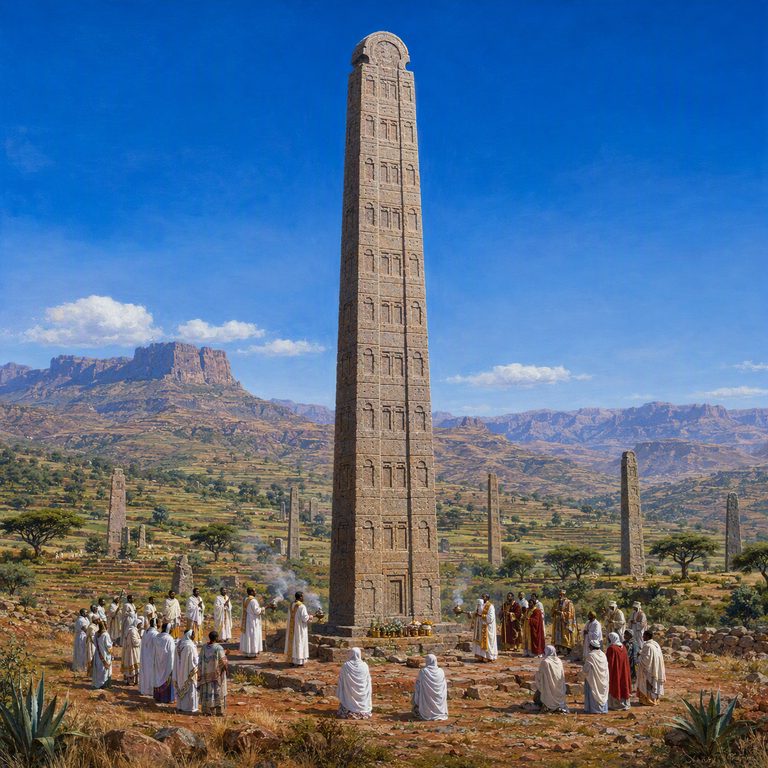
Coastal resource wealth, and unlimited-range trade that everyone benefits from.
Unlimited Trade Route range is the standout: distance simply stops mattering, so partner with the richest civilizations on the map rather than the nearest – and the Tankwa is what makes that safe, since it cannot be pillaged at all. Long routes through contested water are a plan, not a gamble. The Dhow crosses foreign borders freely and can found a route itself. Raising everyone's Route Limit also makes you the partner every AI wants, which converts into alliances. Settle coastal Resource clusters for the +3 Gold.
Kingdom of Natural Wealth
+3 Gold on Resources in Settlements adjacent to Coast • +1 Trade Route Limit with other civilizations – and every civilization gains +1 with you • Trade Routes to or from your Settlements have unlimited Range • +30% Production toward the Great Stele
Aksum uniques
Great Stele
+200 Gold per Age for every Wonder completed, itself included. It pays retroactively as your wonder count grows, so it is worth building early in a game where you intend to chase wonders, and close to pointless if you do not.
Hawilt
+2 Gold, and +1 Culture for each adjacent Wonder and each adjacent Hawilt. Flat Terrain only. Because they feed off each other, site them in a cluster next to your wonder district rather than scattering them across the map.
Dhow
Melee 25 · Ranged 20 · Bombard 15 · Range 1 · Move 3 · Cost 50. +4 Combat Strength on Coast, crosses other civilizations' borders freely, and carries one charge to create a Trade Route. A warship that pays for itself.
Tankwa
A Trade Ship that cannot be pillaged and carries +2 Sight. Aksum's commerce simply does not get raided, which means you can run routes through contested water that would be suicide for anyone else.
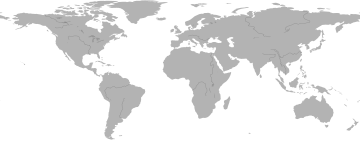
Eritrea · Northern Ethiopia
A highland kingdom holding a Red Sea port, rich from brokering other people's trade — which is why it plays for coastal Gold and long routes. Its Kingdom of Natural Wealth ability points the kit toward that same play pattern.
From Adulis on the Red Sea, Aksum minted its own coinage and brokered trade between Rome and India, raising stelae taller than any other monoliths of the age. Kingdom of Natural Wealth turns brokerage into a rule: coastal Resources pay Gold, and the Trade Route Limit rises for you and your partner – Aksum grew rich by making others richer.
Recommended leaders
Hatshepsut
Cultural + Economic alignment
Resources and rivers.

Machiavelli
Economic alignment
Influence as a hard currency.
AssyriaConquest that pays in free Technologies – at the cost of the usual Codex route.Open profileClose profile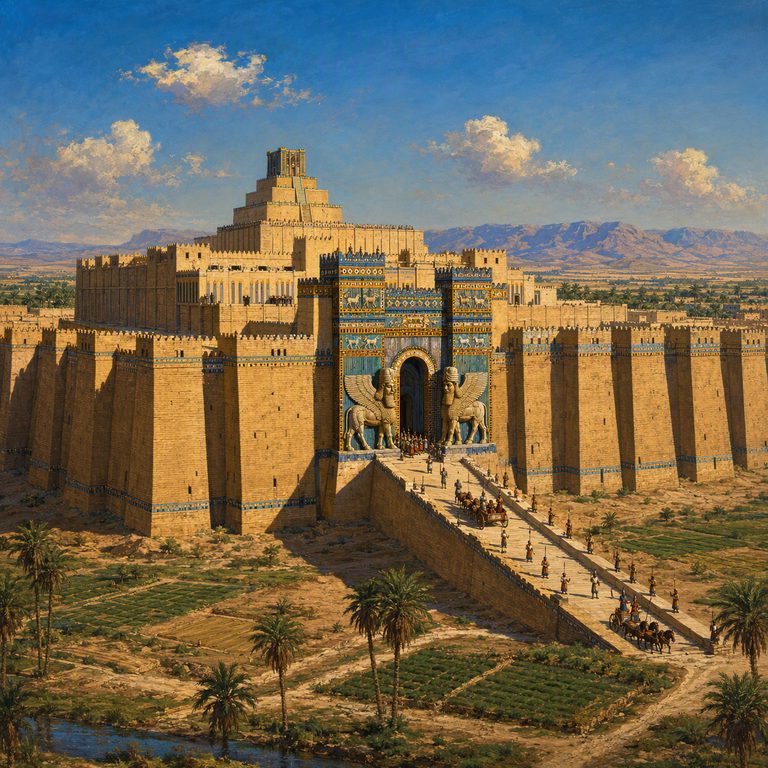
Conquest that pays in free Technologies – at the cost of the usual Codex route.
This is a genuine trade, not a free bonus: you give up Codices from Technologies entirely, so a peaceful Assyria falls behind on Great Works. Conquest is the engine – take settlements steadily, and each first capture accelerates your tech tree and stocks your libraries.
Treasures of Nineveh
Gain a Technology and a Codex upon capturing a Settlement for the first time • Codices are not rewarded from Technologies – conquest replaces research as your Codex source • +30% Production toward Dur-Sharrukin
Assyria uniques
Dur-Sharrukin
Adds Science on Fortifications here and Combat Strength to Fortified Districts across your whole empire, and it is itself a Fortified District an attacker has to take. It rewards a civ that was going to wall up anyway.
Ekallu · Citadel + Royal Library
Production for every Great Work held in this City, so it pays best in your culture capital. Citadel counts as a Fortification and is Ageless; Royal Library adds Science with several Codex slots. Build it where Great Works accumulate.
Magarru
Cavalry with increased Movement that can move after attacking, and takes less damage defending against Ranged Units. Hit, withdraw, repeat — it is built to skirmish at the edge of an enemy line rather than hold ground.
Turtanu
An Army Commander whose Infantry and Cavalry gain Combat Strength against Fortified Districts while inside its Command Radius. It is a siege enabler — keep it with the stack cracking cities, not with your field army.
Northern Iraq · Upper Mesopotamia
An exposed river plain with no natural defences, ringed by rivals — which is why Assyria plays for fortification, siege and taking what it needs.
Ashurbanipal's library at Nineveh gathered tens of thousands of tablets from across the conquered world – an empire that looted knowledge as deliberately as treasure. Treasures of Nineveh is that policy in miniature: a first capture yields a free Technology and a Great Work.
Recommended leaders
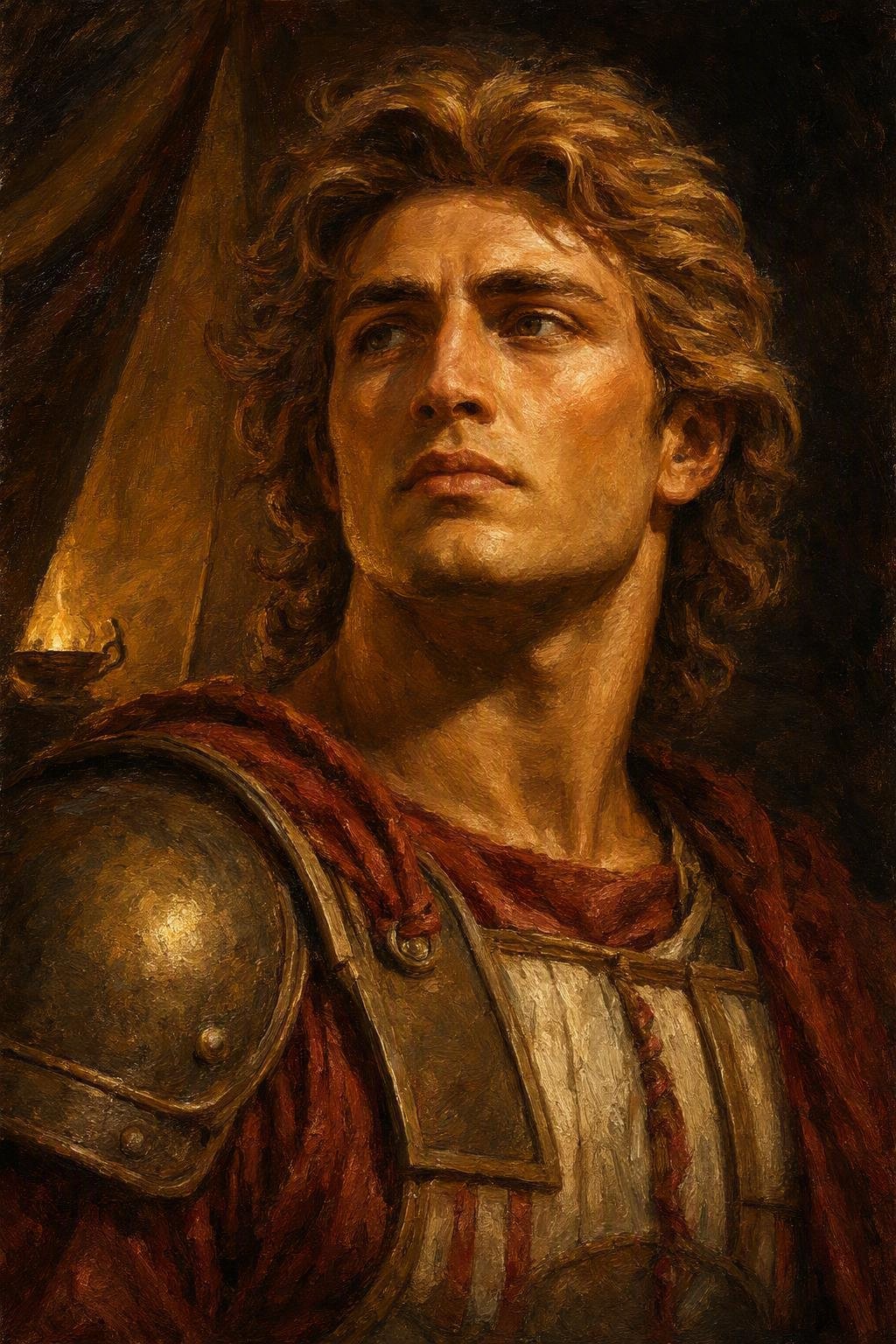
Alexander
Militaristic alignment
Wonders build the empire, and they should sit anywhere except your Capital.
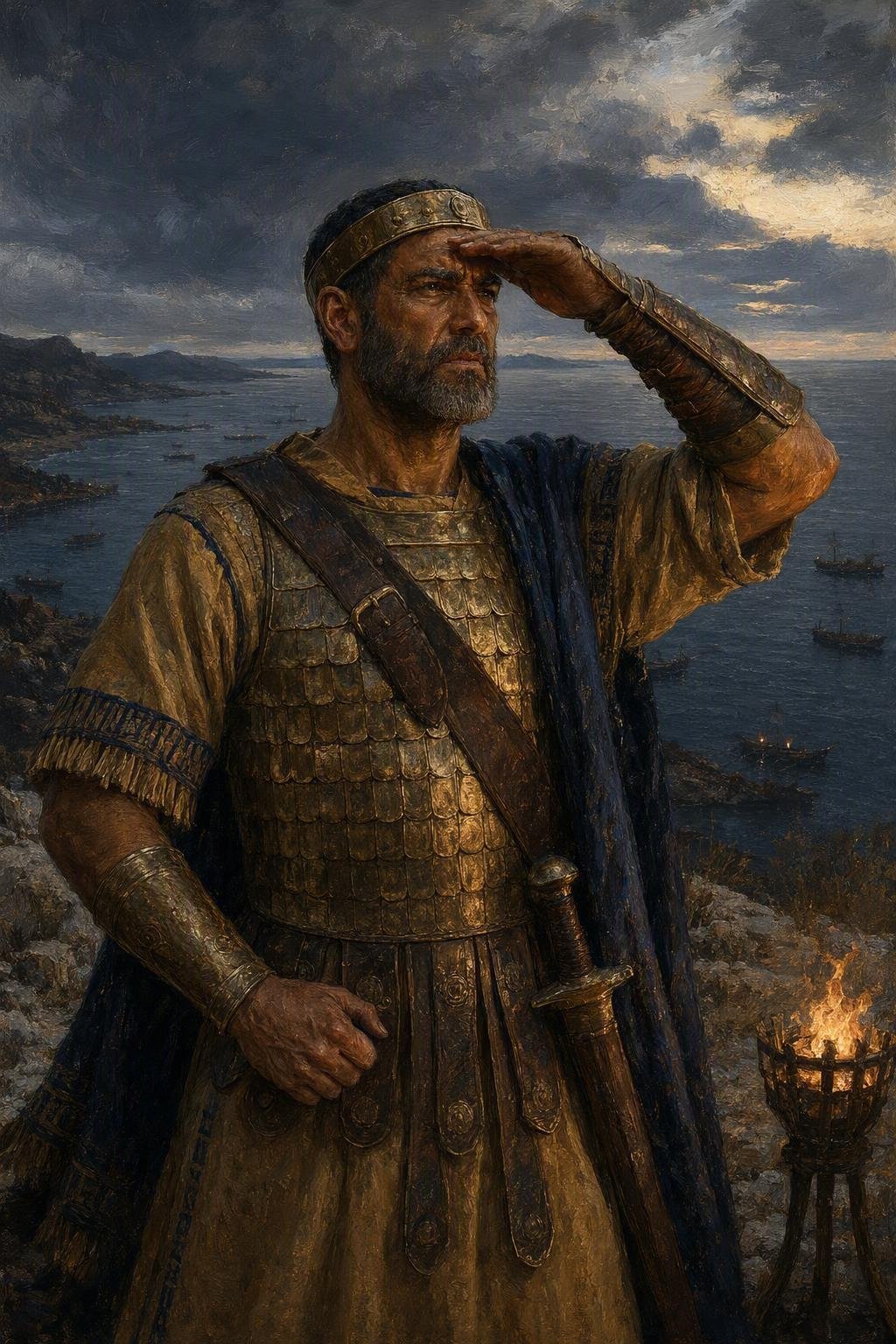
Xerxes (King of Kings)
Militaristic alignment
Rewarded for fighting abroad – +3 Combat Strength when attacking in neutral or enemy territory, a Culture and Gold windfall the first time he captures each Settlement, +10% Gold in…
BabylonEvery Food or Culture Building rings a Growth Event, but the Settlement Limit shrinks under you.Open profileClose profile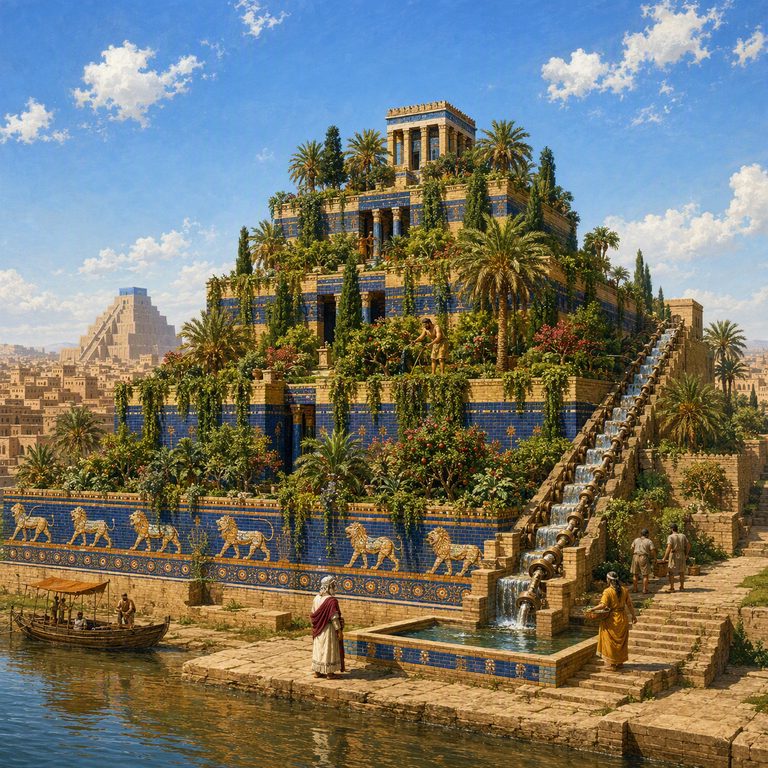
Every Food or Culture Building rings a Growth Event, but the Settlement Limit shrinks under you.
The shrinking Settlement Limit is the whole design: Babylon is built to hold fewer, denser Cities rather than sprawl. Ring your Capital with Food and Culture Buildings – each one is a growth event on top of its normal yield – and put the Kirimāḫu on a river beside as many Districts as it can reach, since it pays +2 Food and +2 more for every adjacent District. The Tamkāru rewards trading far from home, paying 10 Culture per tile of distance on every Trade Route it opens.
City at the Center of the World
Every Food or Culture Building or Wonder built grants an additional Growth Event in that City • −2 Settlement Limit in Antiquity, −4 in Exploration, −6 in Modern • +30% Production toward the Hanging Gardens • +1 Tourism on Quarters in the Modern Age
Babylon uniques
Hanging Gardens
Babylon's civilization ability adds +30% Production toward the Hanging Gardens, so it typically rises well before other Ancient Wonders in a Babylon game. Once built, it pays +1 Food on Farms in this Settlement and +10% Growth Rate empire-wide — a quiet, empire-wide bonus best taken early rather than skipped for something flashier.
Kirimāḫu
+2 Food, plus +2 more for every adjacent District, when built on a river. It rewards a dense, District-packed City rather than a spread empire — exactly the shape Babylon's shrinking Settlement Limit forces on you. Ring it with Districts instead of founding another City.
Qašti
Babylon's unique archer belongs behind the front line, firing from the safety of city walls or a screened formation. Keep it out of direct melee, use terrain and fortifications to preserve it, and let repeated ranged attacks soften units approaching the dense core you must defend.
Tamkāru
Gains 10 Culture per tile of distance from your Capital on every Trade Route it establishes, so your longest routes are also your best-paying ones. It rewards reaching outward rather than trading with your nearest neighbor.
Mesopotamia · Lower Euphrates
The lower Tigris-Euphrates floodplain, a narrow band of irrigated land packed close together rather than spread wide — the geography behind an ability that rewards fewer, denser Cities instead of a sprawling empire.
Babylon's power sat in a narrow, irrigated floodplain rather than open territory, and its rulers built inward – canals, temples, and (by later legend) hanging gardens packed into one city rather than scattered across many. City at the Center of the World rewards exactly that: fewer, denser Cities instead of a wide empire.
Recommended leaders
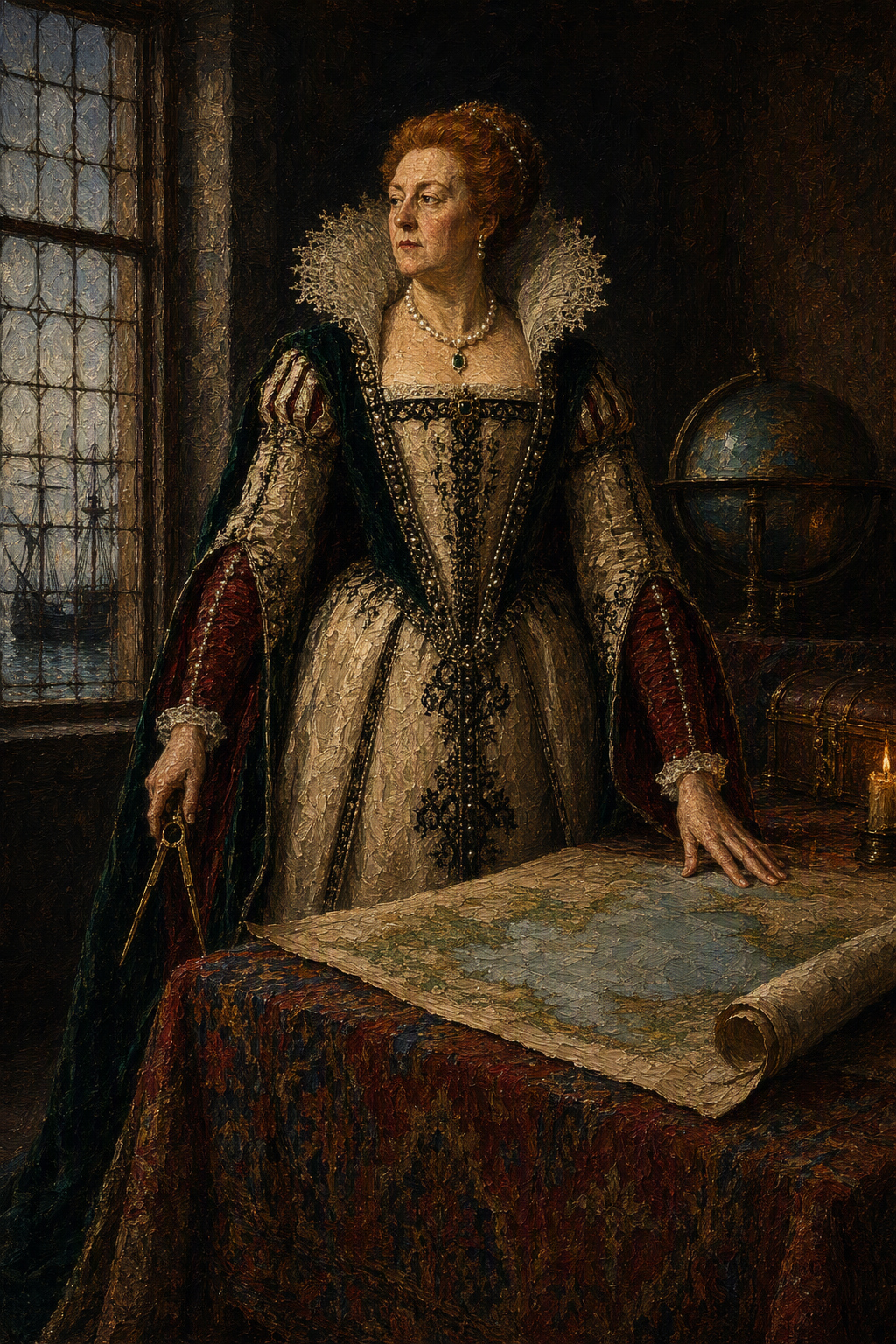
Elizabeth I
Cultural alignment
The map stops limiting your trade.
Hatshepsut
Cultural alignment
Resources and rivers.
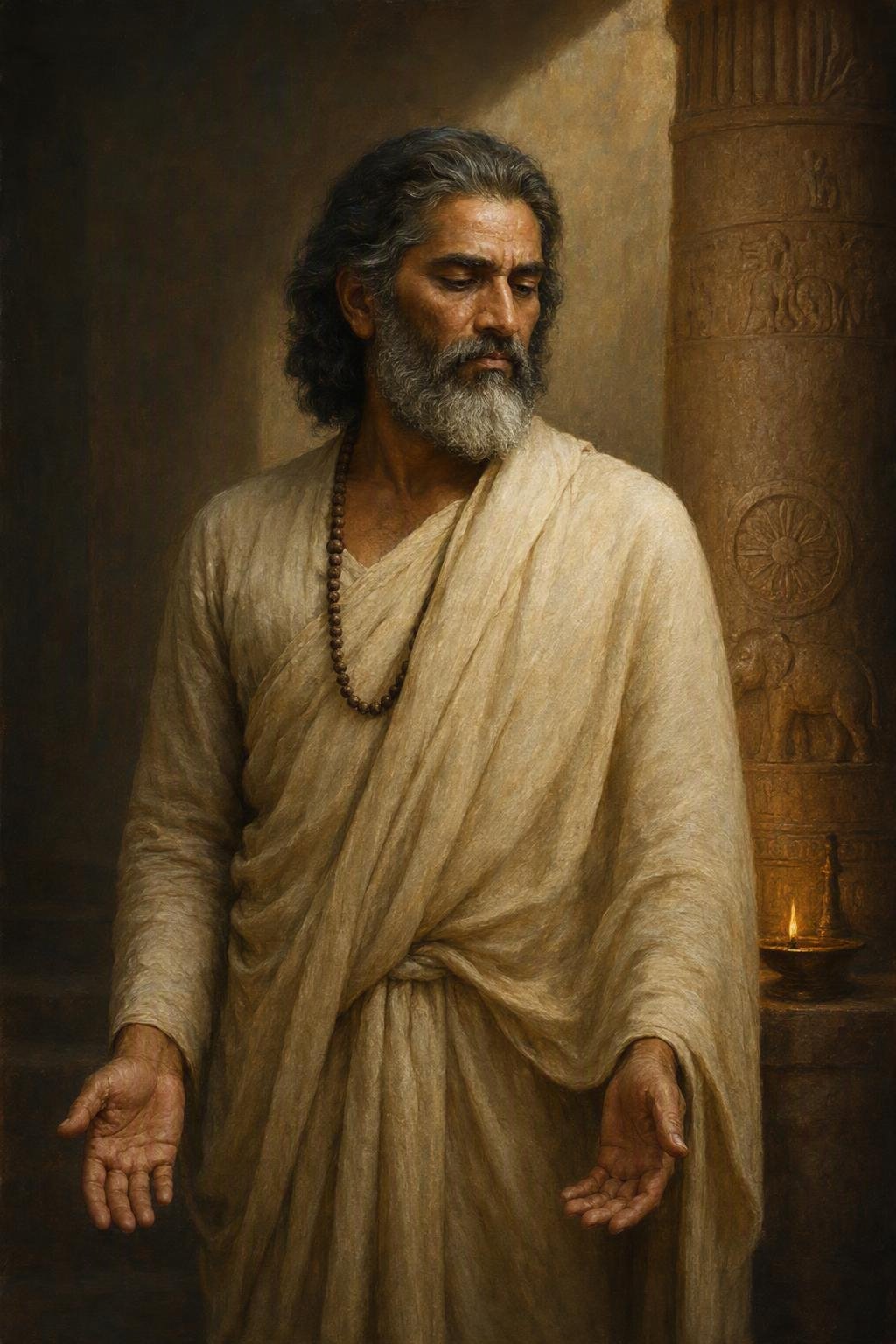
Ashoka (Renouncer)
Expansionist alignment
The mirror image: surplus Happiness becomes Food rather than Production, and Celebrations accelerate growth.
CarthageA one-City empire of Towns that can never be converted.Open profileClose profile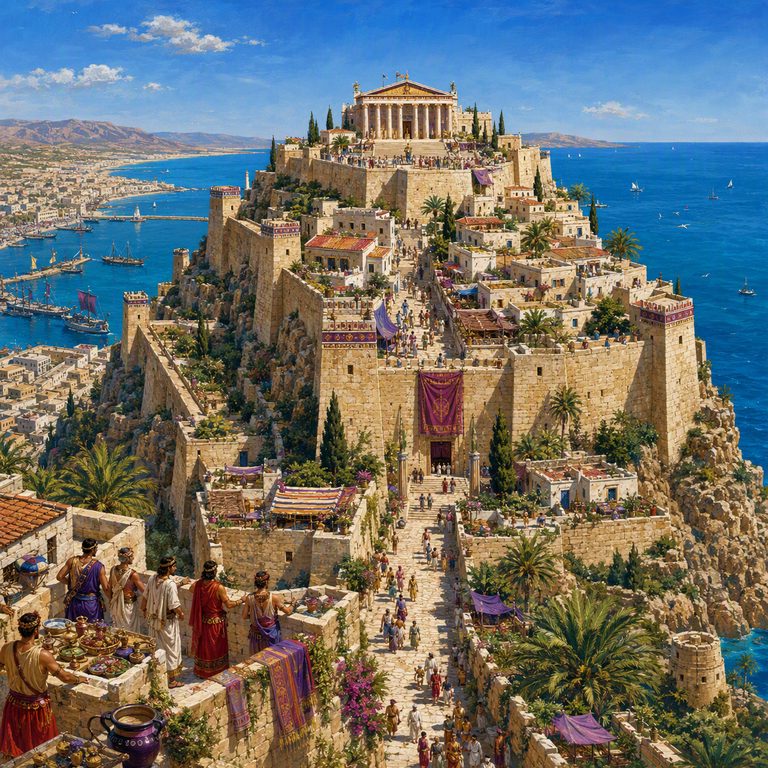
A one-City empire of Towns that can never be converted.
Read the restriction as the strategy: Carthage is a sprawl of Towns orbiting a single City, so all that Town Production reaches you as Gold rather than build queues. Doubling every Merchant expands trade networks at twice the usual rate and doubling every Colonist makes settling cheap. Choose your one City deliberately – you will never get another, and the Punic Port rewards putting it there, paying +2 Resource Capacity or +5 if it stands in the Capital. See Improving Cities & Towns for why Towns without Production are not a handicap.
Phoenician Heritage
Can only ever have one City • Towns cannot use Convert to City • Towns may purchase Water Buildings under any Town Focus • Receive a second Merchant or Colonist free every time you purchase or train one • +30% Production toward Byrsa
Carthage uniques
Byrsa
Adds Gold, makes Trade Routes from this Settlement unplunderable, and automatically walls every eligible coastal tile in the City. For a naval trading civ that is both an economic guarantee and a free defensive perimeter. Must sit adjacent to Coast.
Punic Port · Cothon + Dockyard
+2 Resource Capacity in this Settlement, and +3 more if you place it in the Capital. Cothon adds +2 Production; Dockyard adds +2 Gold with Food adjacency for Resources, Districts and Wonders. Both must sit on Coast.
Numidian Cavalry
Cavalry that can only be purchased, never trained, and costs more than standard. It gains +1 Combat Strength for every Unique City Resource assigned to your Capital, so your trade economy sets how hard it hits.
Colonist
A Settler with +1 Embarked Movement that founds with an extra Population when placed adjacent to a Resource. Built for island-hopping expansion — every crossing is faster and every good site starts a step ahead.
Tunisia · The Western Mediterranean
A great harbour facing a wide sea with little land behind it — which is why Carthage buys its army and plants colonies instead of conquering. Its Phoenician Heritage ability points the kit toward that same play pattern.
A Phoenician colony that became the western Mediterranean's commercial power, governed by elected shophetim and defended by a navy funded on trade rather than tribute. Shophetim pays Gold and Influence from coastal infrastructure – an empire whose fleet was a line item in the ledger.
Recommended leaders
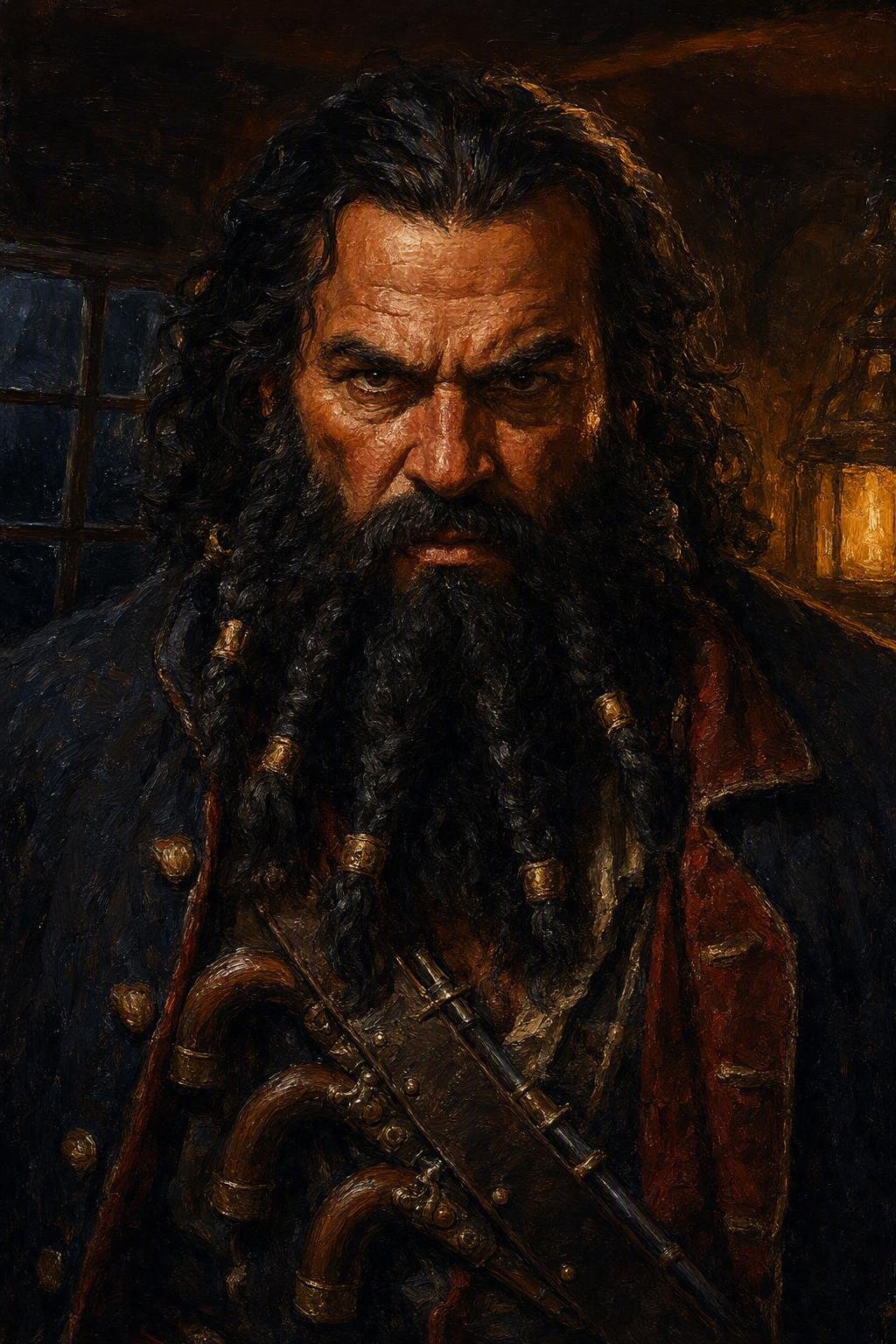
Edward Teach
Economic + Militaristic alignment
You are at war with every non-Allied civilization and formally at war with none.
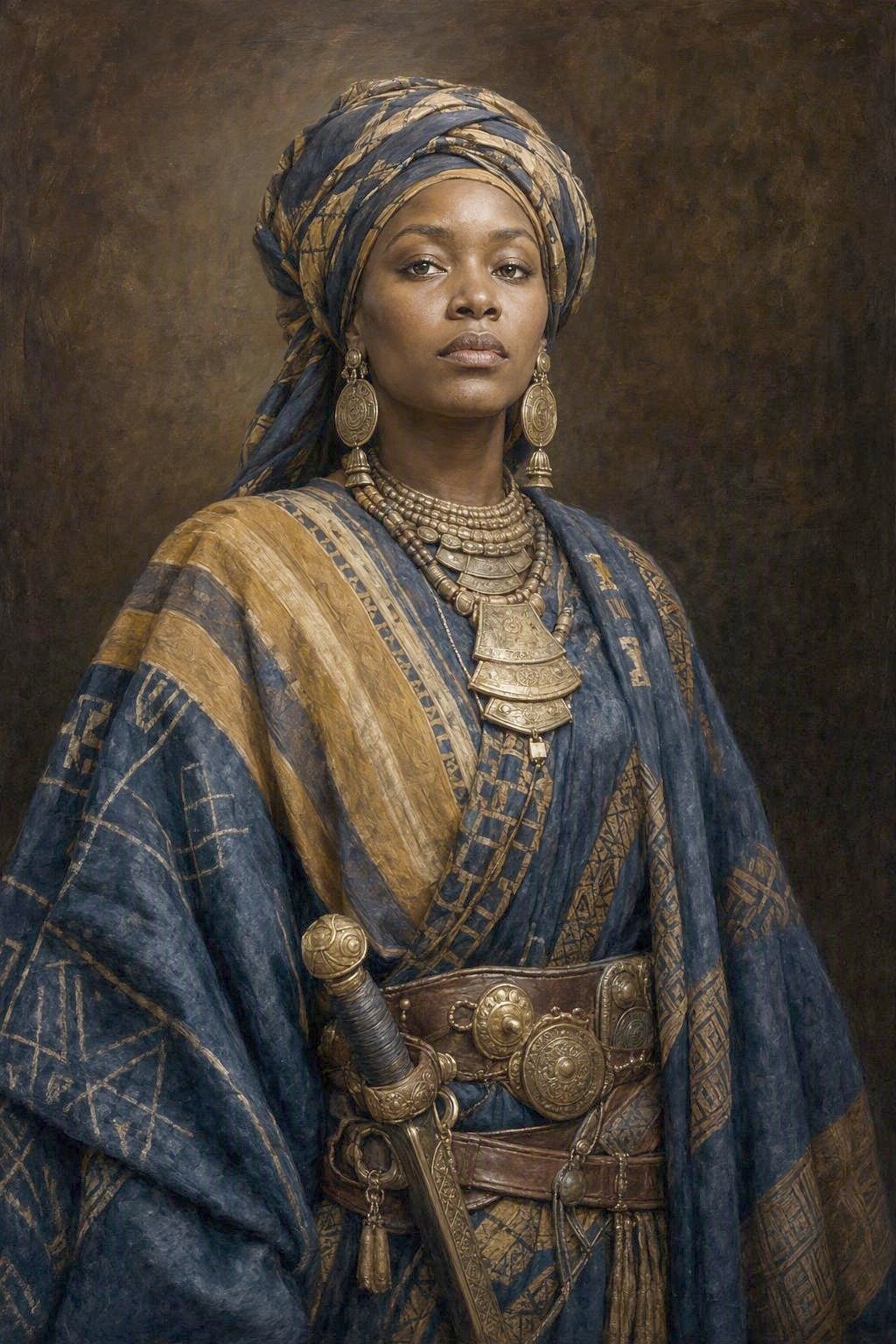
Amina
Economic + Militaristic alignment
Resources are the whole game – each one assigned to a City pays Gold every Age, and extra Resource Capacity means more of them.
EgyptRiver Production that builds Wonders faster than anyone.Open profileClose profile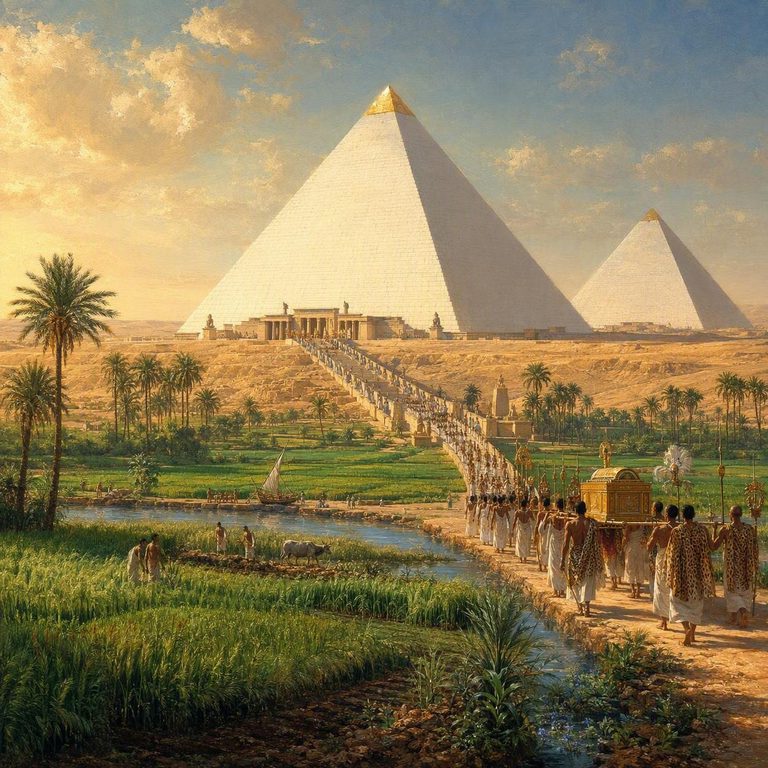
River Production that builds Wonders faster than anyone.
Settle Navigable Rivers and put everything on them – each riverside Improvement and District carries +2 Production, which compounds into the fastest early Wonder construction in the game. Wonders pay Tourism for as long as you hold them, so this is a Cultural victory engine disguised as an economy. Build the Necropolis in whichever city you intend to make your wonder seat: it pays 100 Gold every time a Wonder completes there, and it gates the Tjaty Great People.
Gifts of Osiris
+2 Production on Improvements and Districts on Navigable Rivers • Minor rivers do not end unit Movement • +30% Production toward the Pyramids
Egypt uniques
Pyramids
Yields on Improvements and Districts along Navigable Rivers, so its value is decided entirely by your capital's geography. Site it where a river runs through worked land; on a dry start it is close to dead weight. Needs a Navigable River adjacency, any biome but Tundra.
Necropolis · Mastaba + Mortuary Temple
Grants 100 Gold every time a Wonder completes in this Settlement. Mastaba adds +3 Culture with Gold adjacency for Desert, Navigable Rivers and Wonders; Mortuary Temple adds +3 Gold and is Ageless. Best in the city you intend to make your wonder-building seat.
Medjay
Infantry with no Maintenance and +3 Combat Strength in friendly territory, doubled to +6 when stationed in a Settlement you own. It is a garrison unit, not a scout — park it in a border city and it holds far above its cost.
Tjaty
A Great Person with one charge, trainable only in Cities with a Necropolis. The specific Tjaty is random, each can be received only once, and the cost rises with every one trained. Build the Necropolis early if you want more than one or two.
Egypt · Northern Sudan
One river cutting a fertile corridor through desert, with everything worth building on it — hence Egypt's Production along Navigable Rivers. Its Gifts of Osiris ability points the kit toward that same play pattern.
The Nile's flood was Egypt's entire economy and calendar, and the surplus it left behind paid for pyramids, temples, and a permanent scribal bureaucracy. Gifts of Osiris encodes that chain exactly: river tiles supply the Production, and the Necropolis converts finished Wonders back into Gold.
Recommended leaders
Hatshepsut
Cultural + Economic alignment
Resources and rivers.
Catherine the Great
Cultural alignment
A collector's game.
GaulsIsolation and contested borders both pay, and Fortifications rise without a Focus.Open profileClose profile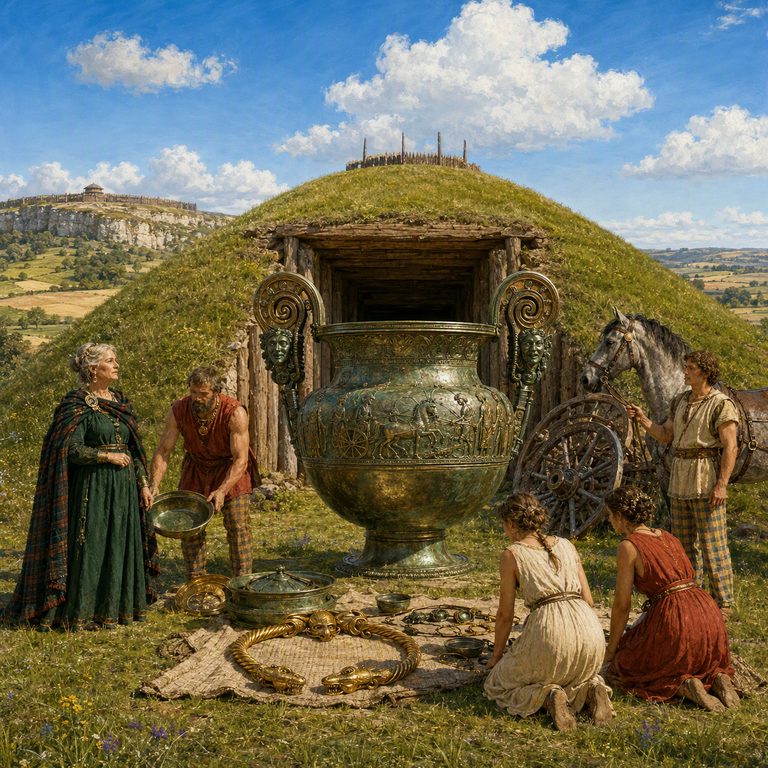
Isolation and contested borders both pay, and Fortifications rise without a Focus.
The ability rewards an inverted settling pattern: found alone, away from your own cities, and near someone else's border, and a single Settlement can collect both bonuses at once. The Druid settles faster than a normal Settler and pays a free Nemeton the instant it founds on a Breathtaking tile, feeding straight into the Dūnon – both its buildings convert the District to a Fortified District, and the finished Quarter adds +25 HP to every Fortified District in the Settlement. Towns purchasing Fortifications regardless of Focus means a frontier Town can wall itself without giving up its economic role.
Favor of Cernunnos
+2 Production in a Settlement with no other City Center within 6 tiles • +2 Gold in a Settlement within 6 tiles of another civilization's border • Towns may purchase Fortification Buildings regardless of Town Focus • +30% Production toward Vix
Gauls uniques
Vix
Gauls' ability grants +30% Production toward Vix, giving a productive frontier Settlement a realistic chance to secure the Wonder before rivals. Use that acceleration without neglecting the Fortifications that let a widely spaced border city survive while the build is underway.
Dūnon · Nemeton + Goben
Both Nemeton and Goben convert their District to a Fortified District, and the completed quarter adds +25 HP to every Fortified District in the Settlement. Pair it with the Gauls' Focus exception — Towns may purchase Fortification Buildings regardless of Focus — to harden an exposed frontier fast.
Gaisatai
Gauls' unique warrior is the melee arm of a frontier strategy built around exposed, widely spaced Settlements. Keep it close enough to answer pressure on those borders, support it with Fortified Districts, and avoid sending the unit so far forward that the settlement chain loses its screen.
Druid
Settles faster than a standard Settler and pays a free Nemeton the moment it founds on a Breathtaking tile — a head start on the Fortified District chain your Favor of Cernunnos ability wants at every frontier settlement.
Gaul · Central and Western Europe
Forested hill country cut by rivers, dotted with hillforts rather than open farmland — ground that rewards Favor of Cernunnos's push to settle apart from yourself and close to a contested frontier.
Gallic society was organized around hillforts and a warrior aristocracy, with a druidic priesthood that sat outside any central state. Favor of Cernunnos rewards that same fragmented, frontier-facing settlement pattern rather than a unified core.
Recommended leaders
George Washington
Expansionist alignment
The strongest opening in the game.
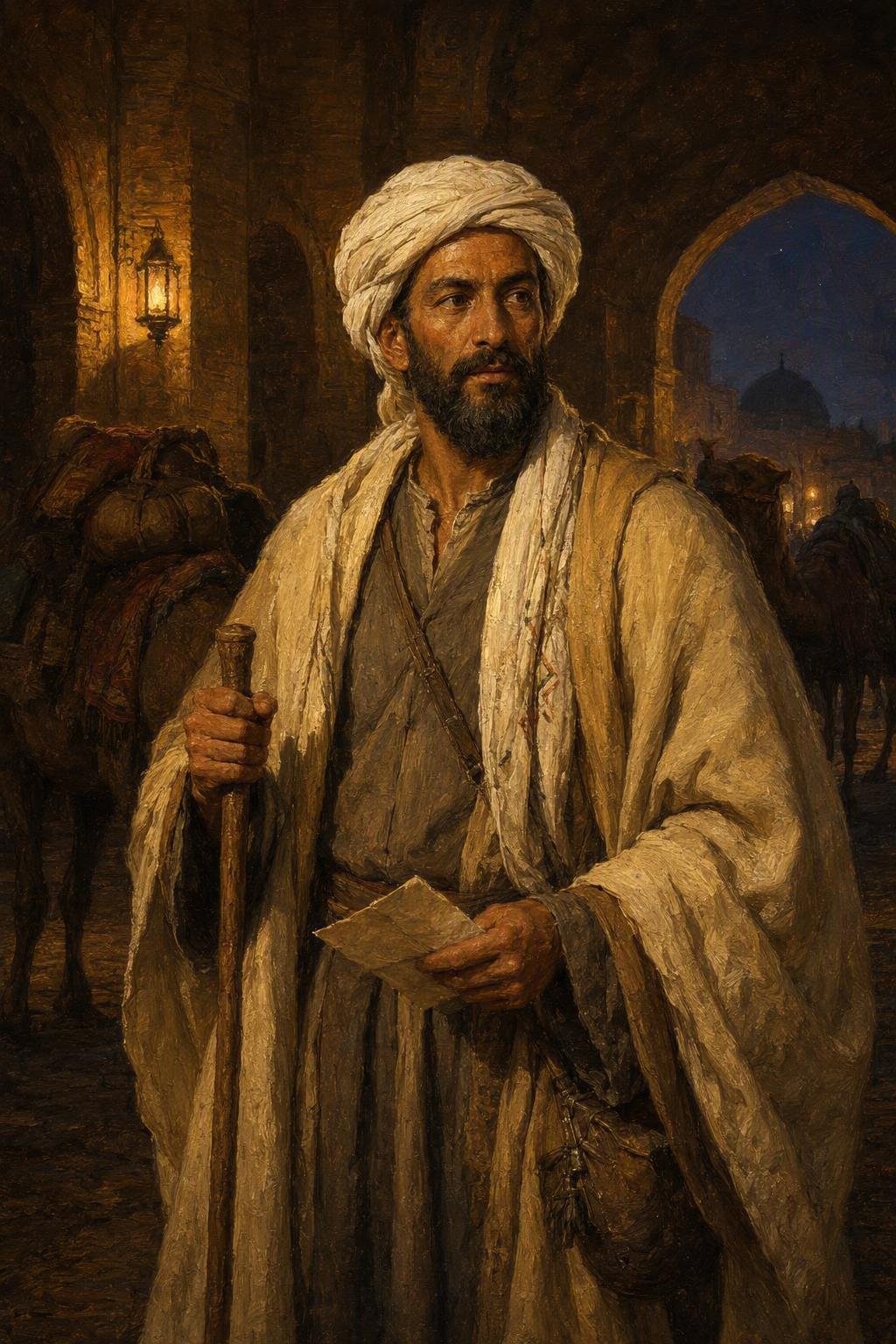
Ibn Battuta
Expansionist alignment
The only leader with a Wildcard Attribute – he gains 2 Wildcard points after the first Civic of each Age, spendable in any tree.
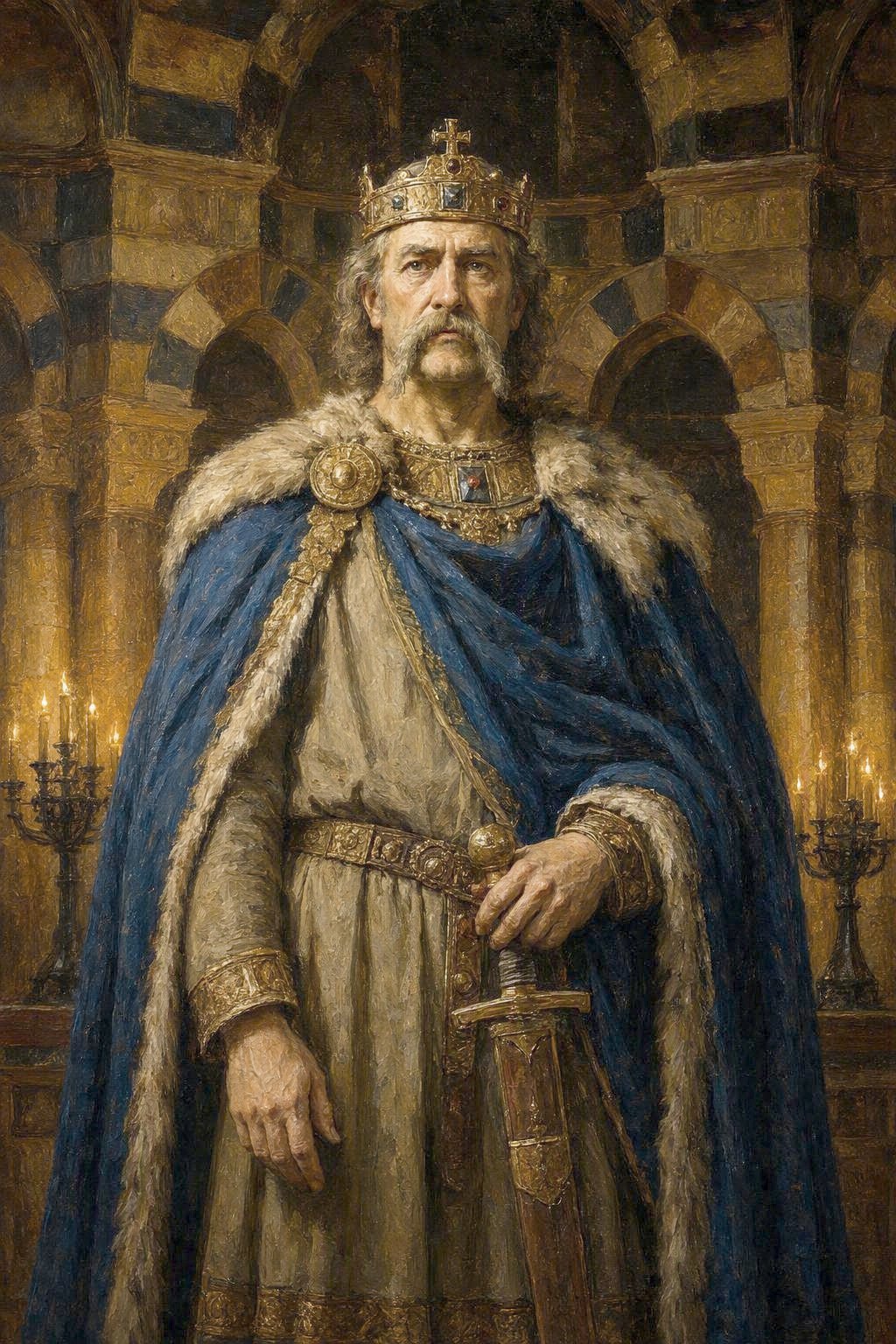
Charlemagne
Cavalry and cathedrals at once.
GreeceInfluence engine that turns diplomacy itself into Culture and Tourism.Open profileClose profile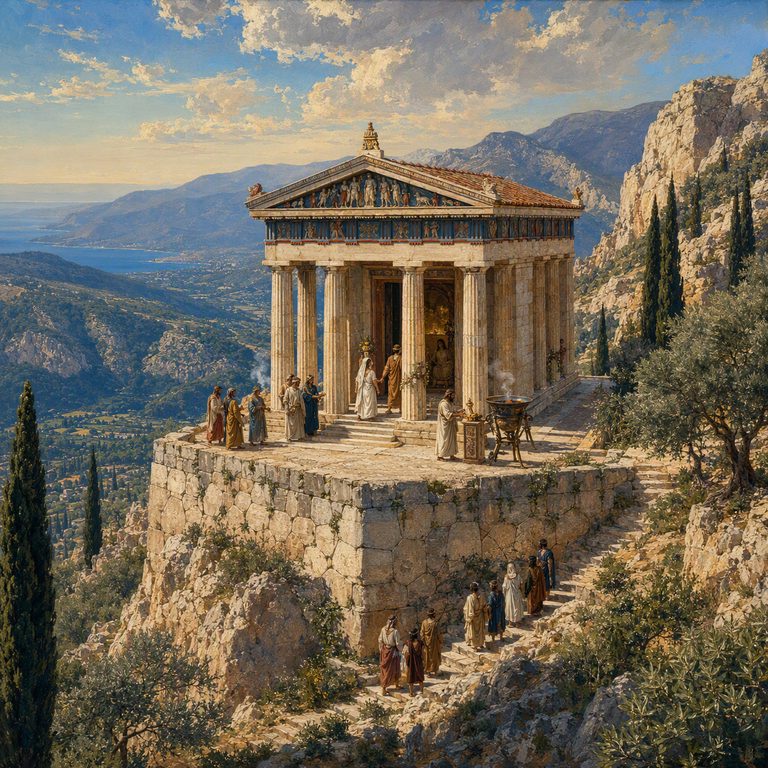
Influence engine that turns diplomacy itself into Culture and Tourism.
Diplomacy is the yield engine, not a side activity. Keep several Endeavors running at all times, initiate Sanctions and Diplomatic Projects for the Culture, and chase City-State suzerainty hard – each one pays Tourism straight into a Cultural victory. The Acropolis pays on the same trigger, adding +2 Gold on its Parthenon for every City-State you are Suzerain of. Hold the line with Hoplites while the civic engine compounds.
Demokratia
+3 Influence on the Palace • +2 Culture for every active Endeavor, Sanction, and Diplomatic Project you started or supported • +3 Tourism for each City-State you are Suzerain of • +30% Production toward the Oracle
Greece uniques
Oracle
+2 Culture, +20 Culture per Age from every Narrative Event, and a Wildcard Attribute Point. The Narrative Event yield rewards a long game with plenty of events; the Attribute Point is immediate and unconditional, which is what makes it a safe early build.
Acropolis · Odeon + Parthenon
+2 Gold on the Parthenon for every City-State you are Suzerain of, so it scales with your Influence game rather than your land. Odeon adds +3 Happiness; Parthenon adds +3 Culture and +2 Influence when placed on Rough Terrain.
Hoplite
Melee 20 · Move 2 · Sight 2 · Cost 30. +2 Combat Strength when adjacent to another Hoplite. The bonus compounds across a formation, so four moving as a block beat four spread across the map — fight them shoulder to shoulder or not at all.
Logios
Move 3 · Sight 1 · Cost 30. A Great Person with one charge, trainable only in Cities with an Acropolis. The specific Logios is random, each arrives only once, and the cost climbs with every one trained.
Greece · The Aegean
Mountains split Greece into small defensible pockets facing the sea, which is why it plays wide on Influence and city-states rather than land. Its Demokratia ability points the kit toward that same play pattern.
Demokratia meant citizens deliberating in assembly – and the same citizens standing shoulder to shoulder in the phalanx, where a city's politics and its battle line were literally the same men. Hence an ability that pays Influence for governance while the Hoplite holds the line protecting it.
Recommended leaders
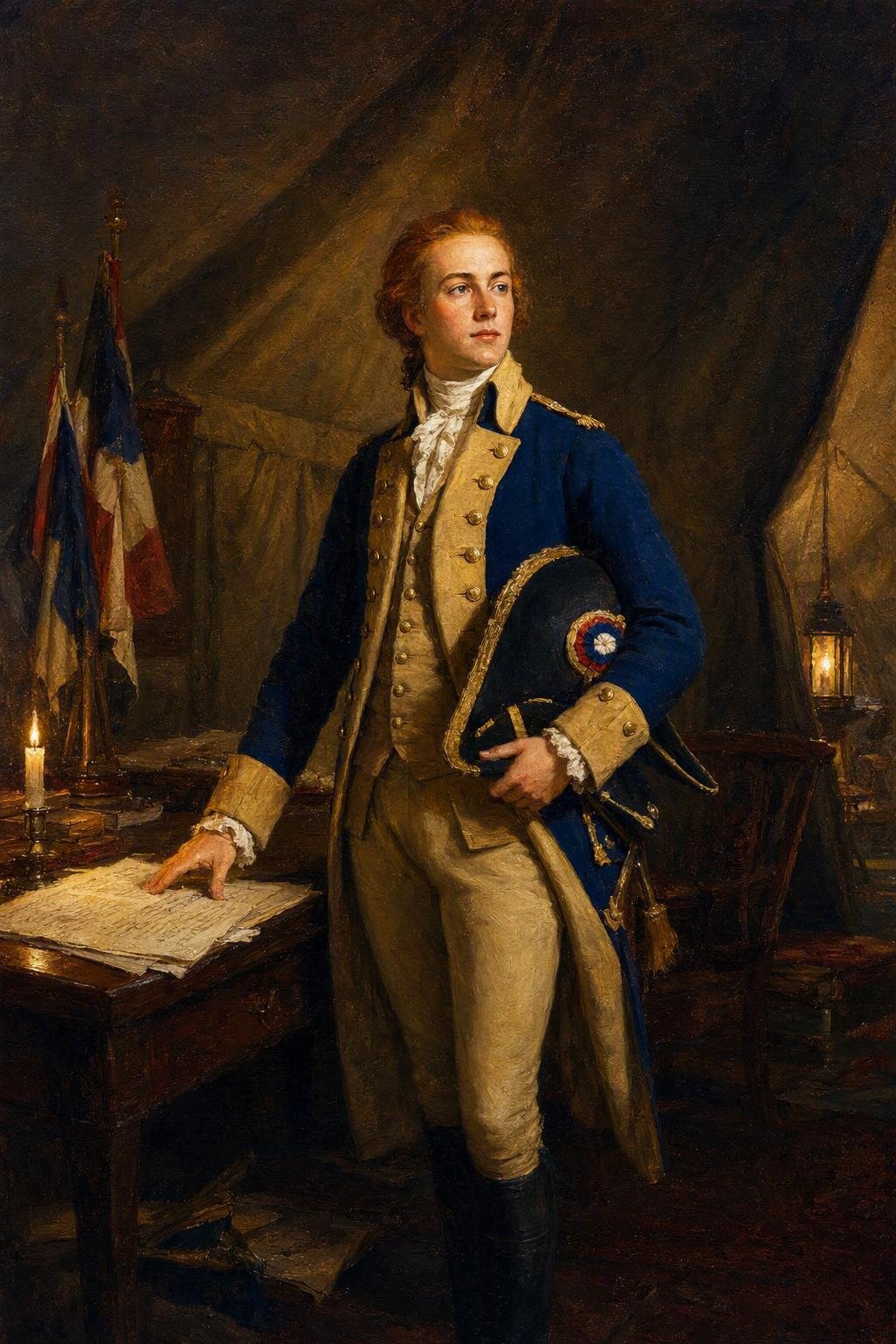
Lafayette
Cultural + Diplomatic alignment
Government-building as a strategy.

Benjamin Franklin
Diplomatic alignment
Diplomacy is his research budget.
Han ChinaScience Buildings that literally grow your Capital.Open profileClose profile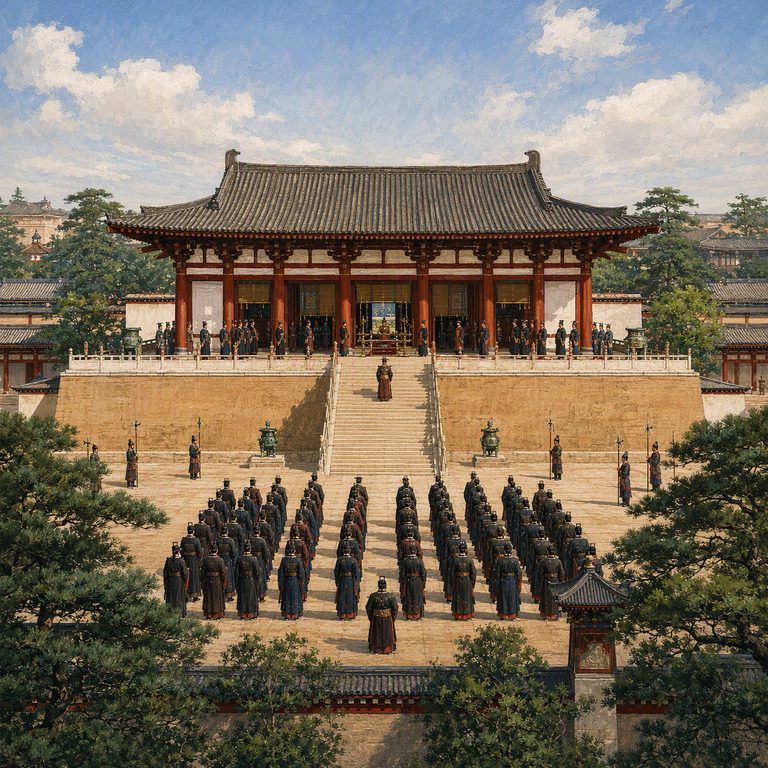
Science Buildings that literally grow your Capital.
Every Science Building in the Capital is also a growth event, so build them relentlessly there – population becomes Specialists, Specialists become more Science, and the loop closes on itself. That growth is also a gate: the Shì Dàfū Great Person only trains in a Capital of 10 Population or more. Plan the Great Wall as a single continuous line from the start – it cannot branch or fork, each segment makes its neighbors happier, and it lays Road as it goes, so it is border infrastructure and defense at once. Found Towns freely; each starts a Population ahead.
Nine Provinces
The Capital gains a Population every time it completes a Science Building • The Capital and new Towns gain an extra Population at their first growth event • +30% Production toward Weiyang Palace
Han China uniques
Weiyang Palace
+3 Influence and an extra Tradition slot. The Tradition slot is the durable half — it widens your Government permanently, so this is strongest taken early in a game you intend to play through several Ages.
Great Wall
+2 Culture, +1 Happiness per adjacent segment, +1 Tourism, and +6 Combat Strength defending as a Fortification. Each segment lays a Road, and it must run as an unbroken line without branching. Cheaper to extend than most Unique Improvements.
Chu-Ko-Nu
Melee 10 · Ranged 15 · Bombard 5 · Range 2 · Move 2 · Cost 30. Exerts Zone of Control, has a higher Defense Strength than most ranged units, and gains +5 Combat Strength attacking adjacent Units. It can hold a line by itself.
Shì Dàfū
A Great Person with one charge, trainable only in a Capital of at least 10 Population. The specific Shì Dàfū is random, each arrives once, and the cost rises per one trained. Growing the Capital is the gate here, not Production.
China · The Yellow River Plains
Loess plains fed vast populations behind a hard desert frontier, which is why Han plays for Influence, Traditions and fortified depth. Its Nine Provinces ability points the kit toward that same play pattern.
The Han built an empire on scholar-officials and standardized administration across its provinces, and its arsenals produced the repeating crossbow that made infantry lines hold. Nine Provinces makes scholarship generate people outright: Science Buildings grow Population, who then staff more Science.
Recommended leaders
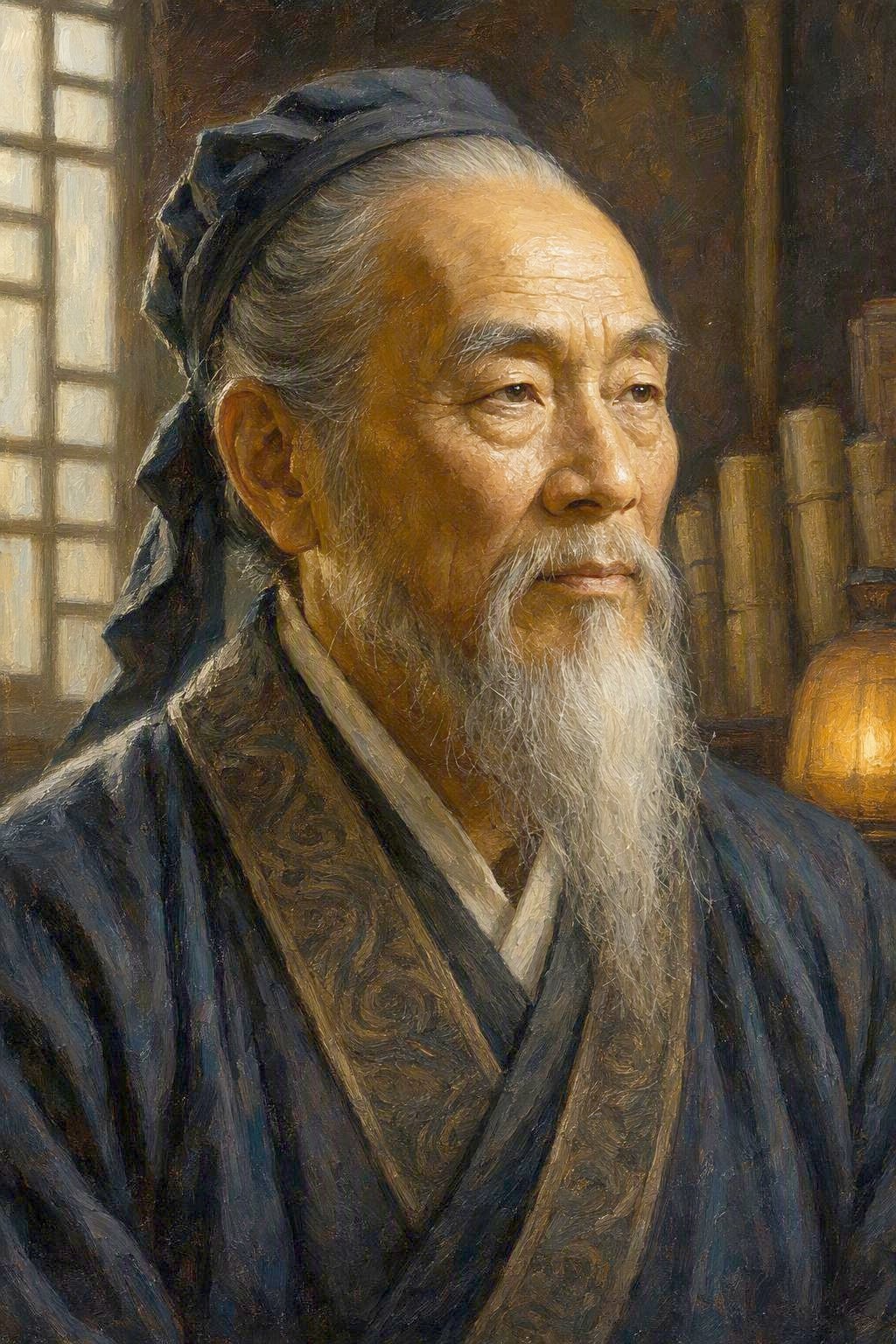
Confucius
Scientific alignment
Growth compounds into research.
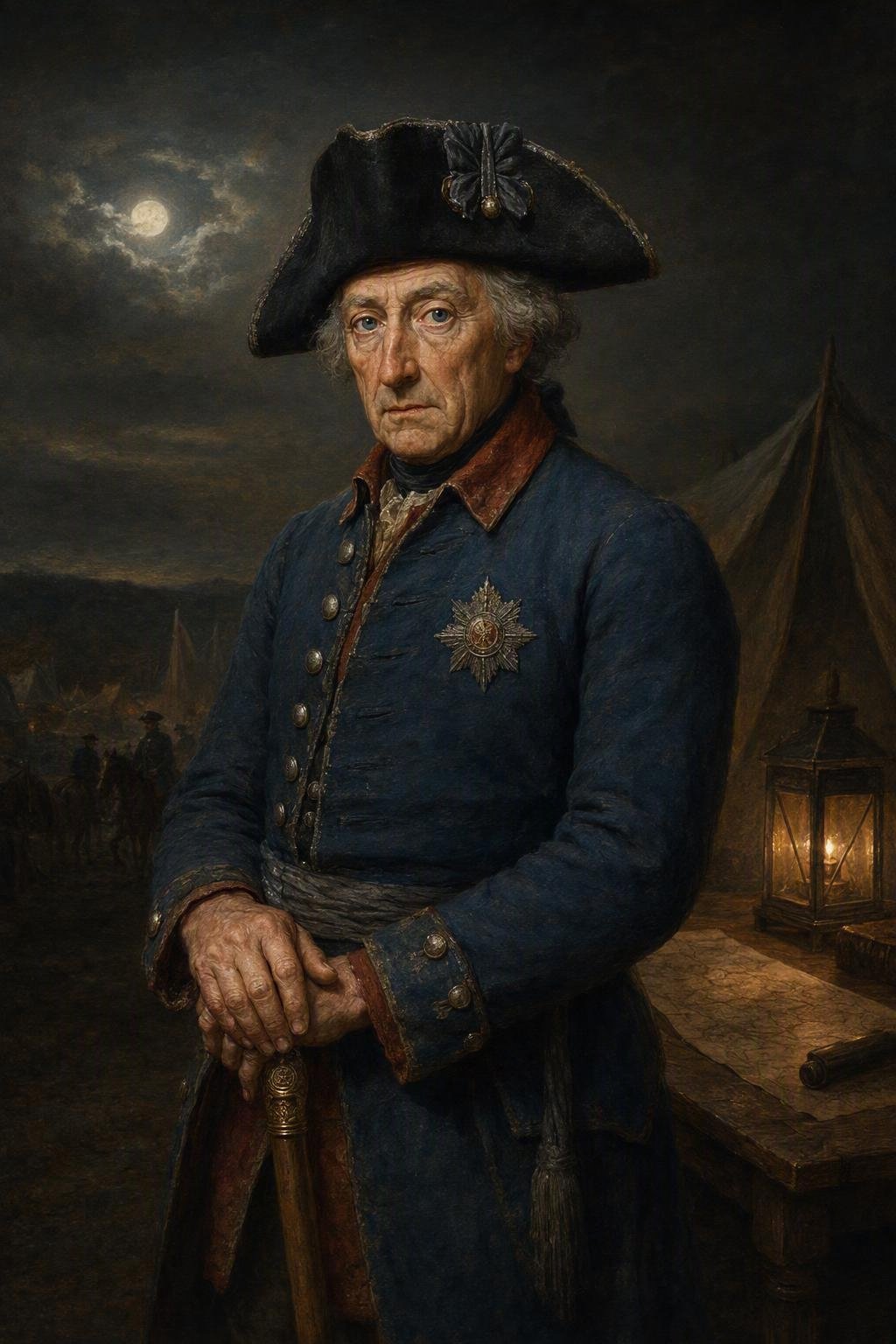
Friedrich (Oblique)
Scientific alignment
Commanders are his research program.
Heian JapanCulture from beautiful terrain, chosen in Antiquity and paid out for the whole game.Open profileClose profile
Culture from beautiful terrain, chosen in Antiquity and paid out for the whole game.
Settle for scenery, not just yields – Breathtaking tiles are the entire ability, so mountainous river valleys and vegetated coasts are worth more to you than flat farmland. Improve every Breathtaking tile you own; these are Antiquity decisions that keep paying Culture across all three Ages.
Pure Land
+2 Culture on Improvements on Breathtaking tiles • +30% Production toward the Hoo-do Hall
Heian Japan uniques
Hoo-do Hall
Wonders here raise the Appeal of adjacent tiles, and Breathtaking tiles in this Settlement return extra Production, Culture and Happiness. It rewards a deliberately beautiful city, so site it where your wonders cluster. Flat Terrain beside a River.
Jinja
Adds Happiness, with Culture adjacency for Charming and Breathtaking tiles. It can be placed on land or water — a Water Jinja must sit beside Flat Terrain — and each Settlement supports only a set number of each kind.
Yumi
A Ranged unit with increased Movement that hits harder when it has not moved that turn. The two pull against each other deliberately: reposition it and it is mobile, hold it still and it is your hardest-hitting archer.
Shijin
A Great Person trainable in any Settlement with a Jinja. Ten named Shijin exist, each activating on a specific constructible — a Great Work slot, an Altar, a Culture Building, the Palace — and each grants a different Culture or Happiness effect.
Japan · The Kansai Heartland
Mountains, rivers and forested coast made beauty itself a resource here — which is why Heian Japan scores Culture from the scenery it settles.
The Heian court made aesthetic judgement a form of rank, producing The Tale of Genji and a poetry culture in which the right response to a beautiful view was itself a political act. Pure Land scores you for exactly that, paying Culture for Improvements on Breathtaking tiles and fielding poets as Great People.
Recommended leaders
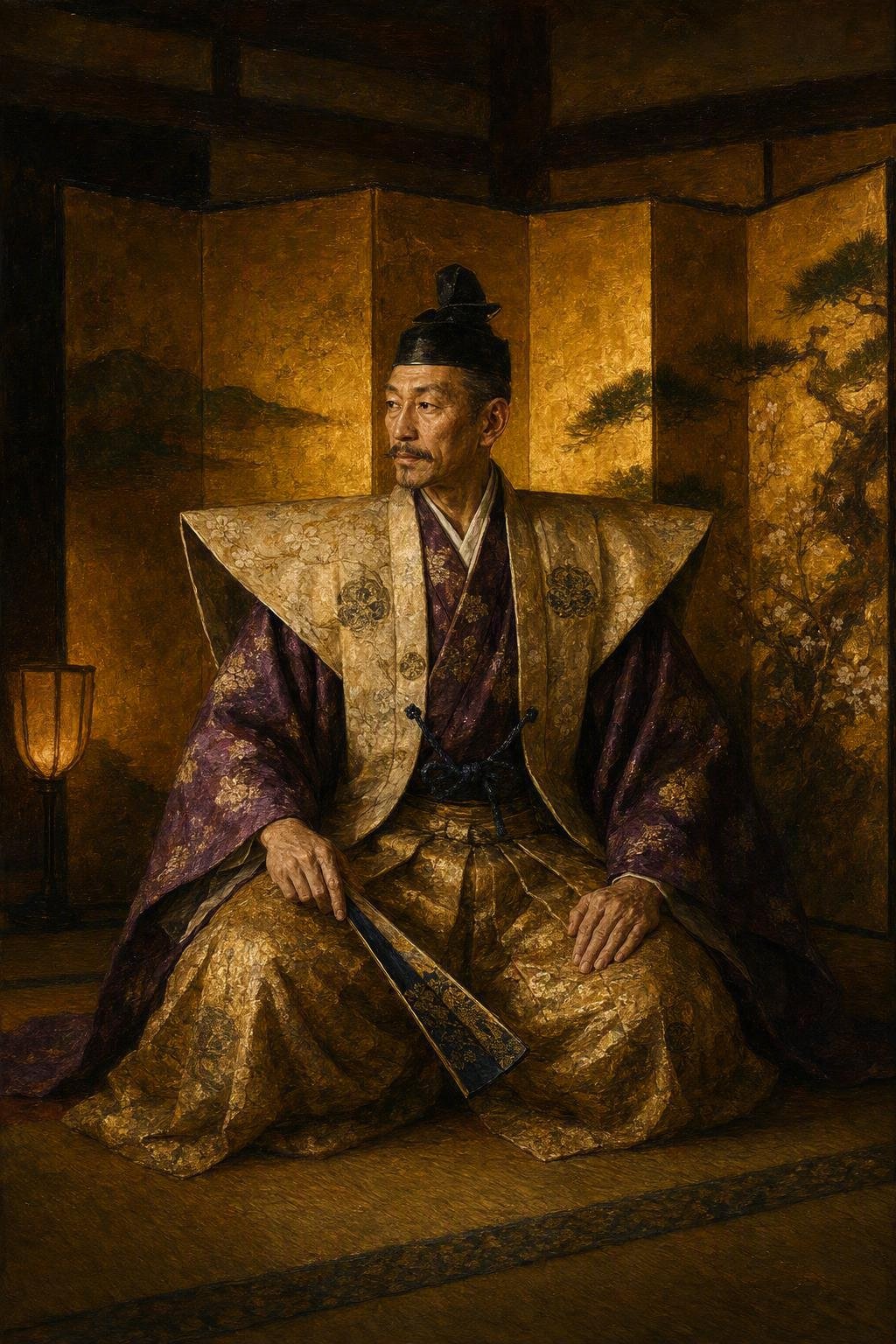
Toyotomi Hideyoshi
Cultural alignment
The purest glass cannon in the game: Land Units deal double damage attacking and take double damage defending.

Himiko (Queen of Wa)
Diplomatic alignment
Alliances are infrastructure.
Hatshepsut
Cultural alignment
Resources and rivers.
KhmerA hyper-grown Capital that keeps its river tiles' natural yields.Open profileClose profile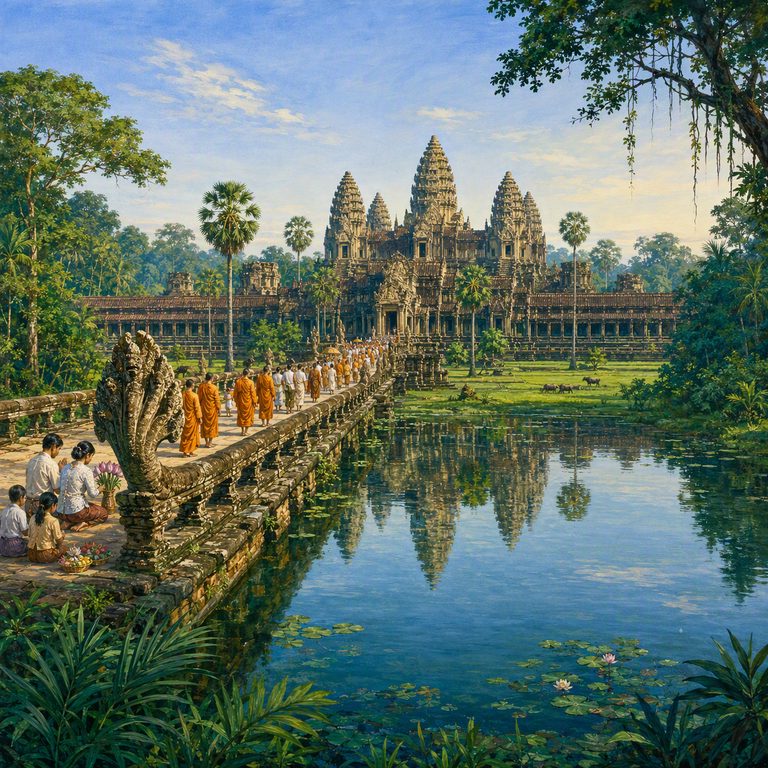
A hyper-grown Capital that keeps its river tiles' natural yields.
The −5 Happiness per City is the whole design: build one enormous river Capital and keep everything else a Town, since Towns escape the penalty entirely. River Districts keeping their natural yield means your Capital's tiles never stop paying, so stack it tall and let Towns feed it. Then note what the uniques have in common – Baray stops floods pillaging anything in its Settlement, and both the Vaishya and the Yuthahathi are flood-immune. Khmer is the one civilization that can build hard onto floodplains and simply ignore the downside everyone else plans around.
Ksekam Chamnon
Districts on Rivers do not remove the tile's natural yield • +50% Growth Rate in the Capital, but −5 Happiness for every other City • +30% Production toward Angkor Wat
Khmer uniques
Angkor Wat
+3 Happiness and +1 Specialist Limit in this Settlement. The Specialist Limit is the real prize for a civ that wants dense, well-fed cities — put it in whichever settlement you plan to stack Specialists highest.
Baray
+3 Food, plus +1 Food on every Floodplain in the Settlement, and nothing here can be pillaged by floods. Flat Terrain, one per Settlement. It turns a flood-prone river city from a liability into the best food engine you own.
Yuthahathi
Melee 35 · Move 2 · Sight 2 · Cost 70 · Maint 1. Higher Combat Strength than the Cavalry it replaces but slower, and immune to flood damage. A battering ram rather than a raider — commit it to a front, not a flank.
Vaishya
A Merchant that establishes Trade Routes to import Resources from foreign Settlements, immune to flood damage and unslowed by Wet Terrain. In the wet, broken country Khmer settles, it keeps moving when other traders bog down.
Cambodia · The Lower Mekong
A monsoon floodplain that drowns and drains every year, which is why Khmer banks Food, tames water, and fields troops that ignore the flood. Its Ksekam Chamnon ability points the kit toward that same play pattern.
Angkor was a hydraulic city – reservoirs and canals fed an urban population unmatched in the medieval world, with the capital dwarfing every other settlement. Ksekam Chamnon reproduces both halves: river Districts keep their natural yield, and the Capital surges while the provinces strain.
Recommended leaders
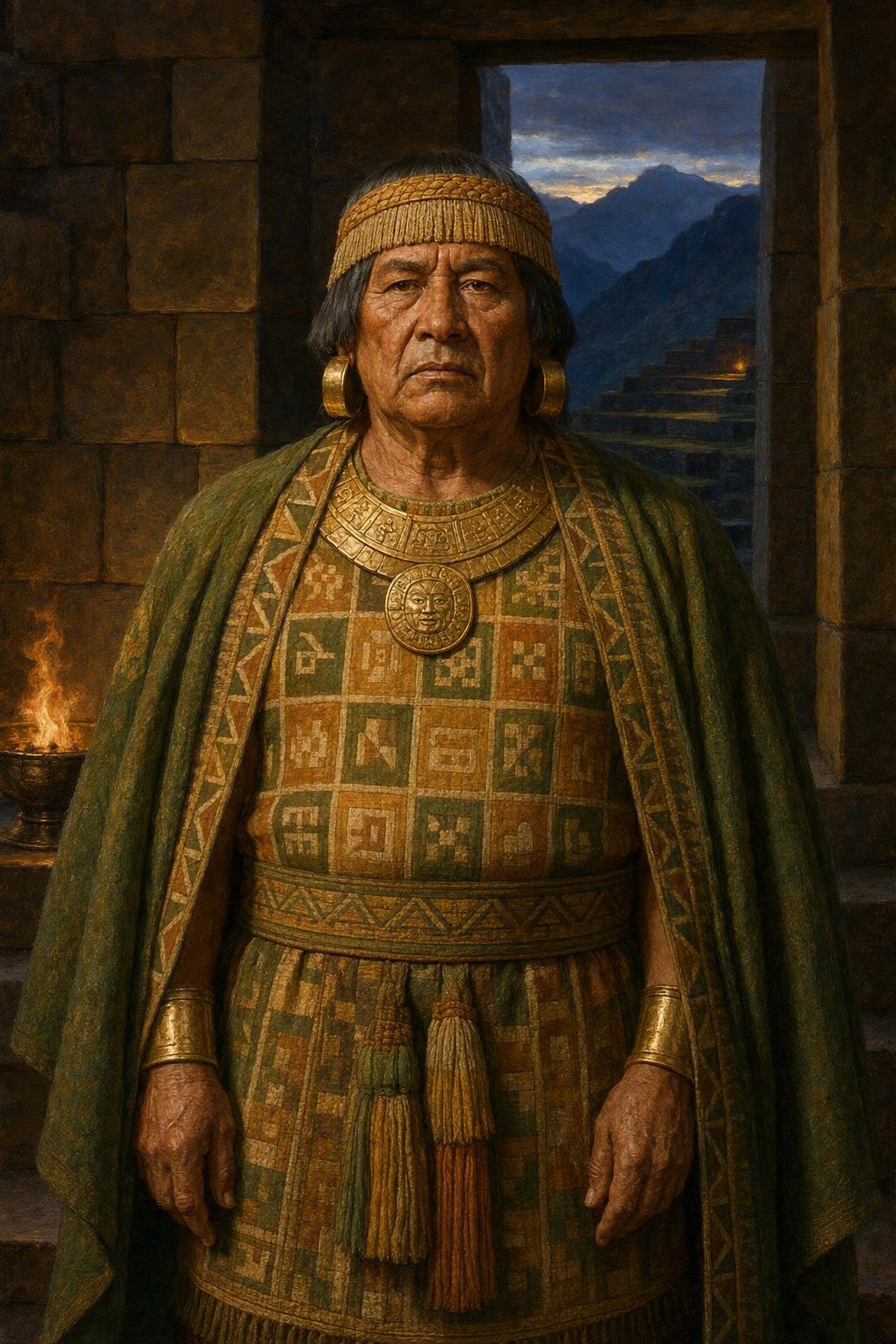
Pachacuti
Expansionist alignment
Mountains become farmland.
Confucius
Expansionist + Scientific alignment
Growth compounds into research.
MauryaCelebrations fully heal Land Units while key Building classes generate Happiness.Open profileClose profile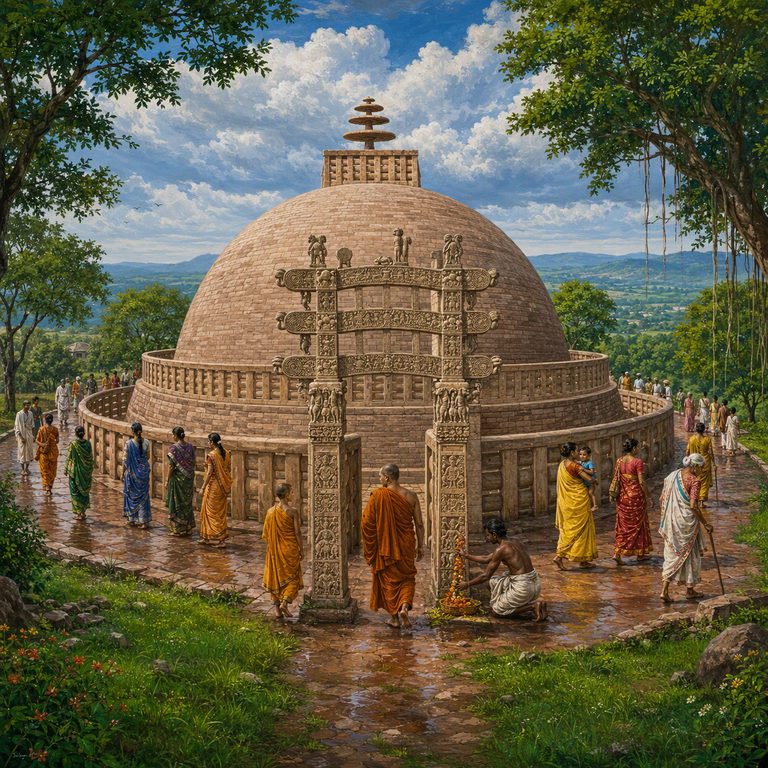
Celebrations fully heal Land Units while key Building classes generate Happiness.
Time your wars around the Celebration cycle: fight, trigger a Celebration, and your entire army heals at once in the field. The +2 Happiness on Happiness, Military and Science Buildings is what keeps those Celebrations coming – three whole categories feeding one engine. The Matha adds +10% Happiness in its Settlement to shorten the cycle further, and every Nagarika founds its Town with an Altar already purchased.
Dhamma Thambhā
+2 Happiness on Happiness, Military, and Science Buildings • Land Units fully heal when you enter a Celebration.
Maurya uniques
Sanchi Stupa
Adds Happiness, then converts this City's excess Happiness into Culture — so it pays twice over in a settlement already running a surplus. Pair it with your Happiness buildings rather than treating it as standalone. Must be placed on Plains.
Matha · Dharamshala + Vihara
+10% Happiness in this Settlement, on top of the components themselves. Dharamshala adds +3 Happiness with Science adjacency for Quarters and Wonders; Vihara adds +3 Happiness with Culture adjacency for Mountains.
Purabhettarah
Melee 30 · Move 2 · Sight 2 · Cost 70 · Maint 1. +5 Combat Strength against Fortified Districts. A dedicated city-taker — it does nothing special in the open field, so build it when you have walls to bring down.
Nagarika
Move 3 · Sight 1 · Cost 60. A Settler that grants a free Altar purchase in the Town it founds, so every new settlement starts with its Happiness building already in place instead of sitting in the queue.
India · The Gangetic Plain
A subcontinent unified by road, river and administration rather than terrain — which is why Maurya plays for Happiness, expansion and reach. Its Dhamma Thambha ability points the kit toward that same play pattern.
Ashoka's edicts on dhamma were carved into rock and pillar across the subcontinent, pairing imperial reach with a state ideology of welfare and public works. Dhamma Lipi turns that ideology into logistics: a Celebration – the empire at its happiest – fully heals every land unit in the field.
Recommended leaders
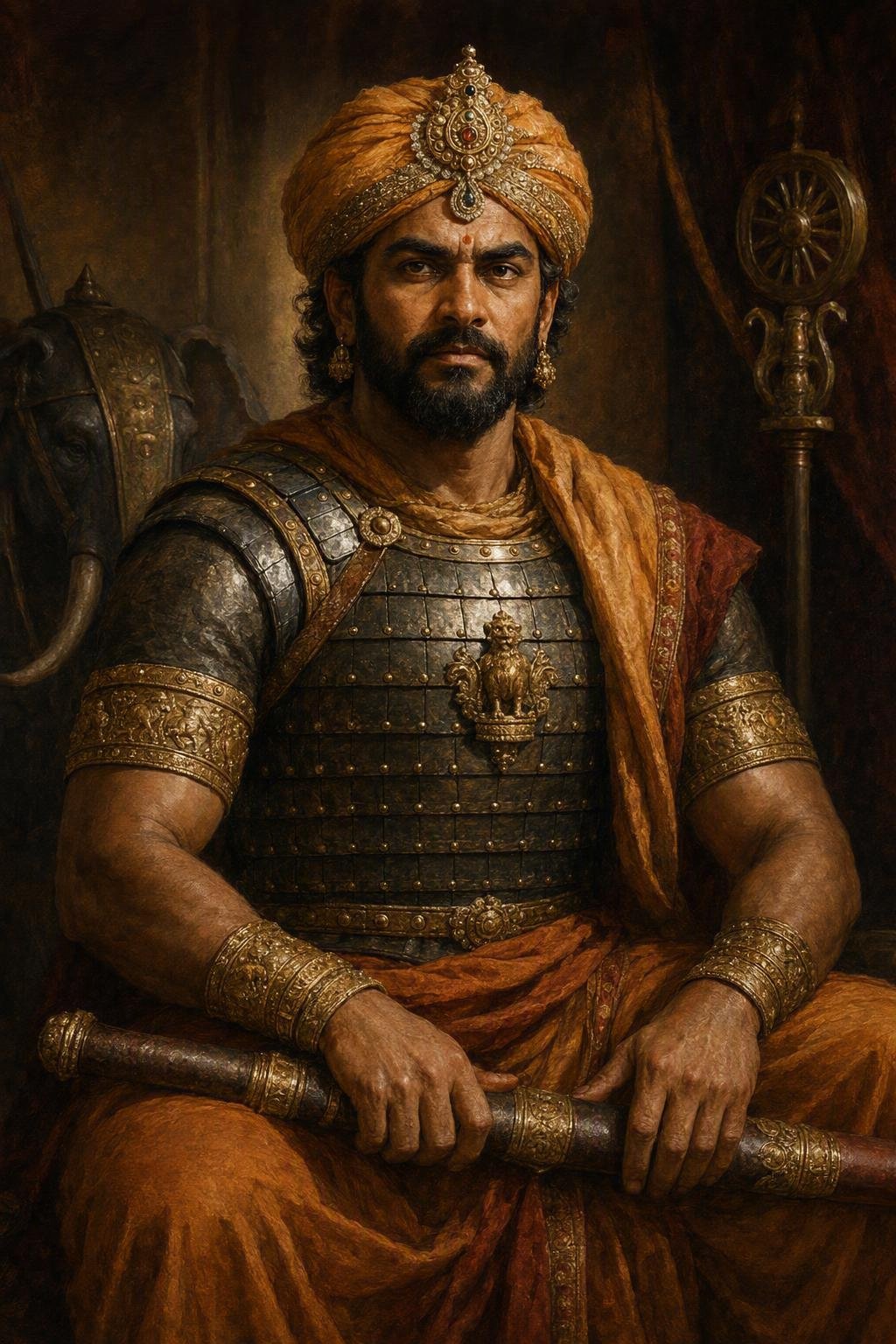
Ashoka (Conqueror)
Militaristic alignment
War is the Happiness engine.
Charlemagne
Militaristic + Scientific alignment
Cavalry and cathedrals at once.
MayaResearch itself pays out in the opposite yield.Open profileClose profile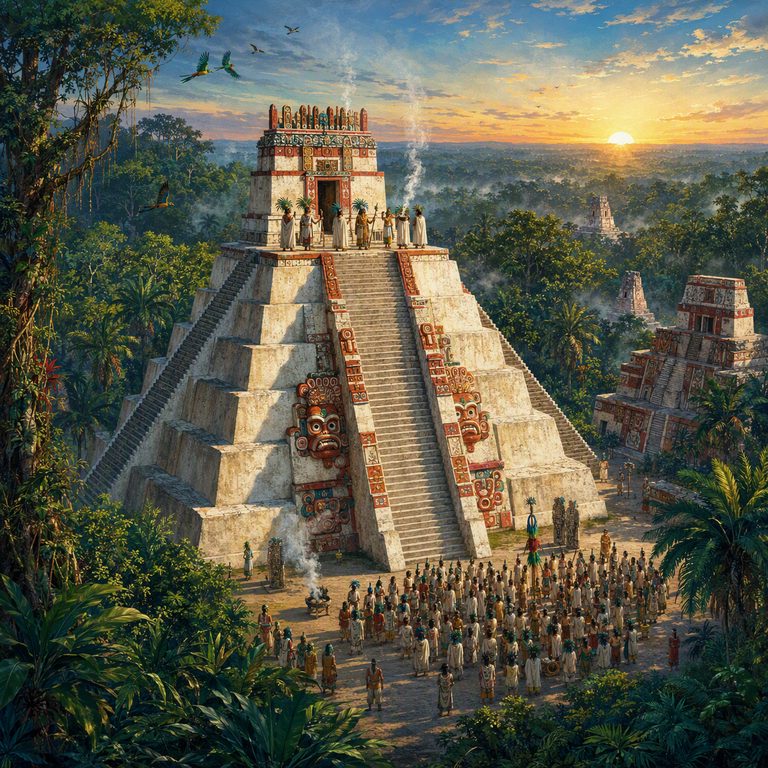
Research itself pays out in the opposite yield.
Maya converts each research track into the other, so a balanced tech-and-civic push outperforms specializing in either. Because the payout scales with cost, the returns grow as the game goes on – late Technologies and Civics hand you very large lump sums. The Uwaybil K'uh rides the same curve, turning every Technology into Production equal to 5% of its cost, so the Settlement holding it builds fastest exactly when your research is most expensive.
Skies of Itzamna
After researching a Technology, gain Culture equal to 10% of its cost • After studying a Civic, gain Science equal to 10% of its cost • +30% Production toward Mundo Perdido
Maya uniques
Mundo Perdido
Science and Happiness on Tropical tiles, which makes it the most map-dependent wonder in the Age. On a jungle-heavy start it is excellent; on a dry or temperate one it is nearly inert. Check your terrain before committing the Production.
Uwaybil K'uh · Jalaw + K'uh Nah
Every Technology you research gives this Settlement Production equal to 5% of its cost, so it accelerates as the tree gets expensive. Jalaw adds +3 Happiness; K'uh Nah adds +3 Science, and +2 more on Vegetated Terrain.
Hul'che
Melee 5 · Ranged 15 · Bombard 5 · Range 2 · Move 2 · Cost 30. A Ranged unit that sees through Vegetation and pays no movement penalty crossing it. In jungle it fights at full speed with clear sightlines while the enemy stumbles.
Jaguar Slayer
Melee 20 · Move 2. A Scout that can start a fight, with one charge to lay an invisible Jaguar Trap on Flat or Vegetated Terrain. The trap deals 25 damage and ends the movement of whatever walks into it, recharging 5 turns after placement.
Guatemala · Yucatán · Belize
Limestone lowland with no surface rivers but deep rainforest and sinkhole water, which is why Maya banks Science and rewards Tropical terrain. Its Skies of Itzamna ability points the kit toward that same play pattern.
Maya cities rose inside the rainforest rather than clearing it, and their astronomers tracked Venus and eclipses precisely enough to build calendars centuries deep. Skies of Itzamna rewards precisely that instinct, drawing Science from the Palace's adjacent Vegetation while unique units treat jungle as home ground.
Recommended leaders

José Rizal
Cultural alignment
Celebrations, extended and repeated.
Benjamin Franklin
Scientific alignment
Diplomacy is his research budget.
MississippianFood adjacency from Resources, and cheaper buildings everywhere.Open profileClose profile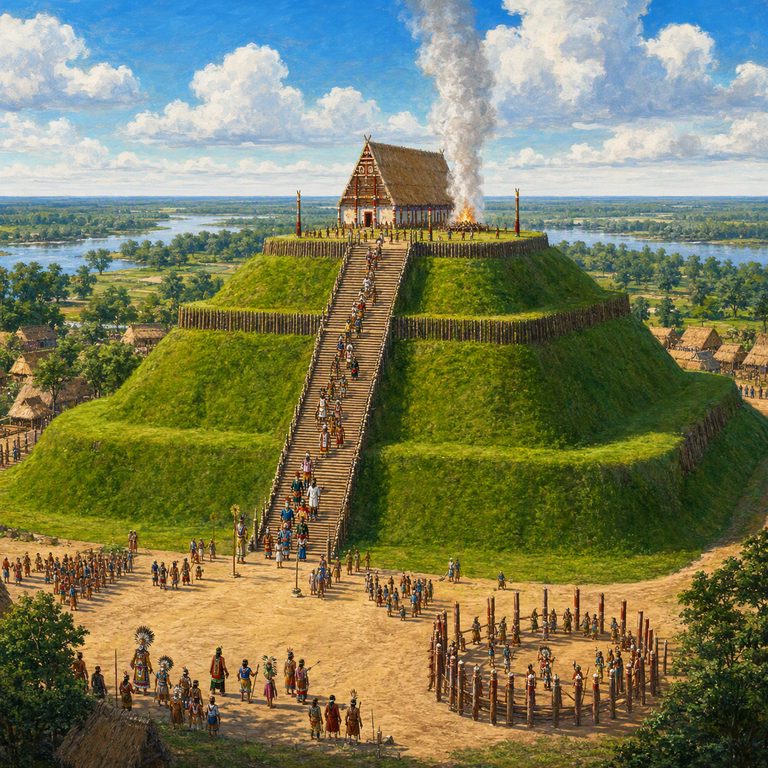
Food adjacency from Resources, and cheaper buildings everywhere.
Settle dense Resource clusters and build districts around them – every Building beside a Resource feeds your population, turning ordinary infrastructure into a growth engine. The +10% Building Production compounds that: you build faster, which grows faster, which staffs more buildings. Potkop doubles down, paying +1 Food per adjacent Resource on Flat Terrain, while the Watonathi turns the same Resources outward – 25 Gold for every one it acquires when it opens a Trade Route.
Goose Societies
All Buildings receive +1 Food adjacency for Resources • +10% Production toward constructing Buildings • +30% Production toward Monks Mound
Mississippian uniques
Monks Mound
+4 Food and +4 Resource Capacity — the largest single Capacity boost available in the Age. If you are running a wide Resource economy it is close to mandatory, since Capacity is usually the ceiling on what you can actually assign.
Potkop
+1 Gold, and +1 Food for every adjacent Resource. Flat Terrain only. The yield lives entirely in the placement — site it in the middle of a Resource cluster and it outperforms almost any generic improvement on the tile.
Burning Arrow
Melee 5 · Ranged 15 · Bombard 8 · Range 2 · Move 2 · Cost 30. Higher Bombard Strength than the unit it replaces, +3 Combat Strength against Siege Units, and it sets tiles Burning for 2 turns. A counter-siege answer.
Watonathi
A Merchant that establishes Trade Routes to import Resources from foreign Settlements, paying 25 Gold for every Resource acquired when the route is created. The more Resource-rich the target, the better the deal.
Central Mississippi Valley
A river system gathering trade from half a continent onto one floodplain, which is why it plays for Resource Capacity and Gold from routes. Its Goose Societies ability points the kit toward that same play pattern.
Cahokia's Monks Mound is the largest earthwork north of Mexico, raised by a river society whose floodplain agriculture and trade reached from the Gulf to the Great Lakes. Goose Societies encodes that abundance as Food adjacency from Resources – a civilization that grew on what the land already offered.
Recommended leaders
Isabella
Economic + Expansionist alignment
The map itself is treasure.
Edward Teach
Economic alignment
You are at war with every non-Allied civilization and formally at war with none.
PersiaFront-loaded Antiquity aggression with free Commander promotions.Open profileClose profile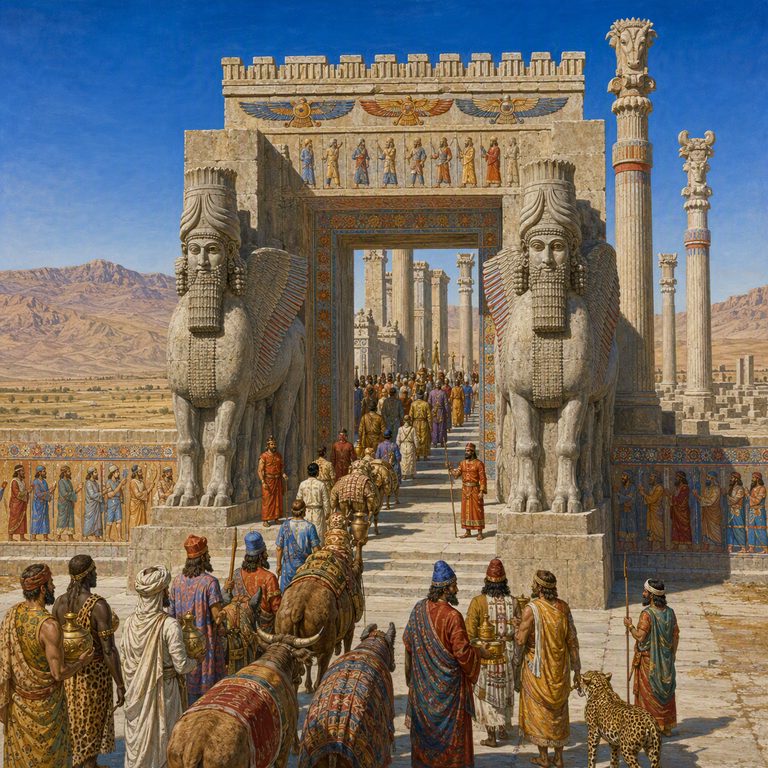
Front-loaded Antiquity aggression with free Commander promotions.
The bonus applies only on the attack, so Persia wants to be the aggressor – take the early wars rather than waiting for them. A free Commander Promotion is worth more than it looks, since Commander XP and Promotions persist across every Age Transition. Sustain the offensive with the Immortal, which heals 15 HP after every kill, and the Pairidaeza, which adds +5 Healing to Military Units anywhere in its Settlement – a forward city becomes a field hospital. See Invest in What Persists.
Hamarana Council
+3 Combat Strength for Infantry Units when attacking • Army Commanders start with a free Promotion • +30% Production toward the Gate of All Nations
Persia uniques
Gate of All Nations
Adds Happiness and increases War Support in every war you fight. War Support quietly decides long conflicts, so this suits a Persia that intends to stay at war rather than raid and stop. Must sit adjacent to a District.
Pairidaeza
+2 Culture and +1 Gold, plus +5 Healing for Military Units anywhere in the Settlement. Cannot sit adjacent to another Pairidaeza. It turns a forward city into a field hospital, which matters more than the yields in a long war.
Immortal
Melee 25 · Move 2 · Sight 2 · Cost 60 · Maint 1. Heals 15 HP after defeating an enemy Unit. A winning stack keeps its momentum instead of stopping to recover, which compounds across a long campaign.
Hazarapatis
Move 2 · Sight 2 · Cost 100. An Army Commander that starts with the Initiative Promotion already earned, putting it a step ahead of a standard commander from the moment it is trained.
Iran · The Iranian Plateau
A dry plateau ringed by mountains, held together by roads rather than terrain — which is why Persia plays for reach, war support and empire. Its Hamarana Council ability points the kit toward that same play pattern.
The Achaemenids fielded the Ten Thousand Immortals, kept at constant strength by replacing every casualty at once, and planted walled pairidaeza gardens that gave us the word paradise. Both survive literally: the Immortal heals after every kill, and the Pairidaeza pays Culture and Gold.
Recommended leaders
Alexander
Militaristic alignment
Wonders build the empire, and they should sit anywhere except your Capital.
Xerxes (King of Kings)
Economic + Militaristic alignment
Rewarded for fighting abroad – +3 Combat Strength when attacking in neutral or enemy territory, a Culture and Gold windfall the first time he captures each Settlement, +10% Gold in…
RomeWide empire converting every new Town into Culture and a free soldier.Open profileClose profile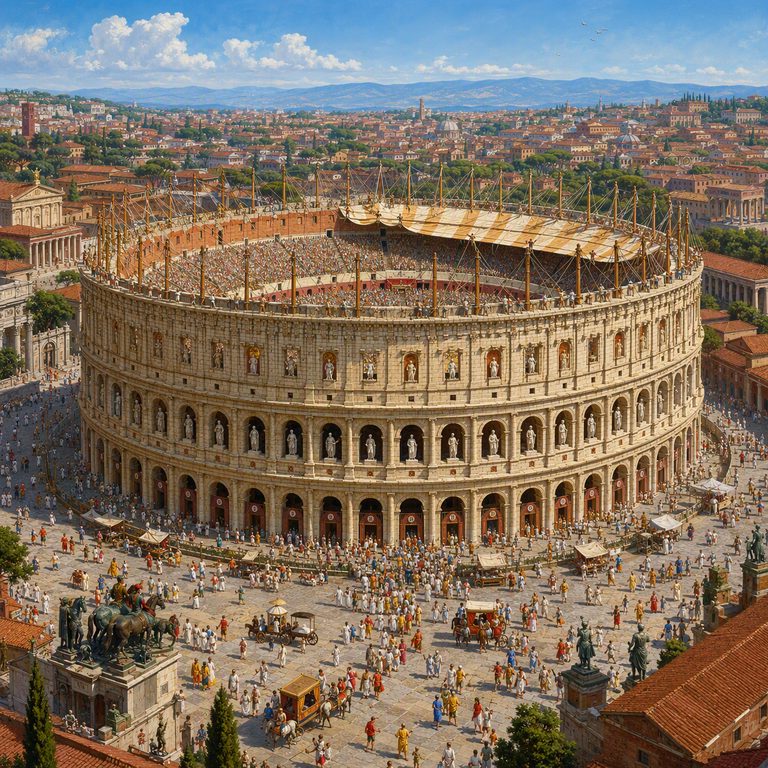
Wide empire converting every new Town into Culture and a free soldier.
Expansion pays twice: each Town adds Culture through its City Center and hands you a free Infantry Unit, so settling wide builds your civic engine and your army at no Production cost. Found Towns aggressively, keep Districts dense in the Capital, and let the free Legions garrison the frontier you just claimed.
Twelve Tables
+1 Culture on Districts in the Capital and on City Centers in Towns • A free Infantry Unit in every new Town you found • +30% Production toward the Colosseum
Rome uniques
Colosseum
Adds Culture, and Happiness to every Quarter in its City. It rewards a dense, built-up capital rather than a sprawling one — put it where you already have Quarters standing, not where you plan to build them later. Must sit adjacent to a District.
Forum · Basilica + Temple of Jupiter
Culture for every Tradition slotted in your Government, so it grows as your Government fills out rather than paying flat. Basilica adds Influence with Gold adjacency for Culture Buildings and Wonders; Temple of Jupiter adds Happiness.
Legion
Melee 25 · Move 2 · Sight 2 · Cost 60 · Maint 1. Gains Combat Strength for every Roman Tradition slotted in your Government, so your civics choices arm the army directly — a late Legion outclasses what its tier suggests.
Legatus
Move 2 · Sight 2 · Cost 100. A Commander that can earn the ability to found a new Settlement once it has taken enough Promotions. Fight with it deliberately and it becomes an expansion tool as well as an army.
Italy · The Mediterranean World
A peninsula at the centre of an inland sea, with roads out in every direction — which is why Rome plays for Traditions, expansion and staying power.
The Twelve Tables put law in public view, and the roads and colonies that followed the legions turned conquest into durable civic culture. Twelve Tables pays Culture from Districts and Town centers for exactly that reason – Rome exported civic life, not just soldiers.
Recommended leaders
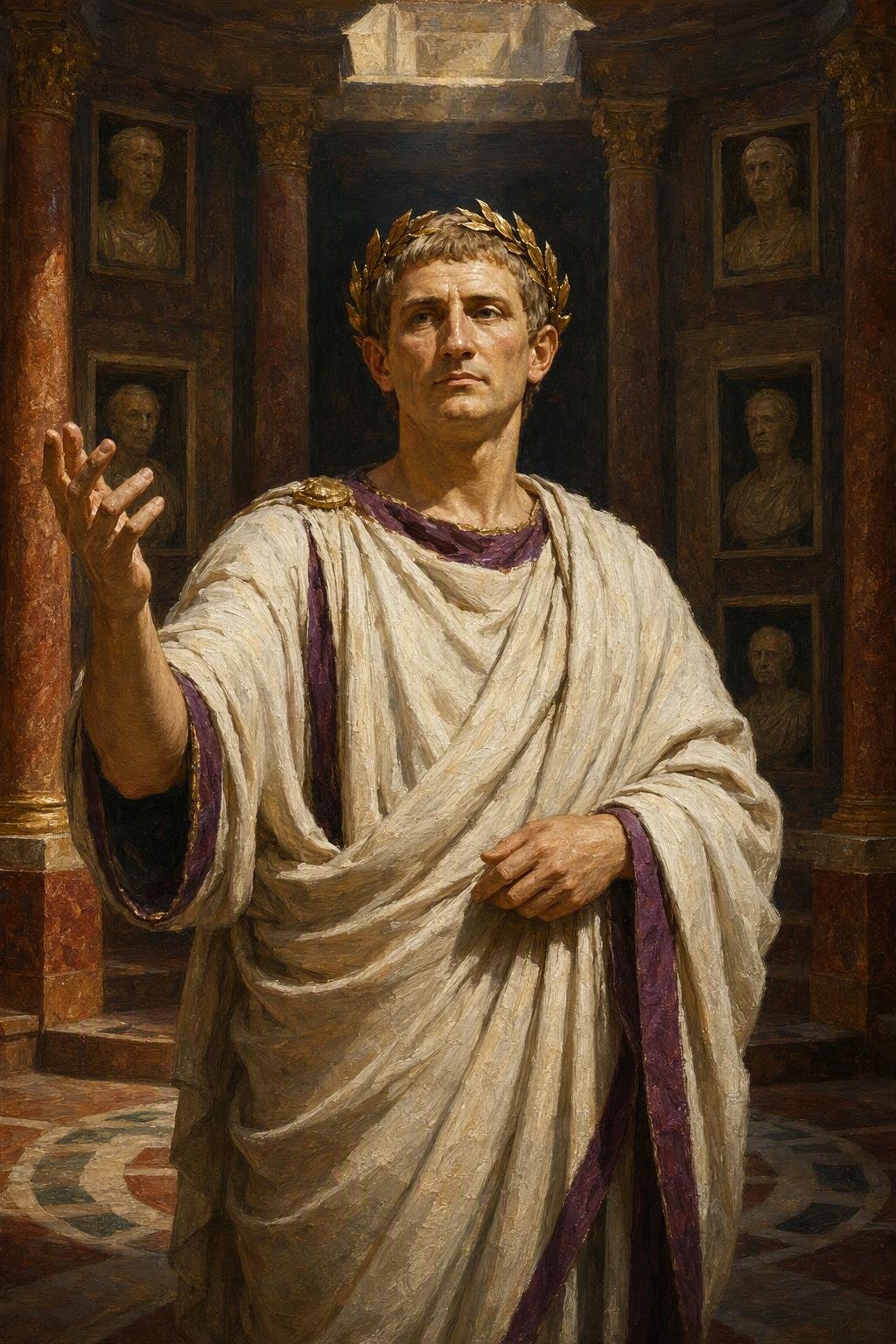
Augustus
Cultural alignment
Towns are not a lesser settlement – they are the point.
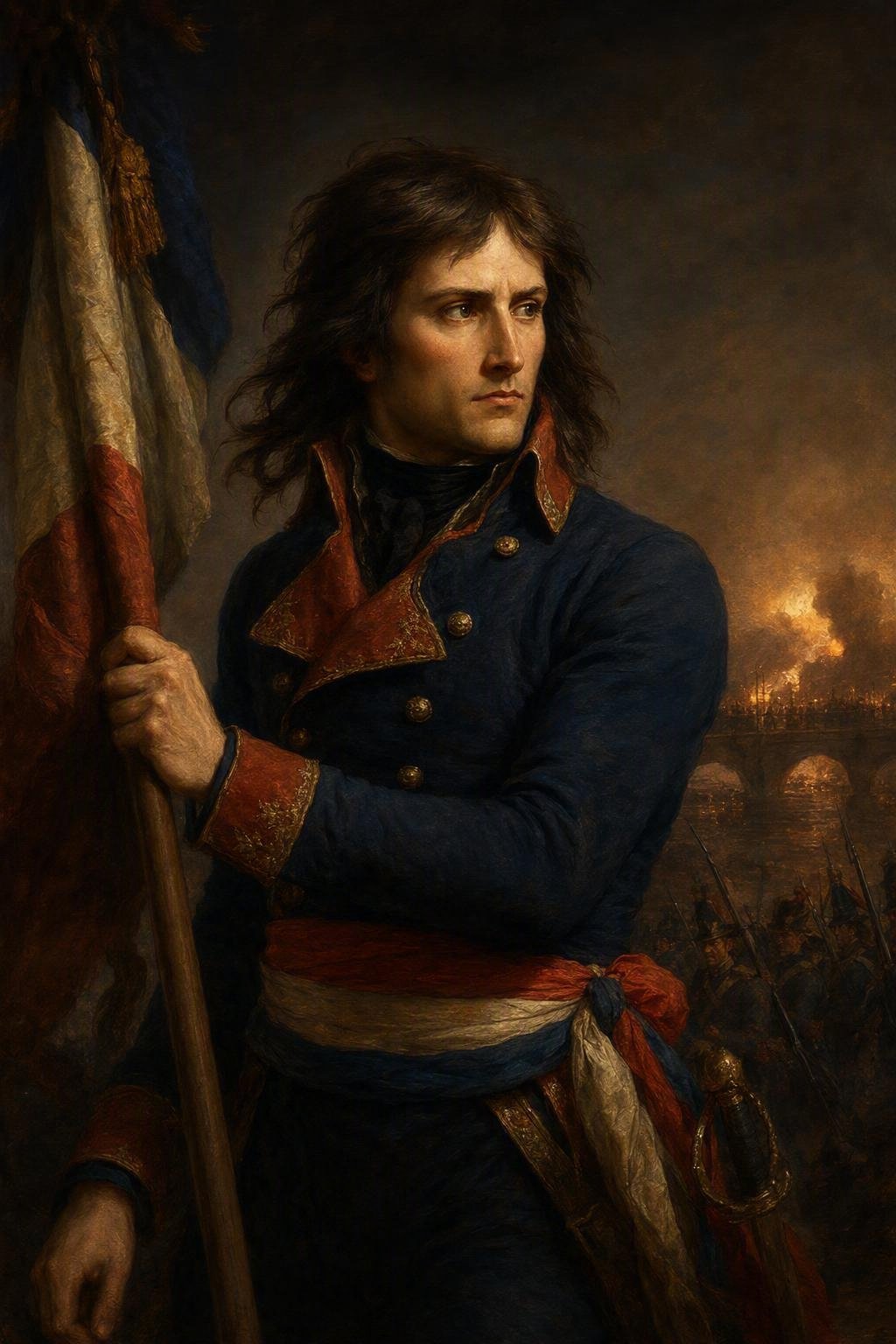
Napoleon (Revolutionary)
Militaristic + Cultural alignment
Speed and momentum.
SillaAlliances that hand both partners a permanent free Trade Route.Open profileClose profile
Alliances that hand both partners a permanent free Trade Route.
Alliances are infrastructure here. Every one you form is a free Trade Route for both sides that never expires while the Alliance holds, and each trade partner then feeds Influence back to you – so ally early, ally widely, and protect those relationships rather than trading them away.
Maripgan
Forming an Alliance gives both leaders a free Trade Route from the other's Capital, lasting as long as the Alliance does • +1 Influence for each civilization you hold at least one Trade Route with • +30% Production toward the Emile Bell
Silla uniques
Emile Bell
Grants the Ginseng Agreement, a unique Diplomatic Endeavor that feeds both leaders' Capitals, plus a Diplomatic Attribute Point. It is a diplomacy play rather than a yield play — worth it if you are courting allies. Must be built on Rough Terrain.
Sachal · Lecture Hall + Pagoda
Gold for every Resource slotted in this City, so site it where your Resources concentrate. Lecture Hall adds Culture and raises the Resource Limit on Rough Terrain; Pagoda adds Happiness with Influence adjacency for Mountains.
Hwarang
A Ranged unit with increased Movement and Attack Range that counts as Cavalry, and hits harder on Bombard than the unit it replaces. It outranges and outruns most of what the Age fields against it.
Sangdaedeung
A Merchant that pays Gold whenever you create a Trade Route to another Settlement, scaling with your Relationship Level with that leader. Friendly diplomacy converts directly into trade income.
South-Eastern Korea
A mountain corner of the peninsula that outlasted its rivals by diplomacy as much as war — which is why Silla plays for Gold and good relations.
Silla's hwarang trained young elites in arms, ethics, and the arts together, and the kingdom's alliance-making eventually unified the peninsula. Hwarang-do keeps both threads: alliances that never decay, and a Hwarang who earns Culture by winning fights.
Recommended leaders
Lafayette
Diplomatic alignment
Government-building as a strategy.
José Rizal
Diplomatic alignment
Celebrations, extended and repeated.
TongaCoastal influence that converts suzerainty into free Trade Routes.Open profileClose profile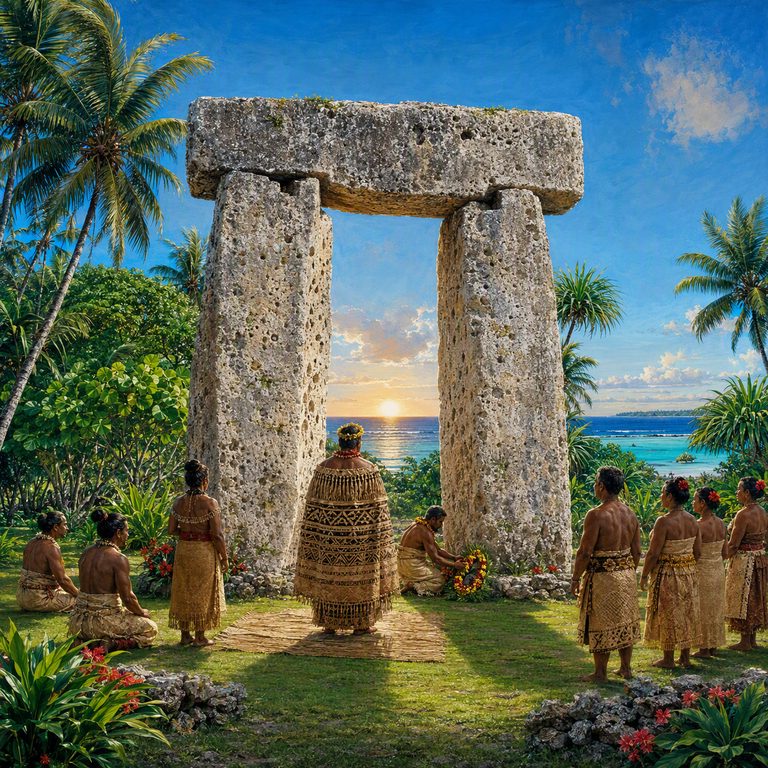
Coastal influence that converts suzerainty into free Trade Routes.
Settle the coastline – every coastal Settlement adds Influence, which buys the suzerainties that pay you free Trade Routes. City-States remain partners rather than expansion targets because you cannot Incorporate them; in Distant Lands, where Levy Unit is also unavailable, plan to defend the network with your own forces. The Tofi'a then converts it into Culture, paying +2 for every Trade Route you run to a City-State – so the routes your suzerainties hand you for free are also your Culture income.
Lords of the South
+1 Influence on the Palace and on City Halls in Settlements adjacent to Coast • A free Trade Route from each new City-State when you become its Suzerain • Cannot use the City-State Incorporate Action or, in Distant Lands, the Levy Unit Action • +30% Production toward Ha'amonga 'a Maui
Tonga uniques
Ha'amonga 'a Maui
Adds Culture, plus Culture and Food on every Fishing Boat in the Settlement, and grants a Cultural Attribute Point. Put it in your best fishing city and it converts a working coast into a culture engine. Must sit adjacent to Coast.
Tofi'a · Langi + Vaikaukau
+2 Culture for every Trade Route you run to a City-State, so it scales with how many you court. Langi adds Culture with Food adjacency for Resources and Wonders; Vaikaukau adds Happiness with Culture adjacency for Coast.
Kalia
A Naval unit with +5 Combat Strength against Fortified Districts. An ocean-going canoe built to crack coastal cities — bring it when the target is a walled port, and leave it home for open-water fights.
Tehina
A Scout that crosses Ocean without taking damage and embarks from the start of the Age, though it cannot disembark in Distant Lands. It can also Coastal Raid adjacent Discoveries, so exploration pays as it goes.
Tonga · Western Polynesia
A scatter of small islands across open ocean, where the sea is the road — which is why Tonga plays for Culture, fishing and unmatched early reach.
The Tuʻi Tonga's authority spread across the western Pacific by canoe, binding distant islands through tribute, marriage, and voyaging rather than occupation. Hence Influence from coastal halls and a free Trade Route on suzerainty – and an Antiquity prohibition on incorporating City-States at all.
Recommended leaders
Isabella
Economic alignment
The map itself is treasure.
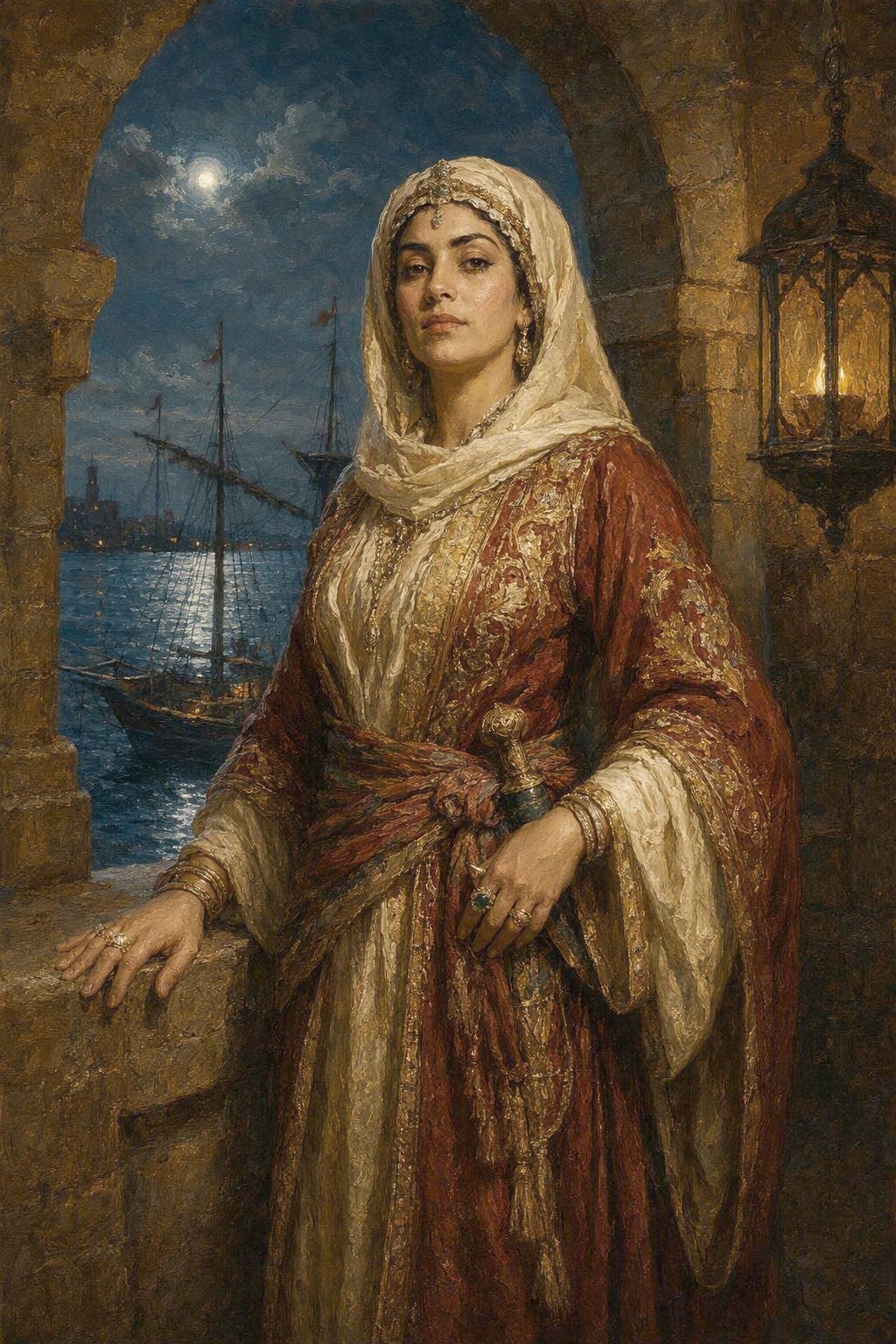
Sayyida al Hurra
Diplomatic alignment
Espionage without consequences – she is immune to Counter Spy, so her operations simply cannot be defended against.
⛵ Exploration Age civilizations
18 civilizations match
AbbasidCreating a Specialist cashes out the City's Rural Population, while mature Specialist Cities build faster.Open profileClose profile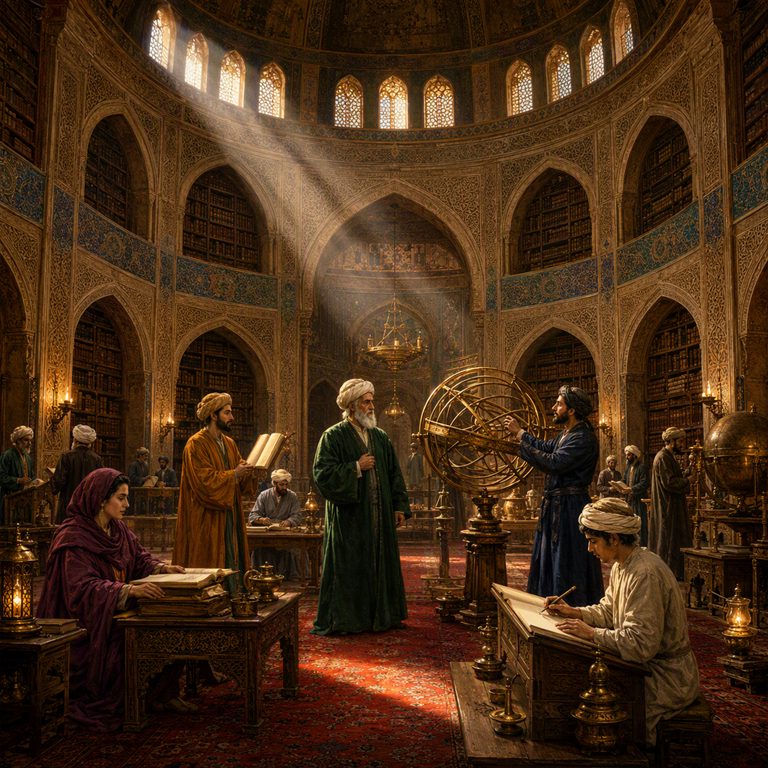
Creating a Specialist cashes out the City's Rural Population, while mature Specialist Cities build faster.
Specialists are income. Every Specialist you create pays 30 Gold for each point of Rural Population in that City, so large cities that keep adding Specialists are worth far more than many small ones – and Cities with five or more also build 20% faster. Invest in Food to support the Specialist slots, then let each new Specialist drop a Gold windfall. The Ulema pays on the same figures twice over, adding +1 Science to every Specialist in its City.
Madina
Receive 30 Gold per Rural Population in the City when you create a Specialist. +20% Building Production in Cities with at least 5 Specialists.
Abbasid uniques
House of Wisdom
+3 Science, a free Relic, +2 Science on every Great Work, three Great Work slots and 3 Innovation. Science and Culture out of a single build, which is why it is widely rated the strongest wonder in the Age. Must sit adjacent to a District.
Ulema · Madrasa + Mosque
+1 Science for every Specialist in this City, so it scales with population you have already grown. Madrasa adds +6 Science; Mosque adds +6 Happiness and unlocks the ability to found a Religion.
Mamluk
Cavalry with the Skirmish ability and +5 Combat Strength when attacking inside your own Towns, or Cities holding at least 5 Specialists. It is a counter-attacker — strongest defending the dense cities Abbasid builds anyway.
'Alim
A Great Person with one charge, trainable only in Cities with an Ulema. The specific 'Alim is random, each can be received only once, and the cost rises with every one trained. Build the Ulema early if you want more than one.
Iraq · Baghdad and the Caliphate
A capital planted where the rivers and the caravan roads met, built to gather knowledge inward — hence Abbasid Science and Specialists. Its Madina ability points the kit toward that same play pattern.
Baghdad's Round City housed the House of Wisdom, where translators and scholars folded Greek, Persian, and Indian learning into a single tradition. Bayt al-Hikma rewards the same density – Science from adjacent quarters, and a Madrasa that converts Gold output directly into research.
Recommended leaders
Benjamin Franklin
Scientific alignment
Diplomacy is his research budget.
Catherine the Great
Scientific alignment
A collector's game.
BulgariaPillaging as an industrial policy – with a real drawback attached.Open profileClose profile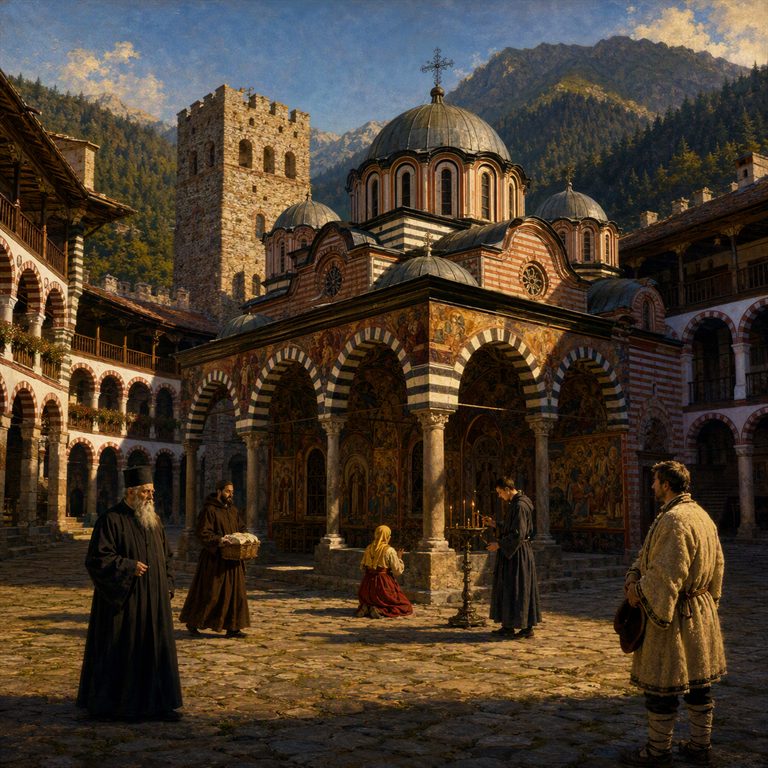
Pillaging as an industrial policy – with a real drawback attached.
Raid the countryside, not the cities. Every Improvement you pillage converts into Production across your entire empire, but the −3 Combat Strength against Fortified Districts means assaulting defended settlements is actively bad for you. Strip a rival's improvements, force them to rebuild, and let your empire industrialize on the proceeds. The Tarkhan makes that raiding relentless – units in its Command Radius pillage for a single Movement point.
Krum's Dynasty
Pillaging Improvements gives Production in all your Cities equal to 50% of the HP or yields gained • −3 Combat Strength for all Military Units against Fortified Districts
Bulgaria uniques
Rila Monastery
A Relic every time you complete a Wonder, this one included, plus three Great Work slots. It only pays if you keep building wonders afterwards — as a last wonder it is nearly wasted, as an early one it compounds.
Hidden Fortress
+4 Production and +2 Culture per adjacent Mountain, and units standing on it gain Stealth. It counts as a Fortification, giving +6 Combat Strength to defenders. Rough Terrain only, never beside another Hidden Fortress.
Bolyar
Cavalry that ignores Rough Terrain movement costs and enemy Zone of Control entirely, with +3 Combat Strength while fighting on Rough. In the mountains it moves as if the map were flat and nothing can pin it.
Tarkhan
An Army Commander with 3 Movement whose units can Pillage for a single Movement point while inside its Command Radius. A raiding stack under a Tarkhan strips a countryside far faster than it should be able to.
Bulgaria · The Balkan Range
Mountain passes between empires, where raiding paid better than holding ground — hence Bulgaria's Production from pillage. Its Krum's Dynasty ability points the kit toward that same play pattern.
The Bulgarian tsars claimed imperial title in their own right, and their cavalry made them a power Byzantium had to negotiate with rather than absorb. Tsardom converts military success into Influence – exactly the leverage that made the claim stick.
Recommended leaders
Charlemagne
Militaristic alignment
Cavalry and cathedrals at once.
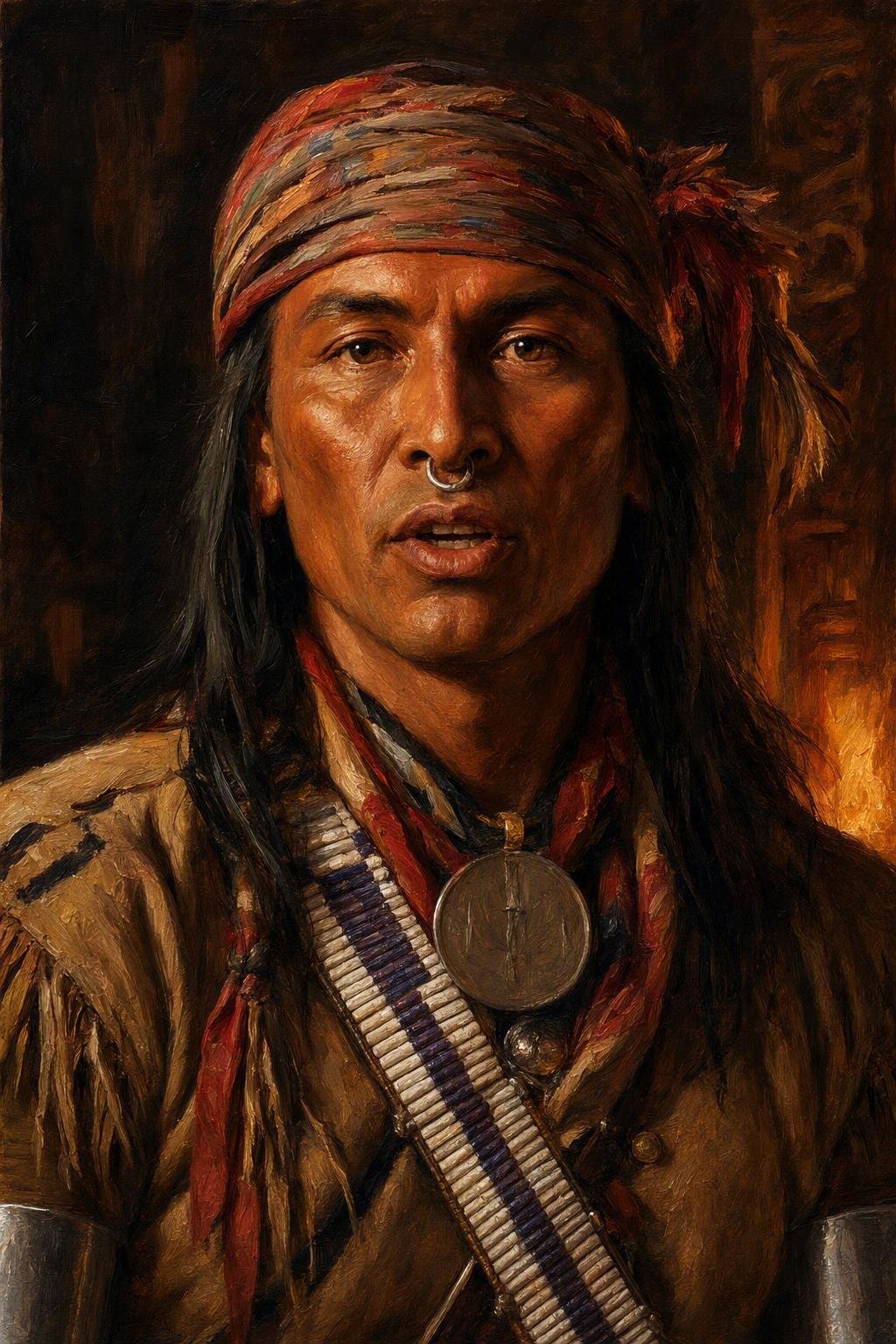
Tecumseh
Militaristic alignment
Diplomacy is military power.
CholaTrade Routes pay Gold and Influence, while imported Resources add another Gold stream.Open profileClose profile
Trade Routes pay Gold and Influence, while imported Resources add another Gold stream.
Every route is worth double – +3 Gold and +2 Influence – so the Improve Trade Relations Treaty is your single best purchase, since it both raises your route limit and grants an extra route outright. Imported Resources assigned to Cities pay a further +1 Gold each. The Five Hundred Lords then extends how far those routes reach, adding +5 Land and +15 Naval Trade Range – which on a water map opens partners no rival can reach. See Diplomacy, Influence & Trade.
Samayam
+1 Trade Route from Improve Trade Relations • +3 Gold and +2 Influence per active Trade Route • +1 Merchant Movement • +1 Gold per imported Resource assigned to Cities.
Chola uniques
Brihadeeswarar Temple
+3 Influence, and every Building in the Settlement gains a Happiness adjacency for Navigable Rivers. On a river city that is a settlement-wide Happiness swing rather than a single-tile bonus — site it accordingly.
Five Hundred Lords · Manigramam + Anjuvannam
+5 Land and +15 Naval Trade Range, which puts distant markets inside reach. Manigramam adds +6 Happiness; Anjuvannam adds +6 Gold and +50% Production toward Naval Units. Both must be placed adjacent to Coast.
Kalam
Heavy Naval that can attack an additional time each turn when it has Movement left, at the cost of reduced base Movement. Park it where the targets come to you and the extra attack more than covers the lost mobility.
Ottru
A Fleet Commander with +1 Movement and extended Sight that strips 3 Combat Strength from every enemy Military Unit inside its Command Radius. It weakens the opposing fleet before a shot is fired.
Tamil Nadu · The Coromandel Coast
A coast facing the Indian Ocean trade, with merchant guilds reaching Sumatra and China — hence Chola's Gold and Influence per Trade Route. Its Samayam ability points the kit toward that same play pattern.
The Cholas projected naval power across the Bay of Bengal to Srivijaya, and their merchant guilds – the Manigramam and Anjuvannam among them – operated as chartered trading corporations. Kadal Athi turns treaties into infrastructure: every Trade Agreement grants another Trade Route.
Recommended leaders
Machiavelli
Diplomatic + Economic alignment
Influence as a hard currency.
Edward Teach
Economic alignment
You are at war with every non-Allied civilization and formally at war with none.
Dai VietFortifications that pay Culture by the population they protect.Open profileClose profile
Fortifications that pay Culture by the population they protect.
Grow a settlement large first, then build its Fortifications – the Culture payout scales with Urban Population at the moment of construction, so the same wall is worth several times more in a developed city than a new one. Tropical terrain adds Culture and Food on top.
Hịch Tướng Sĩ
Creating a Fortification Building or Wonder grants 15 Culture per Urban Population in that Settlement • +1 Culture and Food on Fortification Constructables in Tropical terrain
Dai Viet uniques
Thành Huế
Adds Culture and stands as a Fortified District an enemy has to take. Cities holding enough Fortifications gain Specialist Limit, so the walls pay yields as well as protection. Must be built beside Medieval Walls in a well-walled City.
Water Puppet Theater
Adds Food, more Happiness on Floodplains, and Culture each time this Settlement gains Fertility from a Flood, Storm or Volcano. Nothing here is pillaged by Floods. It turns the monsoon from a threat into an income stream.
Voi Chiến
A Ranged unit that can move after attacking, with more Combat Strength, Movement and Sight than the unit it replaces — and a matching increase in cost. Hit and withdraw before the counter-attack lands.
Quận Vương
A Settler that pays Culture for every Tropical tile around the City Center it founds. It rewards settling the jungle rather than clearing it, which inverts the usual instinct about where a good city site sits.
Vietnam · The Red River Delta
A monsoon delta between mountains and sea, flooding yearly and defended in depth — hence Dai Viet's Culture from tropical land and flood-proof works. Its Hịch Tướng Sĩ ability points the kit toward that same play pattern.
Trần Hưng Đạo's Hịch Tướng Sĩ rallied a fortified nation to throw back three Mongol invasions, and its water puppet theater grew out of the same flooded fields it defended. Hence Culture earned by building Fortifications, and a Water Puppet Theater that pays for every flood survived.
Recommended leaders
Trung Trac
Commanders arrive for free and stay ahead: obtaining your first Land Military Unit brings Trung Nhi into play, a unique Commander with her own promotion tree who persists across Age…
José Rizal
Cultural alignment
Celebrations, extended and repeated.
EnglandGold and Culture cross-pollinate, doubled on Islands and in Distant Lands.Open profileClose profile
Gold and Culture cross-pollinate, doubled on Islands and in Distant Lands.
England's own territory counts as an Island for its own ability, so its home Cities already qualify for the doubled bonus – build Gold and Culture Buildings side by side rather than choosing one economy. The Merchant Adventurer pays 50 Influence for a Homelands Trade Route or 50 Gold per imported Resource for a Distant Lands one, so route it to whichever yield you are short on. The Abbey rewards a well-spread Religion: its Chapter House pays Culture per Town following it, and its Chapel banks two Great Work slots for free.
Magna Carta
+4 Culture on Gold Buildings • +4 Gold on Culture Buildings • both doubled in Settlements on Islands or in Distant Lands • Towns on Islands may purchase Gold Buildings regardless of Town Focus • +30% Production toward the Globe Theatre
England uniques
Globe Theatre
England's ability grants +30% Production toward the Globe Theatre, making it the natural Wonder project for a strong island City already converting Gold Buildings into Culture. Start it where the doubled island yields can support the build without stalling overseas expansion.
Abbey · Chapter House + Chapel
Chapter House adds +2 Culture per Town following your Religion; Chapel carries two Great Work slots and no Maintenance at all. Best raised once your Religion has spread widely, so the Culture side of the pairing is already earning before the Great Work slots fill.
Longbow
England's unique ranged unit belongs behind a defended line, where it can pressure attackers without surrendering the spacing that keeps archers alive. Use Fortifications, rough ground, or screening troops to hold enemies in place while the Longbow works from safety.
Merchant Adventurer
Grants 50 Influence for completing a Homelands Trade Route, or 50 Gold per imported Resource for completing one to Distant Lands. Route it toward Distant Lands once you need Gold, and toward Homelands when Influence is the scarcer yield.
England · The British Isles
An island set apart from the mainland by open water, with every scrap of coastline counted — the geography Magna Carta was written for, since England's own territory qualifies for the doubled Island bonus.
Magna Carta bound the Crown's power to written law in 1215, and centuries later England's wealth ran on the same two tracks the ability models – a wool-and-cloth Gold economy and a Culture the rest of Europe imported wholesale, from playwrights to printed books. Its founding condition, a City on an Island, is simply where that history happened.
Recommended leaders
Elizabeth I
Cultural + Economic alignment
The map stops limiting your trade.
Catherine the Great
Cultural alignment
A collector's game.
Machiavelli
Economic alignment
Influence as a hard currency.
GoryeoDiplomacy and unique improvements, both paying Culture.Open profileClose profile
Diplomacy and unique improvements, both paying Culture.
Run Endeavors continuously and blanket the map with Gama improvements. Placement decides the early payoff: Town improvements favor Culture, while City improvements favor Influence; in Modern, all of them add Tourism.
Byeongjo
Increased Culture from active Endeavors you started or supported • increased Culture on Unique Improvements in Towns • increased Influence on Unique Improvements in Cities • in Modern, increased Tourism from all Unique Improvements
Goryeo uniques
Buseoksa
Adds Happiness, and nearby Joyous or Ecstatic Settlements gain Influence — and Gold, at Ecstatic — on their Unique Improvements. It rewards an empire you were already keeping happy. Must be built on Tropical or Grassland beside a Mountain.
Gama
Adds Culture, and Production for each adjacent Warehouse Building. Vegetated Terrain only. The Warehouse adjacency is the part worth planning around — site it against your storage cluster, not off in the woods alone.
Hwacha
A Siege unit dealing Splash damage as a percentage of the damage it does to its target. The harder it hits, the more everything adjacent suffers — so aim it at the strongest defender in a cluster, not the weakest.
Tobang
Cavalry with extra Combat Strength while stationed in or occupying a District, and Influence for every City Center holding one. Goryeo's second military unique, built to garrison ground rather than to campaign across it.
Korea · The Goryeo Kingdom
A peninsula holding off larger neighbours by fortification and gunpowder invention — hence Goryeo's siege engines and district defence. Its Byeongjo ability points the kit toward that same play pattern.
Goryeo carved the entire Buddhist canon into more than 80,000 woodblocks, developed metal movable type, and produced celadon fine enough for Chinese courts to collect. Byeongjo rewards the same patience: Unique Improvements built early keep paying, and by the Modern Age they generate Tourism.
Recommended leaders
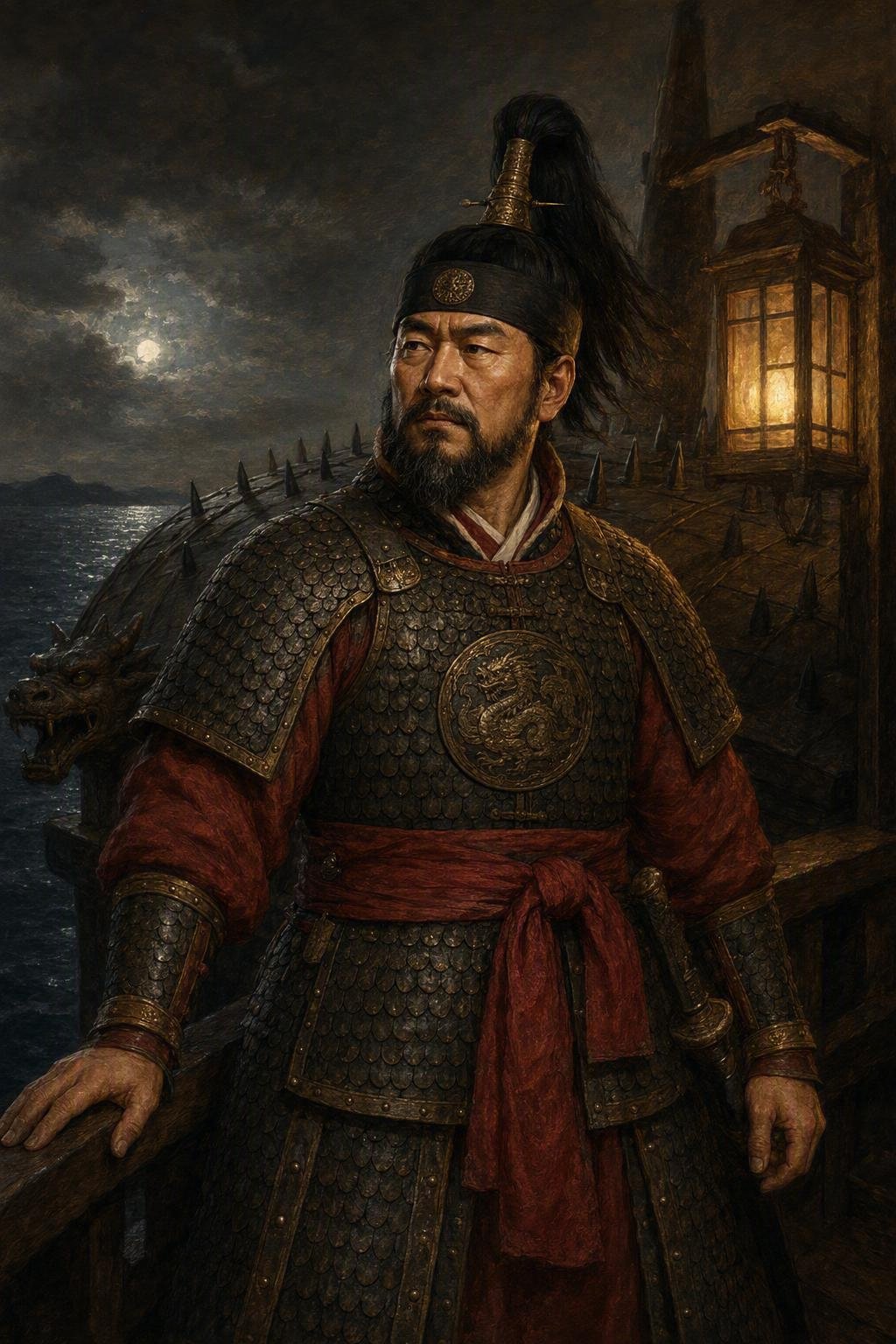
Yi Sun-sin
A navy that funds a laboratory.
Confucius
Growth compounds into research.
Ashoka (Renouncer)
Diplomatic alignment
The mirror image: surplus Happiness becomes Food rather than Production, and Celebrations accelerate growth.
Hawai'iMarine tiles become workable Happiness-and-Culture terrain.Open profileClose profile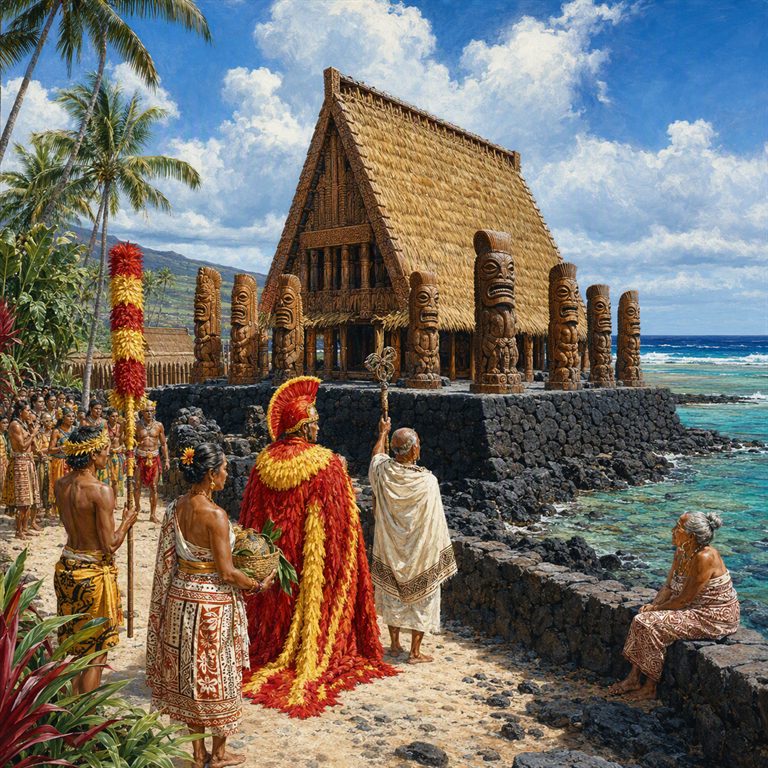
Marine tiles become workable Happiness-and-Culture terrain.
Working Ocean tiles changes what counts as a good settlement site: water that is dead space for everyone else is productive land for you, and every Marine tile also pays Culture. Settle small islands and narrow coasts that rivals skip, and let the sheer number of workable water tiles carry a Cultural victory.
Moananuiakea
Can work Ocean tiles • all Marine terrain gains +1 Happiness and +2 Culture.
Hawai'i uniques
Hale o Keawe
Adds Culture, more Culture on Water Buildings, and several Relic slots. Display capacity is the real constraint on a Culture game, so the slots often matter more than the yield. Must sit on Coast adjacent to land, never beside Tundra.
Lo'i Kalo
Adds Food and Production, plus Culture from adjacent Fishing Boats. Grassland and Tropical Biomes only. It is designed to sit where the taro terraces meet the water, so plan it alongside your fishing tiles rather than inland.
Leiomano
Heavy Infantry with extra Combat Strength against Infantry and Cavalry, and more again when defending against Naval Units. It is built to hold a shoreline against a landing rather than to go anywhere itself.
Kahuna
A Missionary requiring a Temple, with a Heal action that does not consume the unit, and Gold whenever it converts a Settlement. It spreads religion and keeps an army standing at once, which no standard missionary manages.
Hawai'i · The Central Pacific
Volcanic islands a thousand miles from anywhere, ringed by reef and deep ocean — which is why Hawai'i alone can work Ocean tiles. Its Moananuiakea ability points the kit toward that same play pattern.
Polynesian navigators crossed thousands of miles of open ocean by star, swell, and bird, settling the most remote archipelago on Earth and holding it as a connected culture. Moananuiākea pays Culture for ocean navigation and island settlement – distance treated as an achievement rather than an obstacle.
Recommended leaders
José Rizal
Cultural alignment
Celebrations, extended and repeated.
Catherine the Great
Cultural alignment
A collector's game.
IcelandDistant-Lands discovery pays Culture in bulk, while Civic Masteries turn into Relics.Open profileClose profile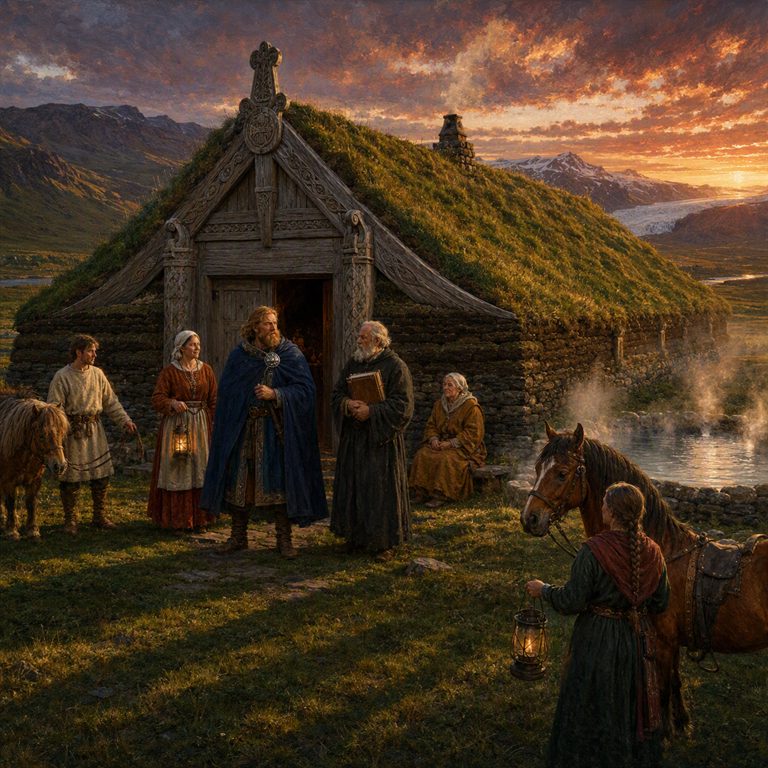
Distant-Lands discovery pays Culture in bulk, while Civic Masteries turn into Relics.
500 Culture per Natural Wonder is an enormous lump sum, but only for discoveries in Distant Lands – so this is not coastal scouting, it is deliberate long-range exploration, and it is your primary Culture income. Push Naval Units outward early with their extra Sight. Then improve what you found: the Víkingr gains +1 Combat Strength for every improved Natural Wonder in your empire, so the same discoveries that funded your Culture quietly build the strongest navy on the map.
Kringla Heimsins
+1 Naval sight • Gain 500 Culture for discovering a Natural Wonder in Distant Lands • Gain a Relic for every Civic Mastery • Missionaries train 50% slower and cost 100% more Gold.
Iceland uniques
Reykjaholt
Production toward Military Units scaling with the number of Great Works you hold, plus three Great Work slots to hold them in. An unusual bridge between a culture game and a war machine — the art you collect builds the fleet.
Þingstaðr
+4 Happiness, with +1 Culture adjacency for Wet, Floodplains, Volcano and Vegetated tiles. Tundra or Grassland only, never beside another. The adjacency list rewards exactly the awkward terrain Iceland tends to settle.
Víkingr
Heavy Naval with 3 Sight that gains +1 Combat Strength for every improved Natural Wonder in your empire, and returns Science equal to 25% of what it pillages. Raiding funds your research directly.
Saga Hero
A Great Person with one charge, trainable only in Settlements with a Þingstaðr. The specific Saga Hero is random, each arrives only once, and the cost climbs per Saga Hero trained — your Happiness improvement gates your Great People.
Iceland · The North Atlantic
A volcanic island at the edge of the known world, reached only by sea — hence Iceland's Naval Sight and Culture from discovery. Its Kringla Heimsins ability points the kit toward that same play pattern.
Icelanders founded the Althing at Þingvellir in 930, reached Vinland before any other Europeans, and wrote the sagas that preserved both feats. Kringla Heimsins pays Culture for discovery and exploration, and the Saga Hero turns the record itself into a Great Person.
Recommended leaders
Lafayette
Cultural alignment
Government-building as a strategy.
Ashoka (Renouncer)
The mirror image: surplus Happiness becomes Food rather than Production, and Celebrations accelerate growth.
IncaMountains become workable Food-and-Production tiles and can launch Homelands Treasure Convoys.Open profileClose profile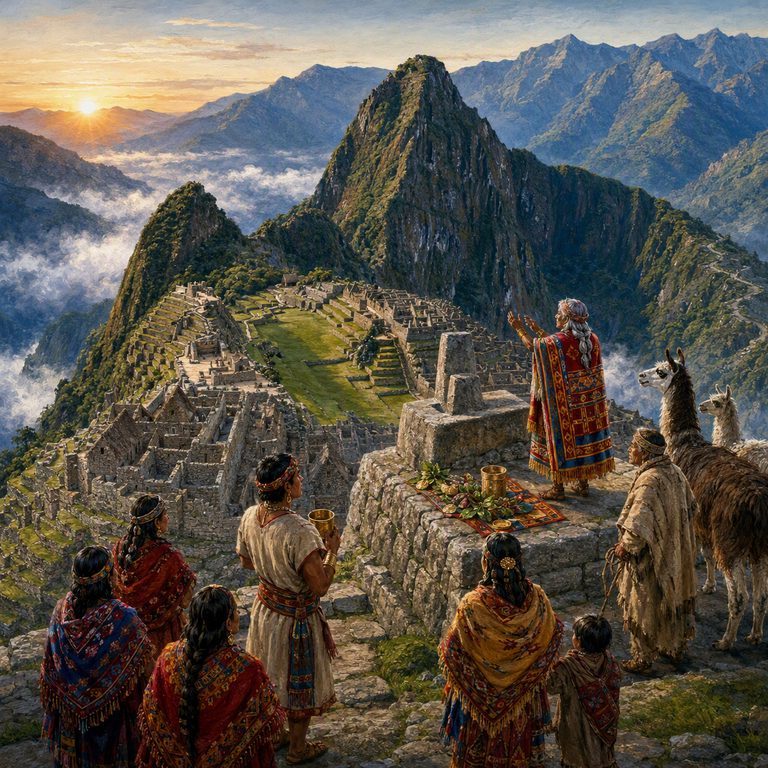
Mountains become workable Food-and-Production tiles and can launch Homelands Treasure Convoys.
Settle the ranges everyone else routes around. Mountains are dead tiles for every rival and productive land for you – +2 Food and +1 Production apiece – so highland sites that look unplayable are your best real estate. The Terrace Farm compounds it, paying +4 Food on Rough Terrain and +1 Gold to every adjacent Building, and once you finish Qhapaq Ñan a City working three Mountains starts generating Treasure Convoys.
Apus
Can work Mountains • Mountains gain +2 Food and +1 Production • Cities with 3 worked Mountains can generate Homelands Treasure Convoys after Qhapaq Ñan.
Inca uniques
Machu Pikchu
+4 Gold, and every Building in the Settlement gains Culture and Gold adjacency from Mountains. In the high country Inca settles, that turns otherwise dead terrain into the best adjacency on the map.
Terrace Farm
+4 Food, and +1 Gold to every adjacent Building. Must be placed on Rough Terrain without a River or Feature. It makes mountainsides productive, which is the whole reason Inca can settle where others cannot.
Warak'aq
Ranged with +1 Movement, and Rough Terrain does not end its Movement. +5 Combat Strength when attacking from Rough. It fights downhill from ground the enemy cannot cross at speed, which in mountain country is most of the map.
Chasqui
A Scout with +1 Movement whose Sight ignores Mountains and Rough Terrain entirely. It sees over the ridgelines that block everyone else, which makes early exploration in broken country far cheaper than it should be.
Peru · The Andean Cordillera
An empire built along the spine of the Andes, where the mountains were the road — which is why the Inca alone can work Mountain terrain. Its Apus ability points the kit toward that same play pattern.
Terraced mountainsides fed the empire, the Qhapaq Ñan road network bound it together, and chasqui relay runners carried messages across the Andes at remarkable speed. Apus makes Mountains workable outright, and both the Chasqui and the Qhapaq Ñan appear by name.
Recommended leaders
Pachacuti
Economic + Expansionist alignment
Mountains become farmland.
Confucius
Expansionist alignment
Growth compounds into research.
MajapahitCoastal Specialists – but only while you stay Majapahit.Open profileClose profile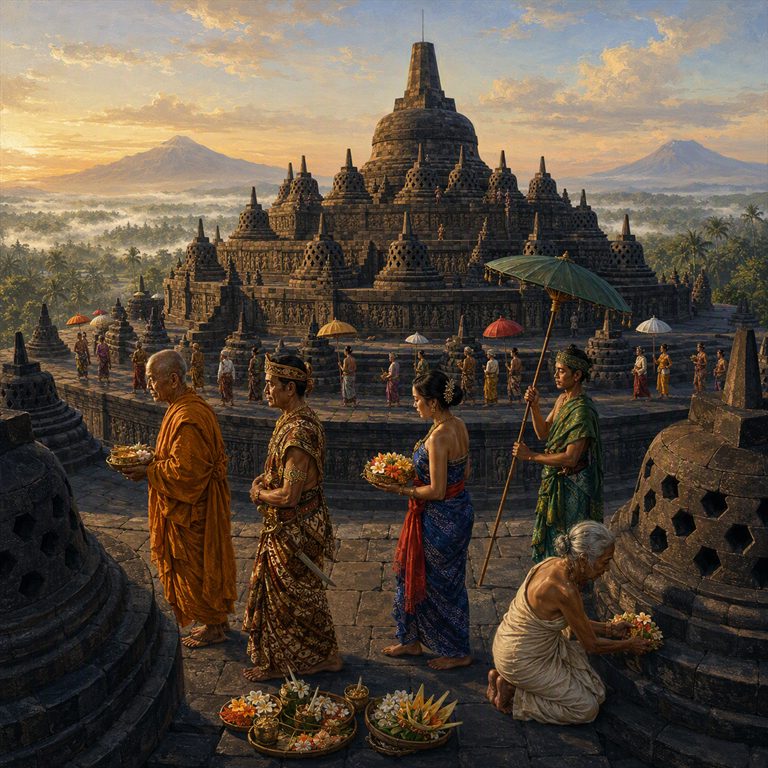
Coastal Specialists – but only while you stay Majapahit.
Build Culture Buildings along the shoreline for the Coastal adjacency and stack Specialists into coastal Districts. The transition penalty is the important part: this is one of the strongest Time-Tested cases in the game, because leaving Majapahit switches off the Specialists you built the empire around. See Playing Time-Tested.
Negara
Culture Buildings gain an adjacency for Coastal Terrain • +1 Specialist Limit in Districts on or adjacent to Coastal Terrain • ⚠️ If you transition away from Majapahit the Specialist Limit increase is lost, and Specialists over the limit go inactive
Majapahit uniques
Borobudur
+3 Happiness, plus Food and Happiness on every Quarter. Widely rated the best wonder in the Age for keeping a Specialist-heavy empire fed and content, which is exactly what Majapahit wants. Must sit adjacent to Coast.
Pura · Meru + Candi Bentar
+10% Gold toward converting a Town to a City, and a free Relic on completion. Meru adds +6 Happiness, +2 more on Natural Wonders; Candi Bentar adds +6 Culture with adjacency for Coast and Navigable Rivers.
Cetbang
Heavy Naval with +5 Combat Strength against Naval Units, and it can Coastal Raid from two tiles away for a single Movement. A bronze cannon that raids the coast without ever closing to the shore.
Pedanda
A Missionary with the Spread Religion action that pays 25 Culture and 25 Gold the first time it converts each Settlement. Spreading wide is worth more than reinforcing ground you hold, since the bonus fires only once per city.
Indonesia · Java and the Nusantara
A thousand islands strung along shipping lanes, where every city faced the water — hence Majapahit's coastal Culture and Specialists. Its Negara ability points the kit toward that same play pattern.
At its height Majapahit claimed influence across the Nusantara archipelago, its wealth resting on maritime trade and its temples on split gateways framing the mountains beyond. Negara grants extra Specialist Limit everywhere except the Capital – a thalassocracy of many ports rather than one center.
Recommended leaders
Hatshepsut
Cultural alignment
Resources and rivers.
Machiavelli
Influence as a hard currency.
Ming ChinaA huge Capital Science multiplier is checked by a severe per-policy Science penalty.Open profileClose profile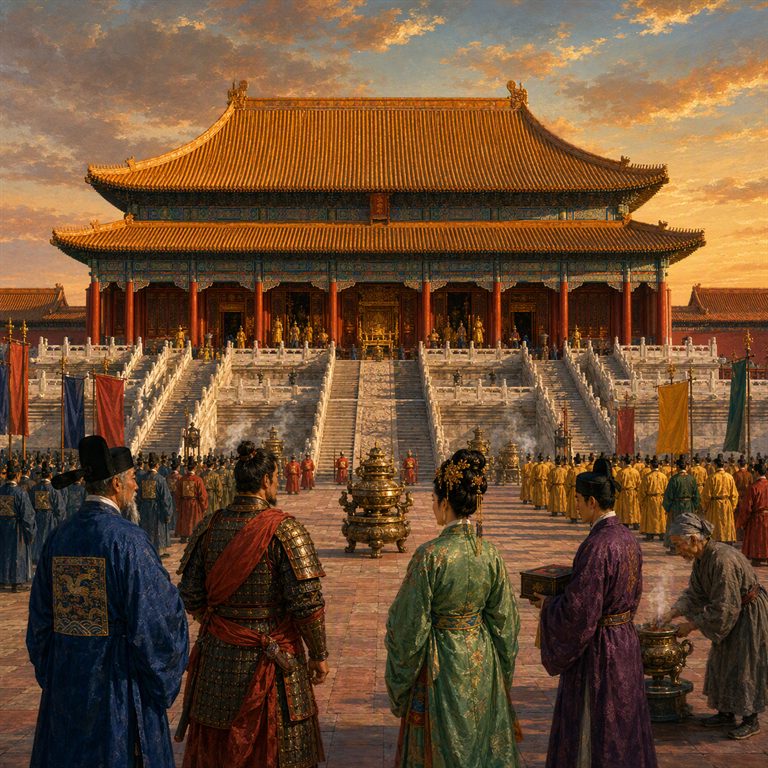
A huge Capital Science multiplier is checked by a severe per-policy Science penalty.
Concentrate Science in the Capital, where the +50% multiplier lives. Fill the Government with Traditions rather than Social Policies whenever possible: each Social Policy costs a punishing 15 Science per turn, while Traditions are exempt and receive an extra slot.
Great Canon of Yongle
+50% Science in the Capital • −15 Science per Social Policy slotted, excluding Traditions • +1 Tradition slot.
Ming China uniques
Forbidden City
+4 Culture, with yields and Tourism on every Fortification in the Settlement. It rewards the walls Ming was already going to build, so it slots into a defensive game rather than asking you to change plans. Must sit adjacent to a District.
Ming Great Wall
+5 Culture, +1 Gold adjacency for Fortifications, +1 Tourism, and +6 Combat Strength defending as a Fortification. Each segment lays a Road and must run in an unbroken line without branching or forking.
Xunleichong
Infantry with a Ranged attack and +4 Combat Strength on Featureless tiles. It wants open ground where the terrain gives nobody cover — on plains it fights like artillery, in forest it is ordinary.
Maritime Envoy
A Merchant that imports Resources, pays the target player +100 Culture on a naval Trade Route, and spawns you a Treasure Convoy worth 1 Cargo near their border — doubled in value if they sit in Distant Lands.
China · The Ming Heartland
A vast inward-facing empire that concentrated everything on its capital — hence Ming's enormous Capital Science and its distaste for Social Policies. Its Great Canon of Yongle ability points the kit toward that same play pattern.
The Yongle Emperor commissioned an encyclopedia of everything then known, rebuilt the Great Wall in brick, and sent treasure fleets across the Indian Ocean. Great Canon of Yongle turns that concentration of knowledge into a Capital Science multiplier, while its extra Tradition slot favors inherited institutions over a crowded policy state.
Recommended leaders
Confucius
Scientific alignment
Growth compounds into research.
Benjamin Franklin
Scientific alignment
Diplomacy is his research budget.
MongoliaConquest replaces settling entirely – each captured city hands you cavalry.Open profileClose profile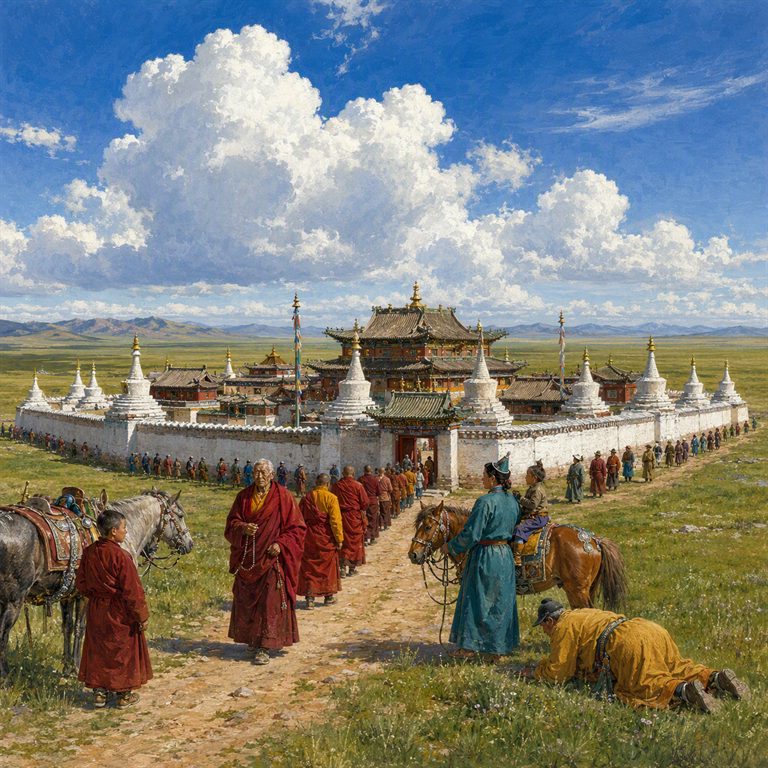
Conquest replaces settling entirely – each captured city hands you cavalry.
The Settler penalty is not a drawback to work around – it is an instruction. Mongolia expands by taking cities, and every capture refills your army with free cavalry, so conquest funds the next conquest. Build Örtöö networks so armies redeploy across the map at speed, and never plan a peaceful expansion phase.
Bokh
Capturing an opposing Settlement grants the strongest Cavalry Unit you can currently train • −50% Production toward training Settlers • Chariots unlock with Agriculture
Mongolia uniques
Erdene Zuu
Culture for every Cavalry Unit you train. It only pays if you are actually building cavalry in volume, which Mongolia usually is — but it is dead weight in a peaceful game, so commit to the horse or skip it entirely.
Örtöö
+5 Gold, and it restores Movement to any of your Units standing on it. Cannot be placed on Rough, River or Featured tiles. Chain them along an invasion route and an army crosses the map at a speed nobody can match.
Keshig
Ranged with +1 Movement that heals 15 HP after defeating an enemy Unit, and counts as Cavalry for anything that cares. It sustains itself on a long push instead of retiring to heal, which keeps a Mongol army in the field.
Noyan
An Army Commander with extra Movement that can move after attacking, granting +50% Flanking Combat Strength to Cavalry inside its Command Radius. Surround with horse under a Noyan and the flanking maths turns brutal.
Mongolia · The Eastern Steppe
Open grassland where distance was covered on horseback and cities were taken rather than founded — hence Mongolia's free Cavalry and Settler penalty. Its Bokh ability points the kit toward that same play pattern.
The yam relay network let riders cross the empire at speed by swapping horses at fixed stations, turning the steppe itself into infrastructure. The Ortöö improvement is that relay: it resets any unit's Movement on contact, so a network of them makes distance nearly free.
Recommended leaders
Alexander
Militaristic alignment
Wonders build the empire, and they should sit anywhere except your Capital.
Charlemagne
Militaristic alignment
Cavalry and cathedrals at once.
NormanCoastal fortress warfare – the shoreline is the strong point, not the weak one.Open profileClose profile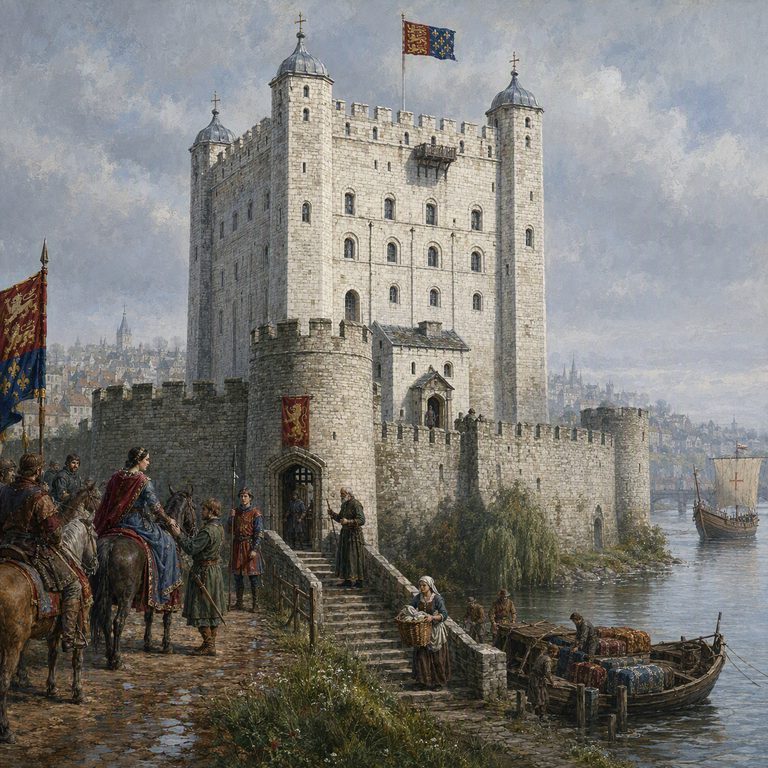
Coastal fortress warfare – the shoreline is the strong point, not the weak one.
This inverts the usual rule that coastlines are vulnerable. Fortify coastal settlements and fight your battles there, where units and districts both gain +5 Combat Strength – inland engagements give that up entirely. Build Walls early, since they are both the unlock requirement and the payoff.
Normannitas
+5 Combat Strength for Land Units and Fortified Districts adjacent to Coast • +25 HP on Fortified Districts
Norman uniques
White Tower
+4 Happiness for every Tradition slotted in your Government. It scales with how full your Government is rather than with your land, so it is worth more late in an Age than early — time the build accordingly.
Donjon · Bailey + Motte
+10% Production toward Cavalry and a free Chevaler on completion. Bailey adds +6 Culture; Motte adds +6 Happiness, +4 more on Rough Terrain. Both turn the District into a Fortified District with 100 extra HP.
Chevaler
Cavalry with +3 Combat Strength against any slower Unit. That covers most infantry and siege in the Age, so pick your fights by speed rather than by strength and it wins engagements that look evenly matched.
Sokeman
A Settler whose founded Towns come with Medieval Walls already standing in the City Center. Forward settlements start defensible instead of spending their first twenty turns hoping nobody notices them.
Normandy · And the Lands They Took
Restless conquerors who held new coasts with stone castles rather than numbers — hence Norman strength on Fortified Districts near Coast. Its Normannitas ability points the kit toward that same play pattern.
Within a few generations the Normans took England, Sicily, and southern Italy – and everywhere they conquered they adopted local administration, faith, and art rather than replacing it. Normannitas pays Influence and Culture for conquest precisely because assimilation, not erasure, was the strategy.
Recommended leaders
Friedrich (Oblique)
Militaristic alignment
Commanders are his research program.
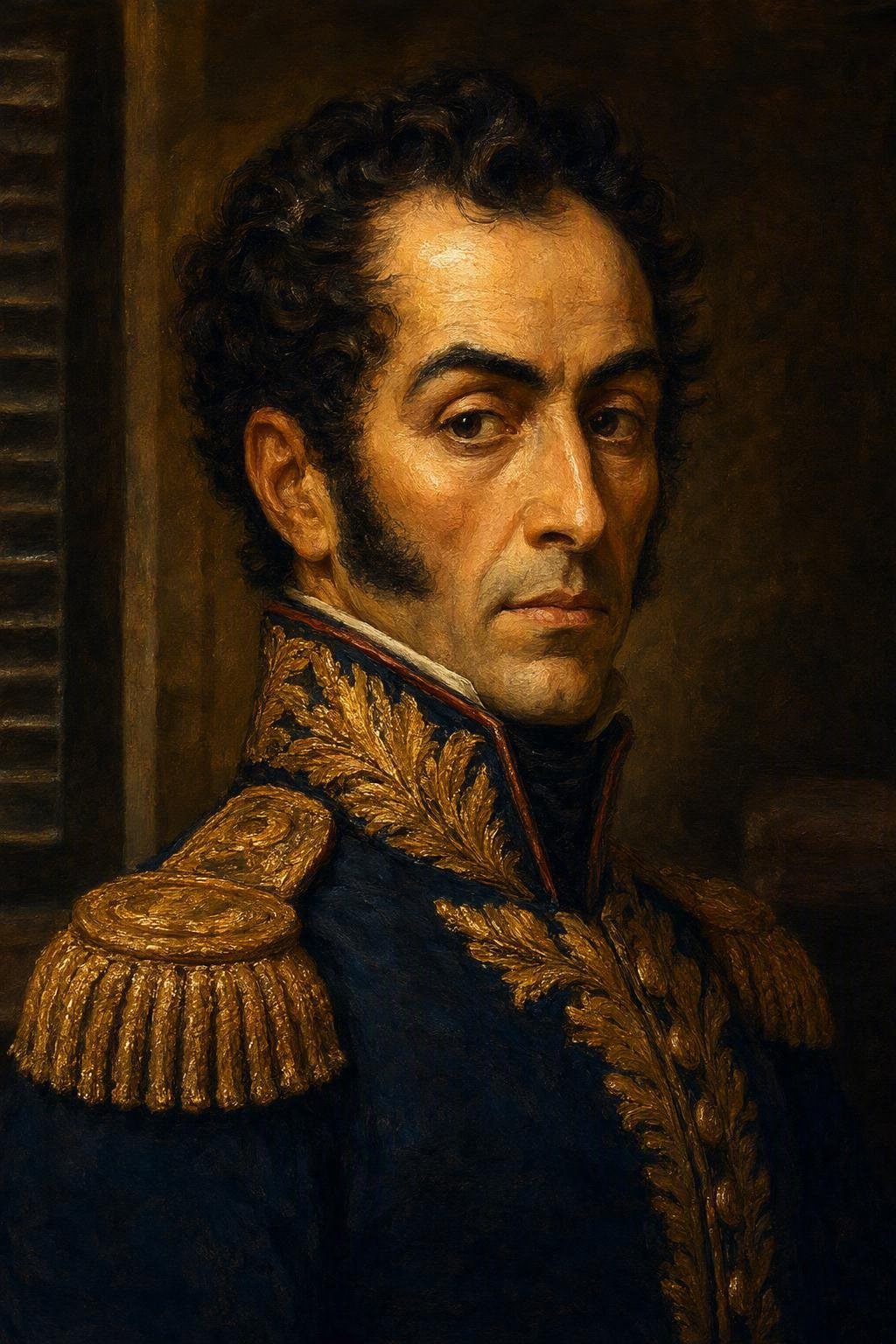
Simón Bolívar
Militaristic alignment
Conquest that pays for itself.
Republic of PiratesYour fleet ignores borders and raids for Gold; free Settlers arrive from progression rather than training.Open profileClose profile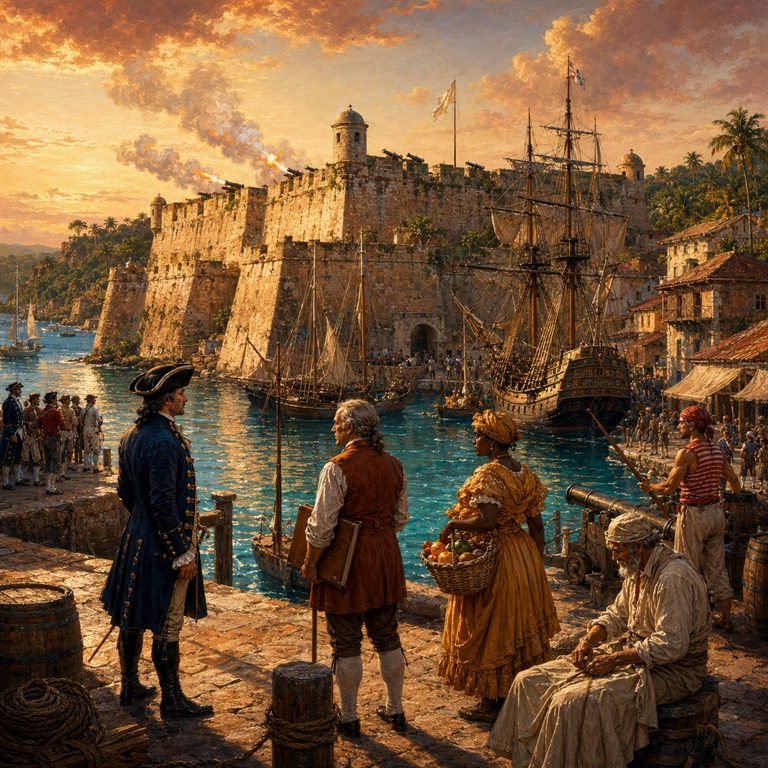
Your fleet ignores borders and raids for Gold; free Settlers arrive from progression rather than training.
Station Sloops on busy sea lanes and plunder every Trade Route in reach – none of it requires a declaration of war, and every naval kill pays +5 Gold on top. You cannot train or purchase Settlers, so expansion runs on free ones: Sailing and Navigation each grant a Settler, as does the Pirate Origins civic, and you can capture rivals' Settlers outright. The Buccaneer meanwhile earns a Raiding Party charge for every two promotion levels it gains. Edward Teach's Pirate ability stacks with Flying Gang for combined plunder yields.
Flying Gang
Naval Units, Treasure Convoys, and Buccaneers can enter foreign borders without War or Open Borders • Settlers cannot be trained or purchased, but enemy Settlers can be captured • Gain a free Settler from Sailing, Navigation, and Pirate Origins • Naval kills grant +5 Gold.
Republic of Pirates uniques
Havana Harbor
+3 Gold, and it generates Treasure Convoys worth 3 Cargo. For a civilization that cannot build Settlers, a wonder that manufactures treasure outright is not a luxury — it is most of the economy. Must be built on Distant Lands Coast.
Haven · Naval Station + Naval Arsenal
+1 Gold for every Treasure Resource in your Pool, and friendly Naval Units heal +50 on the tile. Naval Station adds +5 Production with no Gold maintenance; Naval Arsenal adds +4 Gold. Both must be placed on Coast.
Sloop
Light Naval with 5 Movement that can move after attacking, and every kill pays Gold equal to 100% of the defeated unit's Combat Strength. The stronger the target, the bigger the payday — hunt warships, not scouts.
Buccaneer
A Fleet Commander that gains a Raiding Party charge every 2 Levels. Each charge targets a rival's Treasure Resource in Distant Lands and spawns that convoy under your control instead — stealing the payload outright.
The Bahamas · Nassau and the Caribbean
A stolen harbour on the treasure routes, holding no land worth taxing — hence a civ that cannot build Settlers and lives off the sea. Its Flying Gang ability points the kit toward that same play pattern.
For roughly a dozen years Nassau was governed by pirates under their own articles, a self-declared republic whose crews elected captains and split shares by agreement. The defining restriction follows: you cannot train Settlers, only capture them – a state that could raid but never legitimately found.
Recommended leaders
Edward Teach
Economic + Militaristic alignment
You are at war with every non-Allied civilization and formally at war with none.
Sayyida al Hurra
Militaristic alignment
Espionage without consequences – she is immune to Counter Spy, so her operations simply cannot be defended against.
Sengoku JapanCommander experience converted directly into Culture and Science.Open profileClose profile
Commander experience converted directly into Culture and Science.
You trade the normal adjacency economy for a combat one: Mountains and Resources no longer feed your Culture and Science buildings, so fighting is your research budget. Keep Commanders in combat constantly, and remember Commander XP persists across Ages. See Military & Combat.
Shogunate
+2 Culture and +2 Science for every point of Army Commander XP earned in Combat • Culture Buildings lose their Mountain adjacency • Science Buildings lose their Resource adjacency
Sengoku Japan uniques
Himeji Castle
Adds Culture to Fortified Districts here and Combat Strength to Fortified Districts across your entire empire, and stands as a Fortified District itself. It hardens every city you hold, not just this one. Must be built on Rough Terrain.
Tea House
Adds Food and Happiness, plus Culture for each adjacent District. Flat Terrain only, and never beside another Tea House. The District adjacency means it belongs inside a built-up city, not out on the frontier.
Samurai
Infantry with high Combat Strength that upgrades itself through two further tiers by defeating enough enemies, rather than through the Technology Tree. A veteran Samurai outclasses what its era should allow.
Shinobi
Carries charges of the Sabotage Action, which forces an enemy Army Commander to respawn, and moves with Stealth until it acts. Enemy Military Units sharing its tile can disperse it. It removes leadership rather than troops.
Japan · The Warring States
A mountainous archipelago split among warlords, where castles held the valleys — hence Sengoku's fortifications and veteran infantry. Its Shogunate ability points the kit toward that same play pattern.
A century of civil war made military reputation the currency of rule, produced the shinobi and the daimyō's professional retainers, and made the tea house a place where politics was quietly settled. Shogunate makes that literal – Commander XP converts into Culture and Science, so a general's standing is your civilization's output.
Recommended leaders
Toyotomi Hideyoshi
Militaristic alignment
The purest glass cannon in the game: Land Units deal double damage attacking and take double damage defending.
Genghis Khan
Militaristic alignment
Cavalry above everything – +3 Combat Strength, rising to +5 inside a Command Radius.
Friedrich (Oblique)
Militaristic alignment
Commanders are his research program.
ShawneeRiver settlements gain Food, while City-State suzerainty expands the Capital's Resource Capacity.Open profileClose profile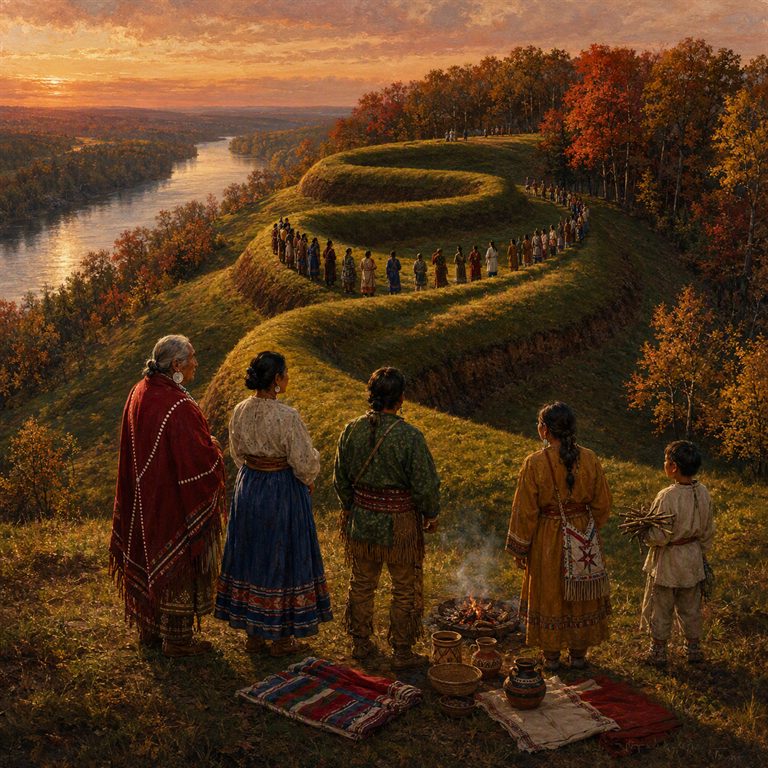
River settlements gain Food, while City-State suzerainty expands the Capital's Resource Capacity.
Follow the rivers when you expand. The bonus needs a Settlement adjacent to a Navigable River, then pays +2 Food on every river tile you develop – so a chain of settlements tracing one river system compounds far better than a spread-out empire. City-State suzerainty adds Resource Capacity to your Capital besides. The Hoceepkileni suits that shape, crossing rivers without ending its Movement, and the Mawaskawe Skote turns the vegetation along the banks into +4 Food.
Nepekifaki
+2 Food on Improvements and Districts on Minor and Navigable Rivers in Settlements adjacent to Navigable Rivers • +1 Capital Resource Capacity per City-State suzerainty.
Shawnee uniques
Serpent Mound
+4 Influence, plus strong yields on your Unique Improvements. It pays twice for a civ already covering its river country in Mawaskawe Skote, so build the improvements first and the wonder second. Must be built on Flat Grassland.
Mawaskawe Skote
+4 Food, and +1 Gold for each adjacent Resource. Vegetated Terrain only, and never beside another. Spacing them is forced rather than optional, so plan the whole settlement's improvement grid before you place the first one.
Kispoko Nena'to
Infantry that gains +1 Combat Strength for every unique Resource in your empire. A wide trading empire arms it without a single military build, which means the army grows strongest exactly when you are least at war.
Hoceepkileni
A Missionary with +1 Movement that rivers do not stop. It carries the faith along the waterways the Shawnee actually live on, covering ground a standard missionary would spend two turns crossing.
The Ohio Valley
River country at the crossroads of the eastern woodlands, where alliances mattered more than borders — hence Shawnee river Food and City-State ties. Its Nepekifaki ability points the kit toward that same play pattern.
The Shawnee sat at the crossroads of eastern trade routes, and their politics turned on councils, kinship, and negotiated confederacy rather than centralized command. Nepekifaki pays yields for sustained alliances and Trade Agreements, making prosperity a direct function of relationships.
Recommended leaders
Tecumseh
Diplomatic alignment
Diplomacy is military power.
Lafayette
Diplomatic alignment
Government-building as a strategy.
SonghaiNavigable-river Cities hold more Resources and convert assignments into Production.Open profileClose profile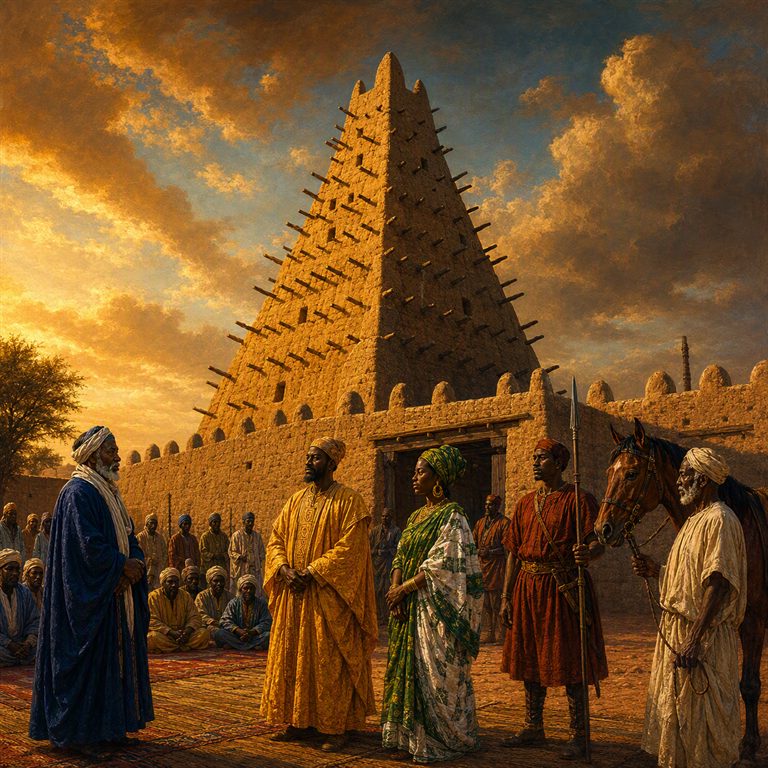
Navigable-river Cities hold more Resources and convert assignments into Production.
Settle Navigable Rivers and funnel Resources into those Cities specifically: each one gets +2 Resource Capacity and converts every slotted Resource into Production. Stack a river City with Resources and it becomes your build engine, and once you finish the Kanta Civic those same rivers start generating Treasure Convoys. The Tajiro pays for the expansion, handing you 200 Gold for any Trade Route touching a Navigable River. See Resources & Yields for slot capacity.
Tarikh al-Sudan
+2 Resource Capacity in Cities on Navigable Rivers • +1 Production per assigned Resource there • Generate Homelands Treasure Convoys on Navigable Rivers after Kanta.
Songhai uniques
Tomb of Askia
+2 Gold, +2 Resource Capacity, and yields for every assigned Resource. It turns the Resources you already hold into free money and Production, which suits Songhai's trade game precisely. Must be built on Desert.
Caravanserai
+5 Gold, +1 Gold adjacency for Navigable Rivers and Resources, and +1 Trade Range. Desert or Plains only, never beside another. The Trade Range is the quiet part — it extends what your merchants can reach.
Gold Bangles Infantry
Infantry with +5 Combat Strength while fighting on Resources, and +100 Gold every time it pillages a Trade Route. War that funds itself — aim it at trade corridors rather than at cities.
Tajiro
A Merchant that costs less than standard and pays 200 Gold for any Trade Route touching a Navigable River. For Songhai, sitting on the Niger, that is most routes you will ever run, so discount and bonus stack in practice.
Mali · Niger · The Middle Niger
A river running through desert, carrying salt and gold between worlds — hence Songhai's Resource Capacity and Production on Navigable Rivers. Its Tarikh al-Sudan ability points the kit toward that same play pattern.
Songhai's power ran along the Niger, with Timbuktu and Gao as its ports of call, where scholars and salt caravans arrived by the same routes. Tarikh grants +15 Trade Route range from Navigable Rivers – for Songhai the river is the road.
Recommended leaders
Amina
Economic + Militaristic alignment
Resources are the whole game – each one assigned to a City pays Gold every Age, and extra Resource Capacity means more of them.
Xerxes (King of Kings)
Economic + Militaristic alignment
Rewarded for fighting abroad – +3 Combat Strength when attacking in neutral or enemy territory, a Culture and Gold windfall the first time he captures each Settlement, +10% Gold in…
SpainCoastal settlements and settlements following your own Religion gain broad yields, doubled in Distant Lands.Open profileClose profile
Coastal settlements and settlements following your own Religion gain broad yields, doubled in Distant Lands.
The whole civilization turns on one instruction: make every Settlement both coastal and home to your own Religion, which raises the bonus from +2 Food, Gold and Production to +4 apiece. All of it doubles in Distant Lands, so overseas settlement is worth more than anything you build at home. Settle the shoreline, spread your Religion, and push across the ocean – the Plaza compounds that reach, paying +2 Gold for every Settlement you hold in Distant Lands, while the Conquistador can activate only there.
Siglo de Oro
+2 Food, Gold, and Production in Settlements adjacent to Coast or following your own Religion, +4 if both; doubled in Distant Lands • +15% Gold toward converting a Town to a City, or +30% in Distant Lands.
Spain uniques
El Escorial
+1 Settlement Limit and +4 Happiness to every City within 7 tiles, plus three Great Work slots. The Settlement Limit is the prize — it lets Spain hold more of what it takes rather than stalling on capacity. Must be built on Rough Terrain.
Plaza · Casa Consistorial + Casa de Contratación
+2 Gold here for every Settlement you hold in Distant Lands — build it at home, paid for by the empire abroad. Casa Consistorial adds +6 Culture; Casa de Contratación adds +6 Gold. Both sit in the Homelands beside Coast.
Tercio
Infantry with high Combat Strength that grants adjacent Units +3 against Cavalry, applied once rather than stacking. It protects the line rather than winning alone — pair it with your damage dealers, do not mass it.
Conquistador
A Great Person with one charge that can always Embark in Ocean but activates only in Distant Lands. Requires a Plaza, arrives at random, and each costs more than the last. It is built entirely for the crossing.
Spain · And the Atlantic Crossing
An Atlantic coast pointed at a new world, funded by what came back — hence Spain's yields doubled in Distant Lands. Its Siglo de Oro ability points the kit toward that same play pattern.
The Siglo de Oro was funded from overseas: silver fleets, viceroyalties, and colonies that generated more for the crown than the Iberian heartland ever did. The ability reproduces that imbalance exactly, making Distant Lands cities outproduce your own homeland.
Recommended leaders
Isabella
Economic alignment
The map itself is treasure.
Napoleon (Revolutionary)
Militaristic alignment
Speed and momentum.
🏭 Modern Age civilizations
15 civilizations match
AmericaImproving Resources pays Gold, and Prospectors claim them outright.Open profileClose profile
Improving Resources pays Gold, and Prospectors claim them outright.
Resource acquisition is the whole economy. Improve every Resource you can reach for the Gold windfall, and use Prospectors to claim Resources outside your normal Settlement radius – bypassing the 3-tile border limit that constrains everyone else. The Industrial Park closes the loop, converting Factory Resources assigned to its Settlement into GDP, so the Resources you spent the game claiming become Economic victory score directly. See Exploration & Settlement.
Frontier Expansion
Gold every time you improve a Resource • +1 Production on Resources
America uniques
Marine
American Unique Infantry Unit. Has the Amphibious ability and is cheaper to train. Use it for the role its effect rewards and keep that condition active through formation, terrain, or target choice.
Prospector
American Unique Civilian Unit. Activate on an unowned Land Resource within 5 tiles of your regular Settlement radius. A path of tiles is claimed back to the Settlement and the Resource is improved immediately. Train or activate it when the settlement and map can exploit its condition; plan around the unique effect.
Industrial Park
+1 GDP from Factory Resources assigned to this Settlement. Railyard adds +9 Production and +1 Production Adjacency for Quarters and Wonders; Steel Mill adds +9 Production and +1 Gold Adjacency for Resources and Wonders. Place it where the adjacency and settlement effect can be used repeatedly; keep the components together as one package.
Statue of Liberty
The Statue of Liberty grants +6 Happiness and 4 Migrants. Build it on Coast adjacent to land when your Settlement has housing, useful tiles, or Specialist slots ready for the population spike.
United States · Great Lakes and Atlantic
A wide resource frontier turns each improvement into Gold and Production, while Factory Resources feed the Industrial Park. Build outward along connected resources.
Frontier expansion was a policy as much as a movement – land claimed, resources improved, and rail and industry converting territory into wealth at continental scale. Frontier Expansion pays Gold on every Resource improved, and the Prospector claims and improves land in a single step.
Recommended leaders
Benjamin Franklin
Diplomacy is his research budget.
Isabella
Economic + Expansionist alignment
The map itself is treasure.
Simón Bolívar
Expansionist alignment
Conquest that pays for itself.
BugandaAmphibious raiders who turn pillaging into Culture.Open profileClose profile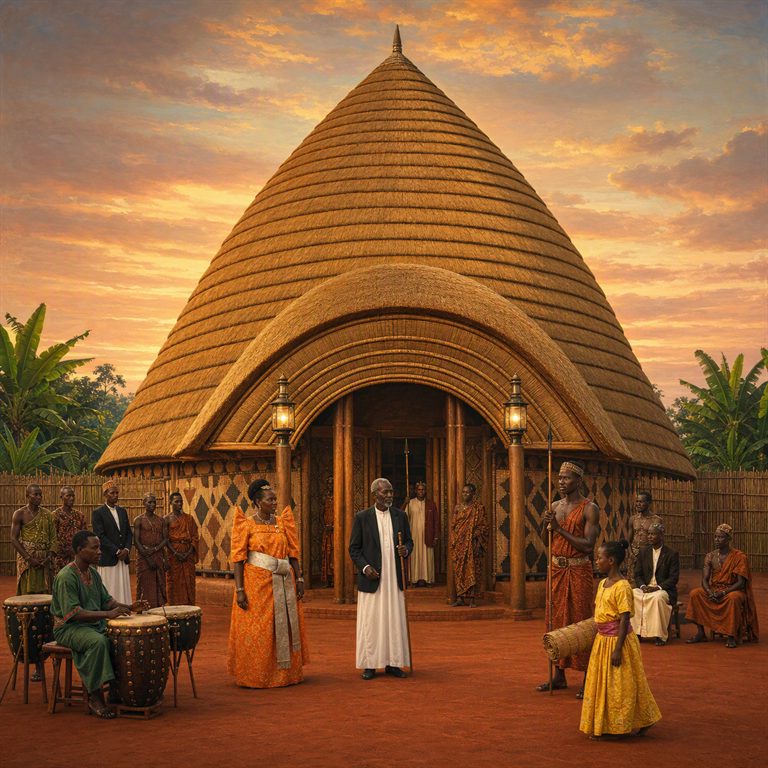
Amphibious raiders who turn pillaging into Culture.
Water is a road, not a barrier: Amphibious units make lakes and coasts part of your attack plan. Raid continuously and settle lake shores, which pay Food, Culture, and Tourism. Two uniques multiply that. The Mwami Army Commander doubles pillage yields and healing for every unit in its Command Radius, and Kabaka's Lake counts as a Lake for all bonuses and adjacencies – so you can manufacture the terrain your whole civilization is built around, even inland.
Omugongo
Pillaging Buildings or Improvements grants Culture equal to the yield or healing gained • Land Military Units gain Amphibious • +6 Food and +6 Culture on Lakes • +1 Tourism from Districts and Improvements on Lakes
Buganda uniques
Abambowa
Bugandan Unique Infantry Unit. Heals +10 HP from Pillaging any tile. Use it for the role its effect rewards and keep that condition active through formation, terrain, or target choice.
Mwami
Bugandan Unique Army Commander. Land Units gain +100% Yields and Healing from Pillaging within the Command Radius. Train or activate it when the settlement and map can exploit its condition; plan around the unique effect.
Kabaka's Lake
+3 Happiness. Counts as a Lake for bonuses and adjacencies. Ageless, must be placed on Flat Terrain, and limited to one per Settlement. Plan terrain and adjacency before placing it; its location should reinforce the civilization geography.
Muzibu Azaala Mpanga
Muzibu Azaala Mpanga grants +4 Food, then +4 Culture and Food on Lake Improvements and Districts, plus 1 Population in lake-adjacent Settlements. Kabaka’s Lake can create the terrain this engine needs.
Uganda · The Great Lakes
Lakes are both terrain and infrastructure for Buganda: they feed Culture, Food and Tourism while amphibious pillagers bring the yields home. Settle their shores first.
The Kabaka's kingdom commanded the northern shore of Lake Victoria, where fleets of war canoes made the lake a highway for raiding, tribute, and trade. Omugongo grants Culture for pillaging and makes land military units Amphibious – the lake as the army's road.
Recommended leaders
Amina
Resources are the whole game – each one assigned to a City pays Gold every Age, and extra Resource Capacity means more of them.
Harriet Tubman
Built to be underestimated.
Hatshepsut
Cultural alignment
Resources and rivers.
Ibn Battuta
Expansionist alignment
The only leader with a Wildcard Attribute – he gains 2 Wildcard points after the first Civic of each Age, spendable in any tree.
French EmpireBorrow any Government's Celebration effects, from Antiquity onward.Open profileClose profile
Borrow any Government's Celebration effects, from Antiquity onward.
You get to pick the best Celebration effect in the game regardless of what Government you actually run, so choose your Government purely for its passive and its Traditions, then take whichever Celebration bonus your current strategy wants. The Avenue is what turns that into a Culture engine – +2 Happiness on every Quarter in its City, feeding the Celebrations you are already optimizing, and it gates the Jacobin Great People, who train only where an Avenue stands. See Happiness, Governments & Celebrations.
Liberté, Égalité, Fraternité
You may select the Celebration effects of any standard Government, starting in the Antiquity Age
French Empire uniques
Garde Impériale
French Imperial Unique Infantry Unit. Can make a Ranged attack. +2 Combat Strength when adjacent to a friendly Army Commander. More expensive to train. Use it for the role its effect rewards and keep that condition active through formation, terrain, or target choice.
Jacobin
A Great Person with one charge. Can only be trained in Cities with an Avenue; the specific Jacobin received is random, each can only be received once, and cost increases per Jacobin trained. Train or activate it when the settlement and map can exploit its condition; plan around the unique effect.
Avenue
+2 Happiness on Quarters in this City. Jardin à la Française adds +9 Culture and +1 Happiness Adjacency for Culture Buildings and Wonders; Salon adds +9 Happiness and +1 Culture Adjacency for Happiness Buildings and Wonders. Place it where the adjacency and settlement effect can be used repeatedly; keep the components together as one package.
Eiffel Tower
The Eiffel Tower grants +5 Culture and adds +4 Culture and +2 Tourism to every Quarter in its City. Place it in your densest urban center; each completed Quarter multiplies the Wonder’s payoff.
France · The Seine and Western Europe
A dense urban core lets Avenues stack Happiness and Culture while the government borrows any standard Celebration effect. Concentrate the quarter where both can compound.
The Revolution and the Empire made public celebration an instrument of state, while salons, gardens, and grand boulevards turned Paris into the argument for French cultural primacy. Liberté, Égalité, Fraternité lets you borrow any Government's Celebration effects – the festival detached from the regime staging it.
Recommended leaders
Napoleon (Revolutionary)
Cultural alignment
Speed and momentum.
Lafayette
Cultural + Diplomatic alignment
Government-building as a strategy.
Charlemagne
Cavalry and cathedrals at once.
Great BritainFaster construction and purchasing everywhere, dearer Cities – so stay a nation of Towns.Open profileClose profile
Faster construction and purchasing everywhere, dearer Cities – so stay a nation of Towns.
Buildings go up faster through both Production and Gold while Cities are expensive, so build densely and convert rarely – a sprawl of well-developed coastal Towns outperforms a handful of Cities here. Coastal Buildings also pay Science, which pushes the same shoreline strategy. The Financial Centre pays for the sprawl directly, adding +2 Gold and +2 Science for every connected Settlement, so each new Town raises the yield of the network as a whole. See Improving Cities & Towns.
Workshop of the World
+25% Gold toward purchasing Buildings and +25% Production toward constructing them • +50% cost to Convert Towns into Cities • +3 Science on Active Buildings adjacent to Coast
Great Britain uniques
Revenge
British Unique Heavy Naval Unit. +5 Combat, Ranged, and Bombard Strength. Enemy Units in tiles adjacent to the target take 25% of the total damage done to the target. Use it for the role its effect rewards and keep that condition active through formation, terrain, or target choice.
Antiquarian
British Unique Explorer. +20 Culture for every tile from your Capital when you use Excavate Artifact. Train or activate it when the settlement and map can exploit its condition; plan around the unique effect.
Financial Centre
+2 Gold and +2 Science for every connected Settlement. Royal Exchange adds +9 Gold and +1 Gold Adjacency for Quarters and Wonders; Manufactory adds +9 Production, +1 Production Adjacency for Resources and Wonders, and +1 Gold Adjacency for Navigable Rivers. Use it where the condition stays active.
Battersea Power Station
Battersea Power Station grants +4 Production and duplicates every Naval Unit trained. Finish it in your main coastal production City before queuing an expensive fleet, not after the first wave is already built.
Great Britain · The North Sea and Atlantic
Britain wants a connected coastal network: Financial Centres reward every link, while coastal Buildings add Science. Keep settlements tied together before promoting Towns.
The workshop of the world built factories, railways, and a navy to move their output – then filled its museums with antiquities collected from everywhere that navy reached. Both halves are here: faster Building construction and purchasing, and an Antiquarian paid by sheer distance from home.
Recommended leaders
Benjamin Franklin
Scientific alignment
Diplomacy is his research budget.

Ada Lovelace
Scientific alignment
Science and Culture feed each other: every Tech Mastery pays Culture equal to 100% of your total Science per turn, and every Civic Mastery pays +2 Science per Age in every City.
Machiavelli
Economic alignment
Influence as a hard currency.
JoseonA deliberately small City core: the Capital and Seowon Cities hold the Specialists while Towns buy their own schools.Open profileClose profile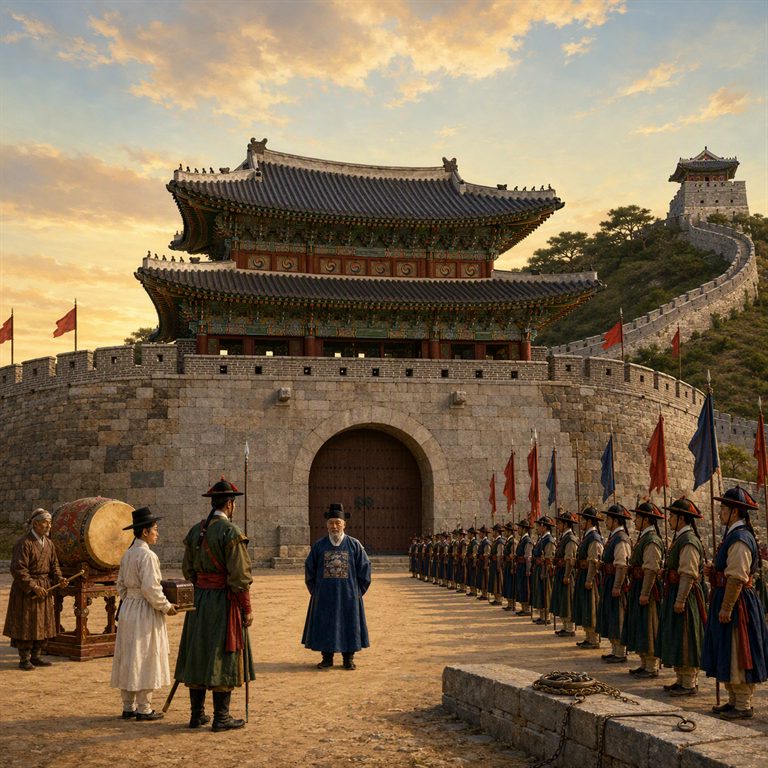
A deliberately small City core: the Capital and Seowon Cities hold the Specialists while Towns buy their own schools.
Joseon is tall by design, but not literally a one-City civilization. Reserve the limited City conversions for the Capital and Settlements that can complete a Seowon; those become Specialist hubs, while non-Seowon Cities take the penalty. Keep the rest as Towns, which can still purchase Tier 1 Science and Culture Buildings.
Munchi
Further increased Specialist Limit in the Capital • Increased Specialist Limit in non-Capital Cities with a Seowon, decreased in those without one • Begins the Modern Age with a set, increased City Limit • Can purchase Tier 1 Science and Culture Buildings in Towns
Joseon uniques
Turtle Ship
Joseon Unique Military Unit. The Modern extraction draft identifies Turtle Ship as the military unique; no further Modern screen text is present in the supplied captures. Use it for the role its effect rewards and keep that condition active through formation, terrain, or target choice.
Jangyongyoung
Joseon Unique Civilian Unit. The Modern extraction draft identifies Jangyongyoung as the civilian unique; no further Modern screen text is present in the supplied captures. Train or activate it when the settlement and map can exploit its condition; plan around the unique effect.
Seowon
A Joseon Unique Quarter. Confucian Academy and Printing House are constructed in the same District; the Seowon changes the City Specialist Limit, with its benefit applying to Cities that contain one. Place it where the adjacency and settlement effect can be used repeatedly; keep the components together as one package.
Hwaseong
Hwaseong adds Culture plus a Tradition and Social Policy slot, and it acts as a Fortified District that must be conquered. Its Flat-adjacent-to-Rough placement should protect, not disrupt, the Capital’s specialist core.
Korea · The Han River Basin
Joseon rewards a compact specialist core, with Seowons protecting City capacity while Towns buy early Science and Culture Buildings. Reserve space for the academic network.
Joseon's seowon academies trained a Confucian scholar-elite, its court commissioned the Hangul alphabet for ordinary readers, and its navy answered invasion with the turtle ship. Munchi concentrates Specialists in the Capital unless a Seowon is present – scholarship as the thing that makes a city matter.
Recommended leaders
Ada Lovelace
Cultural alignment
Science and Culture feed each other: every Tech Mastery pays Culture equal to 100% of your total Science per turn, and every Civic Mastery pays +2 Science per Age in every City.
Confucius
Expansionist alignment
Growth compounds into research.
Yi Sun-sin
A navy that funds a laboratory.
Meiji JapanReplacing old buildings converts Production cost into Science.Open profileClose profile
Replacing old buildings converts Production cost into Science.
Modernize aggressively: replace obsolete Buildings instead of preserving them, and prioritize expensive upgrades because their Production cost sets the Science payout. The Zaibatsu feeds that engine, adding +1 Gold and +1 Production to Buildings in every adjacent District.
Goisshin
Overbuilding a Building grants Science equal to 25% of the new Building's Production cost
Meiji Japan uniques
Mikasa
Meiji Japanese Unique Heavy Naval Unit. The first time this Unit is destroyed, it respawns in the closest Settlement you own at 50% HP. Use it for the role its effect rewards and keep that condition active through formation, terrain, or target choice.
Zero
Meiji Japanese Unique Fighter Air Unit. Has increased range and +4 Combat Strength against other Fighter Air Units. Can intercept enemy Air Units. Treat it as a specialist for the theater where its defining effect can decide multiple turns.
Zaibatsu
+1 Gold and +1 Production on Buildings in adjacent Districts, plus +1 Resource Capacity in this Settlement. The two components are Ginko and Jukogyo. Place it where the adjacency and settlement effect can be used repeatedly; keep the components together as one package.
Dogo Onsen
Dogo Onsen grants +4 Happiness and adds 1 Population to its Settlement whenever you enter a Celebration. Build it in a coastal City with room to grow, then time Celebrations around available housing and productive tiles.
Japan · Honshu and the Inland Sea
Japan’s compact districts turn adjacency into Gold, Production and Resource Capacity, while Goisshin converts Overbuilding into Science. Cluster industry beside replaceable buildings.
In a single generation the Meiji Restoration replaced the old order with railways, shipyards, and zaibatsu conglomerates, pursuing modernization as a matter of national survival. Goisshin pays Science for overbuilding – you are rewarded for demolishing what you built and replacing it.
Recommended leaders
Trung Trac
Militaristic + Scientific alignment
Commanders arrive for free and stay ahead: obtaining your first Land Military Unit brings Trung Nhi into play, a unique Commander with her own promotion tree who persists across Age…
Friedrich (Oblique)
Militaristic + Scientific alignment
Commanders are his research program.
Himiko (Queen of Wa)
Scientific alignment
Alliances are infrastructure.
MexicoA unique Government you can never leave – and never want to.Open profileClose profile
A unique Government you can never leave – and never want to.
Fill the Government with Traditions – each one is Happiness in every City, which drives settlements up the Happiness tiers, which multiplies the Celebration Culture bonus. Then double the Tourism on top. The Zócalo compounds it directly, paying +2 Culture per Tradition slotted, and it is also the gate on the Revolucionario Great People, who can only be trained in a City that has one. Build Zócalos early and everything else scales off them. This is the most direct Culture-victory engine in the Modern Age. See Victory, Triumphs & Dedications.
Revolución
Starts with the unique Revolución Government and cannot adopt any other • Its passive grants +6 Happiness in Cities for each Tradition slotted into the Government • Its Celebration effect grants +2 / +6 / +10 Culture in Happy / Joyous / Ecstatic Settlements for 7 turns • +100% Tourism from Celebrations
Mexico uniques
Soldaderas
Mexican Unique Infantry Unit. Adjacent Units gain +10 Healing. The bonus does not stack. Use it for the role its effect rewards and keep that condition active through formation, terrain, or target choice.
Revolucionario
A Great Person with one charge. Can only be trained in Cities with a Zócalo; the specific Revolucionario received is random, each can only be received once, and cost increases per Revolucionario trained. Train or activate it when the settlement and map can exploit its condition; plan around the unique effect.
Zócalo
+2 Culture for every Tradition slotted into the Revolución Government. Catedral adds +9 Happiness and +1 Culture Adjacency for Culture Buildings and Wonders; Portal de Mercaderes adds +9 Culture and +1 Gold Adjacency for Gold Buildings and Wonders. Use it where the condition stays active.
Palacio de Bellas Artes
Palacio de Bellas Artes grants +5 Culture, a free Artifact, 3 Great Work slots, and +3 Happiness on displayed Great Works. Prepare works to fill it quickly so the cultural and stability payoffs arrive together.
Mexico · The Valley of Mexico
Mexico’s Revolución rewards a happy, tradition-heavy City and makes Celebrations a Tourism engine. Build a dense Zócalo core that can keep its mood high.
Independence and revolution gave Mexico a civic culture in which the fiesta, the mural, and the public holiday carry national identity as deliberately as any institution. Revolución is a Government built entirely around stronger and multiple Celebration effects.
Recommended leaders
José Rizal
Cultural + Diplomatic alignment
Celebrations, extended and repeated.
Ashoka (Renouncer)
Diplomatic alignment
The mirror image: surplus Happiness becomes Food rather than Production, and Celebrations accelerate growth.
Simón Bolívar
Conquest that pays for itself.
MughalEverything becomes Gold – including Wonders, at a premium.Open profileClose profile
Everything becomes Gold – including Wonders, at a premium.
You are trading every other yield for Gold, then converting Gold back into whatever you need. Food is exempt, so your cities still grow – but Production, Science, and Culture all run at 75%, and you make up the difference by buying. Wonders cost a 150% premium yet bypass the build queue entirely, which is how Mughal out-builds civilizations with far better Production. Protect that investment: the Red Fort must be conquered rather than simply captured, and adds +50 HP to every City Center you own.
Paradise of Nations
+100% Gold from all sources • −25% to all other yields except Food • Can purchase Wonders with Gold, though they cost 150% more
Mughal uniques
Sepoy
Mughal Unique Infantry Unit. Can make a Ranged Bombard attack. Use it for the role its effect rewards and keep that condition active through formation, terrain, or target choice. Use it as part of the civilization plan.
Zamindar
Mughal Unique Settler. Civilian Unit capable of founding new Towns. New Towns gain +1 Population. Train or activate it when the settlement and map can exploit its condition; plan around the unique effect.
Stepwell
+2 Food. Gains +2 Food from adjacent Farms. Ageless, must be placed on Flat Terrain, and cannot be placed adjacent to another Stepwell. Plan terrain and adjacency before placing it; its location should reinforce the civilization geography.
Red Fort
Red Fort grants +4 Gold and Production, acts as a Fortified District, and adds +50 HP to itself and every City Center. Place it beside a District in a rich core City where economy and defense reinforce each other.
India · The Indo-Gangetic Plain
Flat farmland supports Stepwells and the population for new Towns, while Paradise of Nations doubles Gold but taxes every other yield. Grow the food base before buying Wonders.
Mughal wealth was legendary enough to fund the Taj Mahal outright, and its emperors laid out charbagh gardens as earthly models of paradise. Paradise of Nations doubles Gold and lets you purchase Wonders with it – monuments bought rather than laboriously built.
Recommended leaders
Machiavelli
Economic alignment
Influence as a hard currency.
Amina
Economic alignment
Resources are the whole game – each one assigned to a City pays Gold every Age, and extra Resource Capacity means more of them.
Lakshmibai
City-States are absorbed, not courted.
NepalMountains become workable – and Warehouses reach them.Open profileClose profile
Mountains become workable – and Warehouses reach them.
Nepal goes a step beyond Inca: not only are Mountains workable, but Warehouse bonuses extend onto them, so an entire mountain range can be developed like ordinary land. The maintenance cost is real – budget Gold and Happiness before committing – and use Sherpas to claim peaks beyond your borders, since they are also the only unit that can build the Highland Power Station on the featureless Mountains they claim.
Roof of the World
Can work Mountain tiles • All Warehouse buildings apply to Mountain tiles, at a cost of +1 Gold and Happiness Maintenance each
Nepal uniques
Gurkha
Nepalese Unique Infantry Unit. Stronger, faster, and more expensive than the unit it replaces. Use it for the role its effect rewards and keep that condition active through formation, terrain, or target choice.
Sherpa
Nepalese Unique Scout. Ignores Mountains and Rough Terrain for Sight, ignores featureless Mountains for Movement, and can move on Mount Everest. Can Claim Mountains within 5 tiles of one of your Settlements. Train or activate it when the settlement and map can exploit its condition; plan around the unique effect.
Highland Power Station
+3 Production and +3 Culture. Must be placed on featureless Mountain Terrain and is constructed by the Sherpa. Plan terrain and adjacency before placing it; its location should reinforce the civilization geography.
Boudhanath
Boudhanath grants +6 Influence and +20 Relationship with every other leader. Build it beside a Mountain before major treaties, sanctions, or alliance contests so its one-time diplomatic swing still changes decisions.
Nepal · The Himalayan Arc
Nepal’s mountains are settlement infrastructure: Sherpas claim peaks for Power Stations, Warehouses can work them, and each mountain Improvement can add Tourism. Preserve the ridges.
Himalayan Nepal was never conquered, its Gurkha soldiers earned a reputation across two centuries of warfare, and Sherpa communities made the highest terrain on Earth passable. Roof of the World lets you work Mountains, and the Sherpa claims peaks other civilizations cannot even cross.
Recommended leaders
Pachacuti
Mountains become farmland.
Ashoka (Renouncer)
Diplomatic alignment
The mirror image: surplus Happiness becomes Food rather than Production, and Celebrations accelerate growth.
Lakshmibai
Diplomatic alignment
City-States are absorbed, not courted.
OttomanArtifacts multiply on Ottoman ground, no matter who excavates them.Open profileClose profile
Artifacts multiply on Ottoman ground, no matter who excavates them.
Claim and hold land rich in Archaeology Sites, then excavate it yourself or let another leader do the work – either way, you receive the bonus Artifact. The attack bonus helps Infantry and Siege Units take that ground. Be deliberate with the Janissary though: every one stationed in a District costs −2 Happiness in every Settlement on the map, including your own.
Devlet-i ʿAliyye-i ʿOsmaniyye
When any leader excavates an Artifact in Ottoman territory, the Ottomans generate an additional Artifact • +3 Combat Strength for Infantry and Siege Units when attacking
Ottoman uniques
Janissary
Ottoman Infantry replacement. +5 Combat Strength against other Land Units. All Civilizations' Settlements suffer a -2 Happiness penalty for every Janissary stationed in or occupying a District. Use it for the role its effect rewards and keep that condition active through formation, terrain, or target choice.
Barbary Corsair
Ottoman Unique Light Naval Unit. It costs no Movement to perform a Coastal Raid. Treat it as a specialist for the theater where its defining effect can decide multiple turns. Use it as part of the civilization plan.
Külliye
+3 Culture and +2 Gold on Specialists in this City. Cami adds +9 Culture, +1 Happiness Adjacency with Science Buildings, +1 Culture Adjacency with Wonders, and 2 Artifact slots; Hammam adds +9 Happiness, +1 Gold Adjacency with Culture Buildings, and +1 Happiness Adjacency with Wonders. Use it where the condition stays active.
Sultanahmet Camii
Sultanahmet Camii grants +4 Happiness and +4 Culture and Gold on local Wonders, doubled for Exploration and tripled for Antiquity Wonders. Put it beside another Wonder in the City with your oldest surviving collection.
Anatolia · The Bosporus and Eastern Mediterranean
A crossroads of coasts and cultures suits Ottoman artifact hunting and Specialist-heavy Külliye Cities. Keep the quarter productive while Janissaries press the attack.
The külliye complex bundled mosque, school, hospital, and kitchen into a single endowment, while Janissaries formed a standing infantry corps centuries before Europe fielded one. The ability turns Ottoman territory into an Artifact engine, while its attacking Infantry and Siege bonus helps acquire and hold that ground.
Recommended leaders
Friedrich (Baroque)
Cultural + Militaristic alignment
Conquest as art collection.
Alexander
Militaristic + Cultural alignment
Wonders build the empire, and they should sit anywhere except your Capital.
Genghis Khan
Militaristic alignment
Cavalry above everything – +3 Combat Strength, rising to +5 inside a Command Radius.
PrussiaStrength that scales with how much everyone dislikes you.Open profileClose profile
Strength that scales with how much everyone dislikes you.
The usual advice to manage your reputation is inverted: every civilization that dislikes you makes your entire army stronger. And because Trade Routes survive War, the normal economic penalty for belligerence does not apply to you. Antagonize deliberately, keep trading through it, and let hostility compound into military advantage. The Staatseisenbahn quietly funds it, paying +2 Gold and +2 Production on rural tiles it crosses and +2 GDP per Settlement it reaches.
Blood and Iron
+1 Combat Strength for every Unfriendly or worse Relationship with another civilization • You may establish and retain Trade Routes with civilizations you are at War with
Prussia uniques
Hussar
Prussian Unique Additional Cavalry Unit. Has +1 Movement. Gains +1 Combat Strength for every Movement it has remaining. Use it for the role its effect rewards and keep that condition active through formation, terrain, or target choice.
Stuka
Prussian Ground Attack Air Unit. +3 Combat Strength against Land Units. Treat it as a specialist for the theater where its defining effect can decide multiple turns. Use it as part of the civilization plan.
Staatseisenbahn
Prussian Unique Railroad. +2 Gold and +2 Production on Rural tiles with a Staatseisenbahn in your territory. +2 GDP for every Settlement with a Staatseisenbahn. Plan terrain and adjacency before placing it; its location should reinforce the civilization geography.
Brandenburg Gate
Brandenburg Gate grants +6 Production, +1 War Support in all Wars, and +1 Settlement Limit. Complete it before a major campaign so its home-front stability and new expansion capacity arrive when both matter.
Prussia · The North German Plain
Prussia’s rail network rewards long rural corridors: each line adds Gold and Production, and every connected Settlement adds GDP. Lay track before the frontier fills.
Bismarck's blood and iron meant exactly that: railways and steel mills feeding an army, in a state whose diplomacy assumed enemies rather than avoided them. Blood and Iron grants Combat Strength for every hostile relationship – the one ability in the game that pays you for being disliked.
Recommended leaders
Friedrich (Oblique)
Militaristic alignment
Commanders are his research program.
Charlemagne
Militaristic alignment
Cavalry and cathedrals at once.
Genghis Khan
Militaristic alignment
Cavalry above everything – +3 Combat Strength, rising to +5 inside a Command Radius.
QajarDiplomatic support is the permanent ability; the civic tree later rewards a compact empire below its Settlement Limit.Open profileClose profile
Diplomatic support is the permanent ability; the civic tree later rewards a compact empire below its Settlement Limit.
Use Kayānī Crown to support other leaders' actions efficiently. The compact-empire payoff comes later from Qajar's civic tree: Twelve Gates adds Capital yields for each Settlement below the limit, while Neẓām-e J̌adīd turns the same gap into Land Unit strength. Stay small when those civics are your plan, not because the base ability requires it.
Kayānī Crown
Increased Influence toward supporting Diplomatic Actions.
Qajar uniques
Gholām
Qajar Unique Military Unit. The Modern extraction draft identifies Gholām as the military unique; no further Modern screen text is present in the supplied captures. Use it for the role its effect rewards and keep that condition active through formation, terrain, or target choice.
Sardār
Qajar Unique Civilian Unit. The Modern extraction draft identifies Sardār as the civilian unique; no further Modern screen text is present in the supplied captures. Train or activate it when the settlement and map can exploit its condition; plan around the unique effect.
Bāq
A Qajar Unique Quarter. Ghahve Khane and Takyeh are constructed in the same District; the Modern extraction draft identifies both components. Place it where the adjacency and settlement effect can be used repeatedly; keep the components together as one package.
Eram Garden
Eram Garden grants +4 Food and +1 Specialist Limit in its Settlement. Its Desert placement makes it a compact tall-city tool: add growth and a productive Specialist slot without spending a stronger central tile.
Iran · The Alborz and Persian Plateau
Qajar wants room below the Settlement Limit so the Capital can turn spare capacity into Food and Production, while Influence supports diplomacy. Do not over-expand too early.
Qajar Persia was a compact state surrounded by empires, holding its position through court diplomacy, garden capitals, and a tea-house public life where politics was conducted in conversation. Kayānī Crown strengthens diplomatic support, while the civic tree rewards a compact state that keeps room below its Settlement Limit.
Recommended leaders
Lakshmibai
Diplomatic alignment
City-States are absorbed, not courted.
Machiavelli
Diplomatic alignment
Influence as a hard currency.
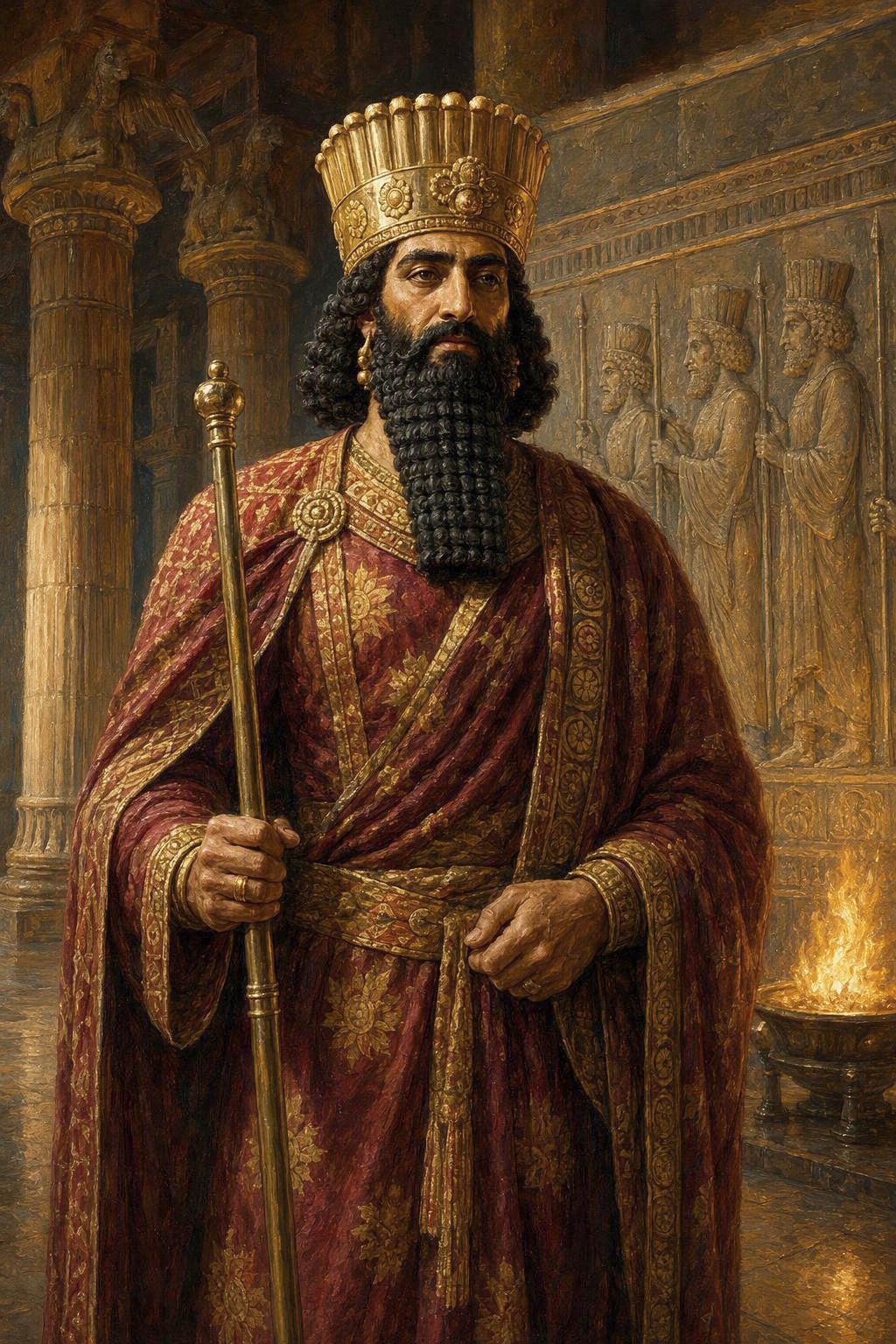
Xerxes (Achaemenid)
The same leader without the war.
Qing ChinaImports pay Gold, Culture, and GDP – while every Trade Route costs Science.Open profileClose profile
Imports pay Gold, Culture, and GDP – while every Trade Route costs Science.
Trade is your economy and your army, but every route taxes research. Import widely for Gold, Culture, and GDP, cultivate many trade partners for Combat Strength, and compensate for the flat Science loss elsewhere. Route imports by sea where you can – the Hangshang pays 50 Gold per Resource on a Naval Trade Route. See Victory, Triumphs & Dedications.
Kang Qian Shengshi
+3 Gold and Culture per imported Resource • −6 Science per Trade Route • +1 GDP per imported Resource assigned to Cities • +1 Combat Strength for Land Units per other civilization you have a Trade Route with
Qing China uniques
Gusa
Qing Unique Infantry Unit. Gains +4 Combat Strength when adjacent to another Gusa. Use it for the role its effect rewards and keep that condition active through formation, terrain, or target choice.
Hangshang
Qing Unique Merchant. Can establish a Trade Route to import Resources from a foreign Settlement. Gain 50 Gold for every Resource acquired when creating a Naval Trade Route. Train or activate it when the settlement and map can exploit its condition; plan around the unique effect.
Huiguan
+25% Influence in this Settlement. Qianzhuang adds +9 Gold and +1 Gold Adjacency for Gold Buildings and Wonders; Shiguan adds +9 Science and +1 Happiness Adjacency for Happiness Buildings and Wonders. Place it where the adjacency and settlement effect can be used repeatedly; keep the components together as one package.
Chengde Mountain Resort
Chengde Mountain Resort grants +6 Gold and +5% Culture for every other civilization connected by your Trade Routes. Delay it until the network is broad enough for the percentage scaling to justify the Mountain site.
China · The Manchurian Plain and North China
Qing trade converts imported Resources into Gold, Culture and GDP, but every Trade Route costs Science. Build a network large enough to profit without starving research.
The High Qing presided over an empire of unprecedented population and trade, with foreign commerce funneled through tightly controlled ports. Kang Qian Shengshi mirrors that ambivalence: imported Resources pay Gold, Culture, and GDP, while the trade network itself taxes Science.
Recommended leaders
Confucius
Expansionist alignment
Growth compounds into research.
Pachacuti
Economic + Expansionist alignment
Mountains become farmland.
Machiavelli
Economic alignment
Influence as a hard currency.
RussiaTundra made productive, and Quarters that pay twice there.Open profileClose profile
Tundra made productive, and Quarters that pay twice there.
Tundra is the point. Quarters everywhere pay Culture, but Tundra Quarters pay Science on top, and Tundra Town farms add Production – so land every rival treats as worthless becomes your best territory. Build Cities on Tundra for the Quarters and keep Towns farming around them. The Obshchina reinforces both halves, adding +1 Food to every Farm in its Settlement and +2 Culture on Tundra, and it is Ageless.
Prosveshchenie
+1 Culture on Quarters in Cities • +1 Science on Quarters in Cities on Tundra • +1 Food on Farms in Towns • +1 Production on Farms in Towns on Tundra (counts as a Warehouse bonus)
Russia uniques
Cossack
Russian Unique Additional Cavalry Unit. +4 Combat Strength in friendly territory. Use it for the role its effect rewards and keep that condition active through formation, terrain, or target choice.
Katyusha Rocket Launcher
Russian Unique Siege Unit. Has +1 Movement. Has lower Combat Strength but the Splash ability, dealing damage to enemy Units adjacent to the target Unit. Treat it as a specialist for the theater where its defining effect can decide multiple turns.
Obshchina
+1 Food on all Farms in this Settlement. +2 Culture in Tundra Terrain. Ageless and cannot be placed adjacent to another Obshchina. Plan terrain and adjacency before placing it; its location should reinforce the civilization geography.
Hermitage
The Hermitage grants +4 Culture, 3 Great Work slots, and +5 Culture in every Settlement displaying a Great Work. Fill its own slots, but distribute at least one work across other Settlements to unlock the empire-wide payoff.
Russia · The Volga and Northern Forests
Russia makes Tundra productive twice: Town Farms gain Food and Production, while City Quarters gain Culture and Science. Settle cold ground deliberately rather than merely tolerating it.
Catherine's Enlightenment reached from the Hermitage's galleries to academies and new towns, extending imperial reach across tundra no rival state could profitably hold. Prosveshchenie makes Tundra productive and the Obshchina Ageless – permanence in country that punishes it.
Recommended leaders
Catherine the Great
Cultural + Scientific alignment
A collector's game.
Ada Lovelace
Scientific + Cultural alignment
Science and Culture feed each other: every Tech Mastery pays Culture equal to 100% of your total Science per turn, and every Civic Mastery pays +2 Science per Age in every City.
Confucius
Scientific alignment
Growth compounds into research.
SiamBuy suzerainty outright, then get paid for being liked.Open profileClose profile
Buy suzerainty outright, then get paid for being liked.
You can skip the slow Befriend accumulation entirely and simply purchase a City-State when it matters – which makes Influence generation your bottleneck, not time. Keep relationships Friendly or better with everyone, since each one funds the next purchase, and each suzerainty adds Tourism. Doi Suthep then adds +5 Culture and Gold for every City-State you hold, while each suzerainty is also a prerequisite for training an Uparat, who can only be produced while you are Suzerain of someone. See Diplomacy, Influence & Trade.
Itsaraphab
A unique Diplomatic Action to immediately become Suzerain of a City-State, at a higher Influence cost than Befriend Independent • +3 Influence for every civilization you are Friendly or Helpful with • +12 Tourism for every City-State you are Suzerain of • +30% Production toward Doi Suthep
Siam uniques
Chang Beun
Siamese Unique Ranged Unit. Has increased Ranged Strength and +1 Movement. Can move after attacking. Use it for the role its effect rewards and keep that condition active through formation, terrain, or target choice.
Uparat
A Great Person with one charge. Can only be trained in Cities when you are Suzerain of a City-State; the specific Uparat received is random, each can only be received once, and cost increases per Uparat trained. Train or activate it when the settlement and map can exploit its condition; plan around the unique effect.
Bang
+3 Culture and +3 Happiness. Ageless. Must be placed on a Navigable River. Plan terrain and adjacency before placing it; its location should reinforce the civilization geography. Use it as part of the civilization plan.
Doi Suthep
Doi Suthep grants +4 Influence and +5 Culture and Gold for every City-State you are Suzerain of. Stabilize several suzerainties before racing it; the Wonder rewards diplomatic control you can hold, not temporary leads.
Siam · The Chao Phraya Basin
Siam’s river settlements provide the Bang, while City-State friendships supply Influence, Tourism and Uparat access. Keep the diplomatic chain close to the core.
Siam is the Southeast Asian state that was never colonized, preserving independence by playing European powers against one another with patient diplomacy. Itsaraphab buys suzerainty outright with Influence – sovereignty maintained by purchasing other people's.
Recommended leaders
José Rizal
Cultural + Diplomatic alignment
Celebrations, extended and repeated.
Lafayette
Cultural + Diplomatic alignment
Government-building as a strategy.
Ashoka (Renouncer)
Diplomatic alignment
The mirror image: surplus Happiness becomes Food rather than Production, and Celebrations accelerate growth.